Contact Platform Support
 Help Center
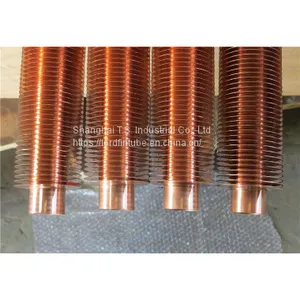
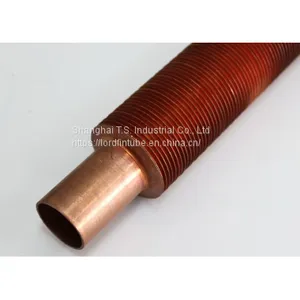
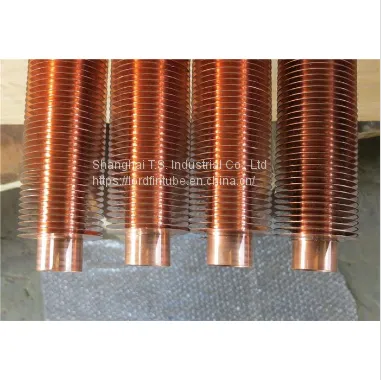
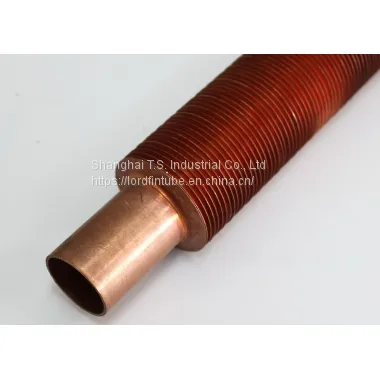
Brazing Fin Tube



Related Products
Nickel-based brazing infiltration oval finned tube:
Patented products, independent research, and development is the independent research and development of the company's efficient heat transfer tube, the working temperature: of 600℃, the use of a strong winding process, chip from the stability of the combination of solid, according to different applications Occasions can be surface galvanized and nickel-based brazing. With high heat transfer efficiency, the wind side of the small resistance characteristics, the same section of the tube, heat transfer than the circular fin tube 25% higher, air side resistance than the circular fin tube small 15-25%, can effectively reduce Fan operating costs, in the power plant boiler economizer, heaters, air coolers, and chemical industry have a broad application prospect.
Features:
The use of winding and brazing process, high production efficiency, pipe welding firm, non-contact thermal resistance, and long-term use in a high-temperature environment.
Application:
- Mainly used for power plant air coolers, boiler heaters, and various types of air heaters heat exchanger components.
- Brazed finned tubing offers a solid metallurgical bond between fin and tube, making it ideal for rigorous, high-temperature applications. When the tube expands or shrinks due to temperature changes, the brazed bond never relaxes its grip. Energy Transfer offers brazed finned tubing in similar or dissimilar metals for increased heat transfer efficiency.
Nickel Brazing osmosis layer fin tubes:
The welding ratio between tubes (pipes) and fins is 100%brazed welded fin tubes
no thermal contact resistance
the contact resistance of 0, significantly less than the high-frequency welding and copper alloy welding, embedded fin tubes (pipes), similar to single metal fin tubes;
welding parts smooth, uniform layer of alloy infiltration.
The working temperature is about 500 to 600 degrees.
Brazed Finned Tubes offer an alternative to welded fins for applications requiring smaller O.D. or thinner wall tubes with a strong fin-to-tube bond. The fin material is edge wound onto the tube and then the furnace is brazed.
Brazed Finned Tubes are commonly used in applications with metal temperatures up to 650° Fahrenheit, and with special coating, 1200° Fahrenheit.
- Tube Sizes:9/16″ O.D. to 2″ O.D.
- Fin Heights:¼” to 1″
- Fin Pitch:5 to 13 fins per inch
Copper phosphorus brazing fin tube:
The use of phosphor copper brazing process, brass-copper welding firm, welding rate of 100%, no contact resistance heat transfer, can be used in high-temperature conditions, the advantages of long-term use are not loose.
- Application: Mainly used for vacuum furnace heat exchanger.
Advantages of Brazed Finned Tubes:
1) Brazing provides a 99.9% metallurgical bond between the fin and tube. The brazing furnace creates a nitrogen cloud around the tube during the brazing to keep impurities out. A metallurgical bond gives much better heat transfer than a welded connection.
2) A nickel-chromium brazing compound is applied to the entire tube. Not only does it join the fin to the tube, but it also melts over the entire outer surface area of the tube and fin surface to provide a nickel-chrome clad coating on the tube. This coating forms a layer over the tube and fin that aids in overall corrosion resistance.
3) The melting braze compound forms fillets at the base of the fin and tube. Smooth fillets provide two advantages over welding: First, craters on the rough surface of the weld provide a home for impurities in the flue gas stream to collect, the first step in the corrosion of the tube. Second, the rough weld surface creates many additional stress risers, places where failures are much more likely to get their start.
4) Cannon does not use the process of welding fins on a tube, because it physically violates the pressure boundaries of the tube wall, thereby unnecessarily increasing wall thickness to meet ASME Code requirements. A brazed tube will maintain the same heat transfer performance but does not penetrate the pressure boundary. This reduces the tube wall thickness, weight, and
cost of the unit.
5) Our brazing furnace temperature partially stress relieves tubes during the brazing process. A stress-relieved tube is much less likely to suffer stress corrosion, which can occur in a welded tube.
- Available Materials: Tubing: Carbon Steel, Stainless Steel, Copper, Cupro-Nickel, Aluminum, admiralty Brass, Inconel, and other High-Nickel, Alloys, Duplex, AL6XN, Fins: Carbon Steel, Stainless Steel, Aluminum, Copper
Advantages of Brazed Finned Tubes:
1) Brazing provides a 99.9% metallurgical bond between the fin and tube. The brazing furnace creates a nitrogen cloud around the tube during the brazing to keep impurities out. A metallurgical bond gives much better heat transfer than a welded connection.
2) A nickel-chromium brazing compound is applied to the entire tube. Not only does it join the fin to the tube, but it also melts over the entire outer surface area of the tube and fin surface to provide a nickel-chrome clad coating on the tube. This coating forms a layer over the tube and fin that aids in overall corrosion resistance.
3) The melting braze compound forms fillets at the base of the fin and tube. Smooth fillets provide two advantages over welding: First, craters on the rough surface of the weld provide a home for impurities in the flue gas stream to collect, the first step in the corrosion of the tube. Second, the rough weld surface creates many additional stress risers, places where failures are much more likely to get their start.
4) Cannon does not use the process of welding fins on a tube, because it physically violates the pressure boundaries of the tube wall, thereby unnecessarily increasing wall thickness to meet ASME Code requirements. A brazed tube will maintain the same heat transfer performance but does not penetrate the pressure boundary. This reduces the tube wall thickness, weight, and cost of the unit.
5) Our brazing furnace temperature partially stress relieves tubes during the brazing process. A stress-relieved tube is much less likely to suffer stress corrosion, which can occur in a welded tube.
- Available Materials: Tubing: Carbon Steel, Stainless Steel, Copper, Cupro-Nickel, Aluminum, Admiralty Brass, Inconel, and other High-Nickel Alloys, Duplex, AL6XN Fins: Carbon Steel, Stainless Steel
Hot Tags: brazing fin tube, China, suppliers, manufacturers, price

Send Inquiry to This Supplier


You May Also Like
-
 Enamel Spiral Finned Tube | Enamel TubeUS$ 50 - 3000MOQ: 100 Pieces
 -
M Type Fin Tube | Medium-Finned TubeUS$ 50 - 3000MOQ: 100 Pieces
-
WO Type Fin Tube | Welded On Solid Finned TubeUS$ 50 - 3000MOQ: 100 Pieces
-
HFW Solid Finned Tube, High Frequency Welded Solid FinnedUS$ 50 - 3000MOQ: 100 Pieces
-
I Type Fin Tube | Tension Wound Finned TubeUS$ 50 - 3000MOQ: 100 Pieces
-
Laser Welding Finned Tube | Laser Welded Stainless Fin TubeUS$ 50 - 3000MOQ: 100 Pieces
-
L, LL, KL Type Fin Tube | DL Fin TubeUS$ 50 - 3000MOQ: 100 Pieces
-
G Type Fin Tube | Embedded Finned TubeUS$ 50 - 3000MOQ: 100 Pieces
-
S Type Fin Tube | Square Finned TubeUS$ 50 - 3000MOQ: 100 Pieces
-
Embedded Finned Tube | G Type Fin TubesUS$ 50 - 3000MOQ: 100 Pieces