Home > Electrical & Electronics > Electrical Control System > GE 489-P1-HI-A1-T Series Motor Management Relay

GE 489-P1-HI-A1-T Series Motor Management Relay

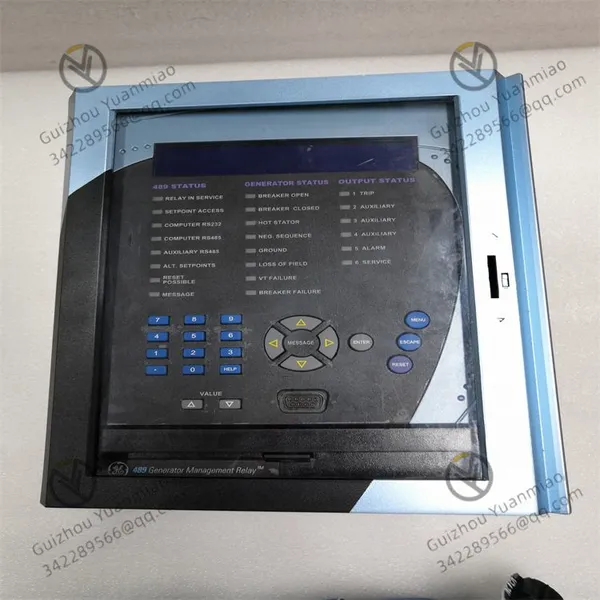
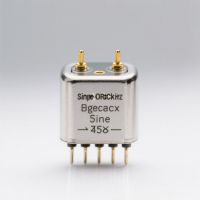
GE 489-P1-HI-A1-T Series Motor Management Relay photo-1
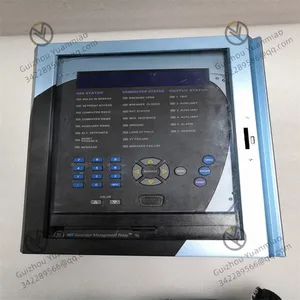
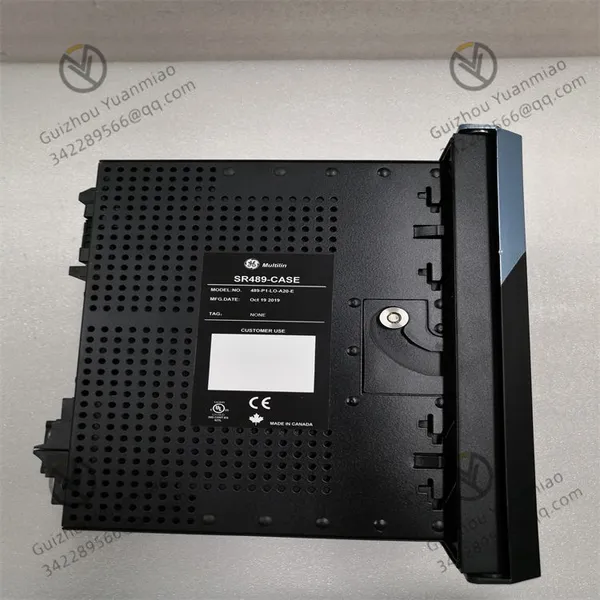
GE 489-P1-HI-A1-T Series Motor Management Relay photo-2
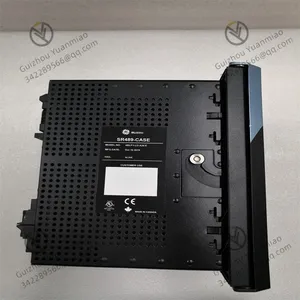
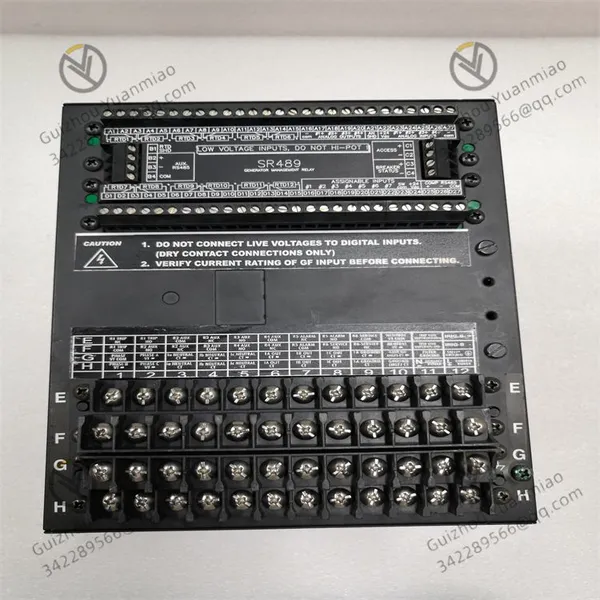
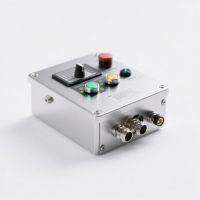
GE 489-P1-HI-A1-T Series Motor Management Relay photo-3
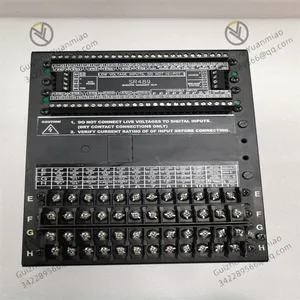
Negotiable MOQ: 1 Piece (Price negotiable depending on order volume and customization)
Key Specifications
Get Latest Price
Material:
Other
Certification:
Other
Function:
Other

Payment & Shipping
Payment Methods:
Port of Shipment:
China
Delivery Detail:
Delivery time depends on order quantity.
Material Other
Certification Other
Function Other
Condition Other
Task Other
Mathematical Model Other
Signal Other
Customized Other
Structure Other

GE  489-P1-HI-A1-T  series motor management relay

SR489-P1-LO-A20-E—05


I. Basic Electrical Fault Protection

  1. Overload Protection (Core Function)
  • Principle: Determines the degree of overload by monitoring whether the three-phase current exceeds the motor's rated value, combined with a thermal accumulation model (I²t curve).

  • Protection Mechanism: Supports 8 standard inverse-time curves (such as standard, medium, extreme inverse-time) and custom FlexCurve, which can match the thermal characteristics of different motors to avoid winding overheating and burnout caused by long-term overload.

  • Short-Circuit Protection
    • Instantaneous Short Circuit: When the current suddenly surges to several times the rated value (e.g., 5-10 times), it immediately triggers a trip to prevent the circuit breaker or motor windings from burning out due to high current.

    • Inverse-Time Short Circuit: For non-instantaneous but continuous overcurrent (such as interphase short circuit), the action time is automatically adjusted according to the current magnitude—the larger the current, the faster the trip.

  • Phase Loss/Unbalance Protection
    • Phase Loss: When any phase in the three-phase power supply is missing, the motor torque drops sharply, and the current surges. The module quickly identifies and trips through negative sequence current detection.

    • Unbalance: When the difference in three-phase current exceeds the set threshold (e.g., 10%-15%), it prompts power supply abnormalities or motor faults (such as winding short circuits) to avoid motor overheating or vibration damage caused by unbalanced current.

  • Ground Fault Protection
    • Principle: Detects zero-sequence current through a neutral CT. When the motor winding insulation is damaged, causing a ground fault (leakage current exceeds the threshold), the power is quickly cut off to prevent electric shock risks and equipment damage.

    • SR489-P1-LO-A20-E—02

    II. Advanced Operational Fault Protection

    1. Locked Rotor/Stator Protection
    • Scenario: When the motor cannot rotate due to mechanical blockage (such as bearing jamming or overloaded load), the current will surge to 5-8 times the rated value, and the windings can be burned out in a short time.

    • Protection Mechanism: The module determines the locked rotor status through current mutation and duration, triggering a quick trip (typically acting within hundreds of milliseconds).

  • Undervoltage/Overvoltage Protection
    • Undervoltage: When the power supply voltage is lower than 80% of the rated value (configurable), the motor torque decreases, the speed drops, and the current increases. The module trips with a delay to avoid overheating.

    • Overvoltage: When the voltage exceeds 110%-120% of the rated value, the winding insulation withstands high voltage, which is prone to breakdown during long-term operation. The module cuts off the power in a timely manner.

  • Phase Sequence Protection
    • Function: Prevents motor reversal caused by reverse power phase sequence (e.g., reverse rotation of pump equipment will damage the impeller). The module prohibits motor starting or immediately trips when a phase sequence error is detected.

  • Thermal Overload Protection (Dual Verification)
    • I²t Model: Calculates the motor's thermal capacity based on the current thermal effect and simulates the winding temperature change.

    • RTD Temperature Verification: Directly monitors the winding or bearing temperature through an external PT100 sensor. When the measured temperature exceeds the set value (e.g., 130°C), it triggers an alarm or trip to avoid protection lag caused by model errors.


    III. Special Fault and Abnormality Monitoring

    1. Excessive Starting Time Protection
    • Scenario: When the motor starts with high current but slow speed rise (such as overloaded load or motor failure), and the starting time exceeds the normal range (e.g., 10-30 seconds), the module determines it as an abnormality to prevent overheating during starting.

  • Mechanical Fault Auxiliary Detection
    • Vibration/Torque Abnormality: Although not a direct protection function, the module can indirectly determine mechanical faults (such as bearing wear or coupling looseness) through current fluctuations or temperature changes. Matching with external sensors (optional) can enhance monitoring capabilities.

  • Pre-Trip Alarm
    • Sends an alarm signal in advance at the critical fault state (such as thermal capacity reaching 80% or current approaching the overload threshold), facilitating maintenance personnel to troubleshoot problems in a timely manner and reducing downtime losses.

    • SR489-P1-LO-A20-E—01

    IV. Flexibility and Configuration of Protection Functions

    • Programmable Logic: 4 relay outputs can be customized as functions such as "main trip", "alarm", and "spare" to adapt to different scenarios (such as alarming only without tripping or multi-level protection actions).

    • Adjustable Parameters: Sets current thresholds, action times, protection curves, etc., through the front panel or communication interface, compatible with motors of different powers (e.g., 10kW-1000kW) and types (asynchronous motors, synchronous motors).


    Summary: Covered Motor Fault Types

    Fault Type Specific Scenario Protection Method
    Overload Excessive load, poor heat dissipation I²t thermal model + inverse-time trip
    Short Circuit Interphase short circuit, winding insulation damage Instantaneous/inverse-time current detection
    Phase Loss/Unbalance Power phase loss, winding fault Negative sequence current detection + threshold judgment
    Ground Fault Winding ground, cable damage Zero-sequence current detection + quick trip
    Locked Rotor Mechanical blockage, load jamming Current mutation + time threshold judgment
    Voltage Abnormality Undervoltage, overvoltage, phase sequence error Voltage monitoring + phase sequence detection
    Thermal Abnormality Winding overheating, bearing overheating RTD temperature sensor + I²t model verification
    Starting Abnormality Excessive starting time, abnormal starting current Time-current curve monitoring


    This module provides full-cycle protection for industrial motors from electrical faults to mechanical abnormalities through multi-dimensional protection logic, especially suitable for scenarios requiring continuous operation and high reliability (such as chemical, power, and metallurgical industries). For precise parameters, it is recommended to refer to the official technical manual of GE Multilin or contact the supplier for confirmation.


    Product Tags: 489-P1-HI-A1-T

    Send Inquiry to This Supplier

    * Message
    0/5000

    Want the best price? Post an RFQ now!
    Verified Business License
    Business Type
    Trading Company
    Year Established
    2014
    Factory Size
    1,000-3,000 square meters
    Product Certifications
    SA8000