Material
Other, Global universal model
Condition
Other, Global universal model
Task
Other, Global universal model
Mathematical Model
Other, Global universal model
Signal
Other, Global universal model
Customized
Non-Customized
Structure
Other, Global universal model
Temperature
-40°C to 70°C
humidity
(5%–95% non-condensing)
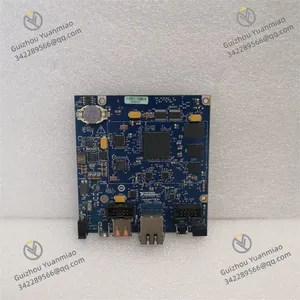
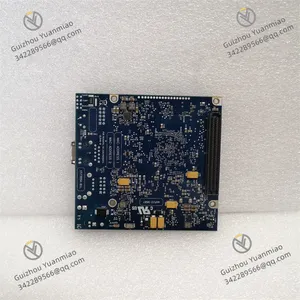
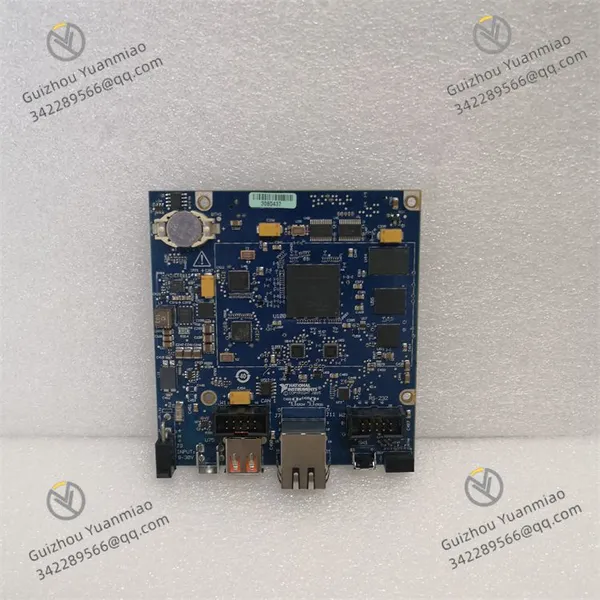
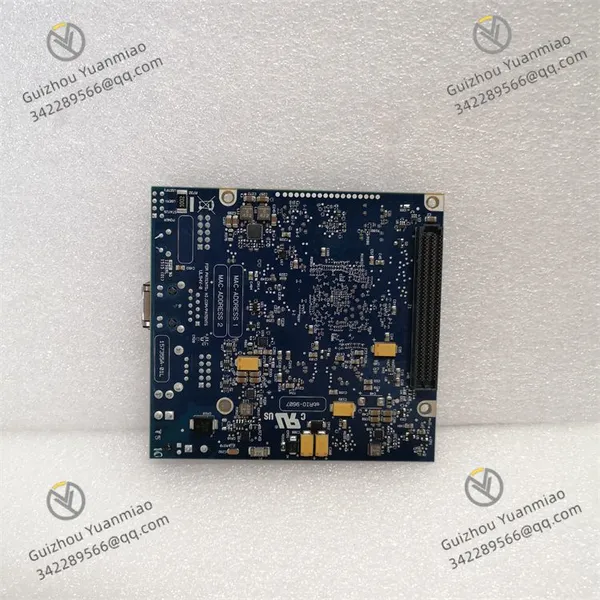
NI sbRIO-9607OverviewThe NI sbRIO-9607 is a high-performance embedded controller that highly integrates a real-time processor running NI Linux Real-Time, a user-reconfigurable FPGA, and I/O functions on a single printed circuit board (PCB), merging multiple key capabilities into a compact form factor. Equipped with a RIO Mezzanine Card (RMC) connector—a high-speed, high-bandwidth interface—this device allows users to directly access the processor and digital I/O FPGA lines, providing an efficient pathway for data transmission and processing. With its outstanding flexibility, reliability, and high-performance capabilities, the sbRIO-9607 can be easily embedded in OEM applications requiring mass production, widely serving industries such as industrial automation, test measurement, and intelligent device control to deliver core control and signal processing capabilities for complex systems.
Functional Features1. Flexible Reconfigurable FPGA
Users can program and configure the FPGA according to specific application needs to implement customized logic functions. Whether designing proprietary data acquisition algorithms, building high-speed signal processing pipelines, or implementing special communication protocols, the FPGA's reconfigurable nature offers robust support, enabling the device to quickly adapt to different scenarios and meet diversified functional requirements.
2. Real-Time Processing Capability
Powered by a 667 MHz dual-core ARM Cortex A9 processor and combined with the NI Linux Real-Time operating system, the sbRIO-9607 delivers excellent real-time processing performance. It can rapidly respond to and process input signals within millisecond or even microsecond time scales, ensuring the timeliness and accuracy of system control—making it ideal for industrial control and automation monitoring tasks with strict real-time requirements.
3. Rich I/O Interfaces
Featuring 96 channels of 3.3V digital I/O lines, it can connect to various digital devices for input/output control of digital signals (e.g., switching quantity detection and actuation). It also integrates Gigabit Ethernet, CAN, serial, and USB ports, supporting multiple communication protocols to facilitate data interaction and communication with other devices/systems, enabling system integration and linkage to easily build complex automation control networks.
4. Reliable Hardware Design
The product uses conformal coating to protect electronic components, effectively resisting moisture and ensuring stable operation in humid or harsh environments. Its compact and rugged structure design can withstand certain vibrations and impacts, adapting to the complex and changeable working conditions of industrial sites to ensure long-term reliable operation and reduce maintenance costs.

Technical Parameters1. Processor
667 MHz dual-core ARM Cortex A9, providing stable and efficient computing power to support real-time task processing.
2. Memory & Storage
512 MB DRAM for fast data read/write, meeting the system's operational speed requirements.
512 MB storage for saving programs, configuration information, and critical data, ensuring traceability and recoverability of device operation status.
3. FPGA
Based on Xilinx Zynq-7020 with 85k logic cells, offering abundant hardware resources for users to implement custom logic functions.
4. Digital I/O
96 channels of 3.3V digital I/O lines, flexibly configurable as input/output modes for digital signal acquisition and control.
5. Communication Interfaces
2 x 10/100/1000 Mbps Ethernet ports for high-speed network communication, enabling data transmission and remote control with host computers, other intelligent devices, or cloud platforms.
Integrated CAN interface suitable for industrial fieldbus communication, enabling reliable device-to-device communication in automotive electronics, industrial automation, etc.
Serial interface to meet connection needs of traditional serial devices (e.g., certain sensors, instruments).
2 x USB 2.0 ports for connecting external storage, human-computer interaction devices (e.g., keyboard, mouse), or other USB-connected sensors.
6. Analog I/O (Optional)
4 x 16-bit, 250 ks/s analog input channels for high-precision acquisition of analog signals (e.g., temperature, pressure, voltage from sensor outputs).
4 x 16-bit, 400 ks/s analog output channels for generating analog control signals (e.g., motor speed control, valve opening adjustment).
7. Operating Environment
Temperature: -40°C to 70°C, adapting to extreme thermal conditions.
Humidity: Operates normally within common industrial humidity ranges (5%–95% non-condensing), demonstrating strong environmental adaptability.

Working Principle
In practical operation, the sbRIO-9607 first receives signals from external devices via its rich I/O interfaces. For analog signals (e.g., continuous physical quantity signals collected by sensors), they enter the device through analog input channels. The analog signals first go through front-end conditioning circuits for preprocessing (filtering, amplification, or attenuation) to meet the input requirements of the A/D converter. The A/D converter then converts the analog signals to digital signals, which are transmitted to the FPGA or processor for subsequent processing.
For digital signals (e.g., switch states, pulse signals), they enter the FPGA directly via digital I/O lines. The FPGA performs preliminary processing (e.g., signal shaping, counting, encoding) on these signals according to user-defined logic programs. Meanwhile, the FPGA caches and preprocesses data to reduce the processor's workload. After FPGA processing, part of the data is directly output via digital I/O lines to control external devices, while the other part is transmitted to the processor.
Supported by the NI Linux Real-Time OS, the processor runs user-developed applications that deeply analyze and process digital signals from the FPGA or direct inputs based on preset algorithms and logic. For example, in industrial automation, the processor may calculate equipment operation status parameters from sensor data, compare them with preset thresholds, and then output control signals via analog output channels or digital I/O lines to drive actuators (e.g., motors, valves), achieving precise control of industrial processes. Throughout this process, the device interacts with other systems via integrated interfaces (Ethernet, CAN, etc.), uploading processing results to monitoring centers and receiving commands from host computers to ensure collaborative operation and remote monitoring.