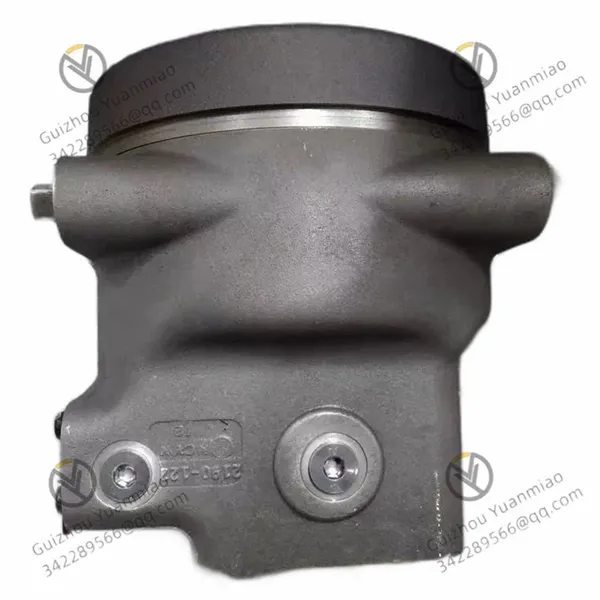
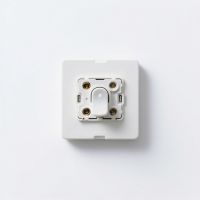
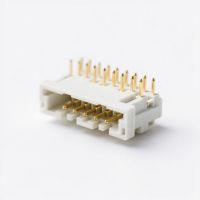
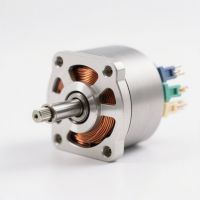
WOODWARD 9907-1200 Current Pressure Converter
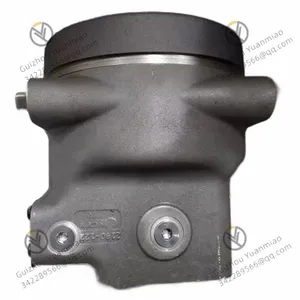
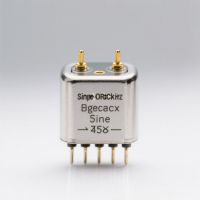
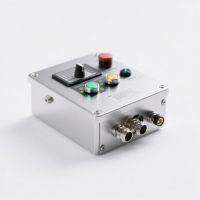
The WOODWARD 9907-1200 current-pressure transducer is a high-performance industrial control device, belonging to the second - generation current - pressure converter (CPC - II). The following is a detailed introduction:
Working principle: It receives a 4 - 20mA DC input signal and converts it into a proportional output pressure signal. The typical working pressure range is 0 to 10bar (14.5 to 145psi), which in turn controls valves or other actuators in the hydraulic system.
Technical parameters: The input voltage is usually 18VDC to 32VDC, the operating temperature range is - 40°C to 85°C, the speed loop bandwidth is up to 100Hz, the mean time between failures (MTBF) can reach 100,000 hours, the oil pollution resistance complies with the ISO 20/16 standard, the size is approximately 120x70x35 mm, the weight is about 350 grams, and the protection level is IP67.
Functional features:
High - precision signal conversion: It can accurately convert the 4 - 20mA DC input signal into a 3 - 15psi air pressure signal, with an accuracy of ±0.5% of the range. It can achieve stable linear valve control, and the full - range error of the valve linearization table is less than 0.2%, ensuring accurate signal conversion and control to meet the demand for precise control of fluid pressure.
Fast response: With a speed loop bandwidth of up to 100Hz, it can quickly process commands and output corresponding control signals in a short time. It can quickly respond to system changes and adjust the output pressure in a timely manner, which helps to improve the response speed and flexibility of the system.
High reliability: The mean time between failures (MTBF) can reach 100,000 hours, showing excellent long - term stable operation capability. Its shell is made of aluminum, with a protection level of IP67, and its oil pollution resistance complies with the ISO 20/16 standard. It can work stably in harsh industrial environments and effectively resist the impact of oil pollution and other factors on the equipment.
Redundant design: For key applications, redundant inputs/sensors are provided, which can receive signals from redundant controllers and have the function of redundant (dual) CPC (master/slave). When a component fails, the redundant part can take over the work in time to ensure the normal operation of the system and improve the safety and reliability of the system.
Status monitoring function: It has the function of status and health indication, which can monitor the health status of the pressure sensor, the health status of the input demand signal, the health status of the internal unit, the quality of the input power supply, etc. It can also provide control pressure readings, which is convenient for operators to timely understand the operation status of the equipment and facilitate maintenance and troubleshooting.
Self - cleaning function: It is equipped with a self - cleaning valve algorithm, which can prevent valve blockage, maintain equipment performance, reduce the probability of failures caused by blockage, and lower maintenance costs and workload.
Rich communication interfaces: It supports RS232, RS485, Ethernet and USB communication, facilitating data exchange with other equipment or systems, enabling remote monitoring and control, and facilitating system integration and centralized management.
Flexible installation: Adopting a compact design with a small size, it can be installed in panel or guide rail ways. It can be flexibly installed in positions with limited space and is easy to integrate into existing systems. In addition, it supports zero and range adjustment, facilitating on - site calibration and reducing installation and maintenance time.

Application fields:
Industrial automation: It is used in process control systems and pneumatic actuation systems, which can accurately control the fluid pressure of hydraulic systems and realize precise control of various industrial mechanical equipment.
Energy field: In power plants, it can control the frequency stability of generators, be used to control the valves of steam turbines, and also be applied in wind and solar power generation systems.
Oil and gas: It can be used to control valves in oil and gas pipelines, improving transportation efficiency and safety.
Aerospace: It can be used for precise control in the aviation field, such as controlling the speed and output power of aircraft engines.