I. Overview
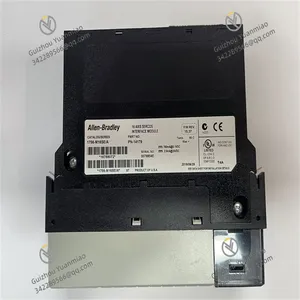
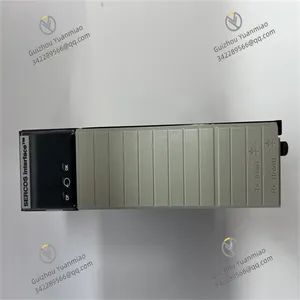
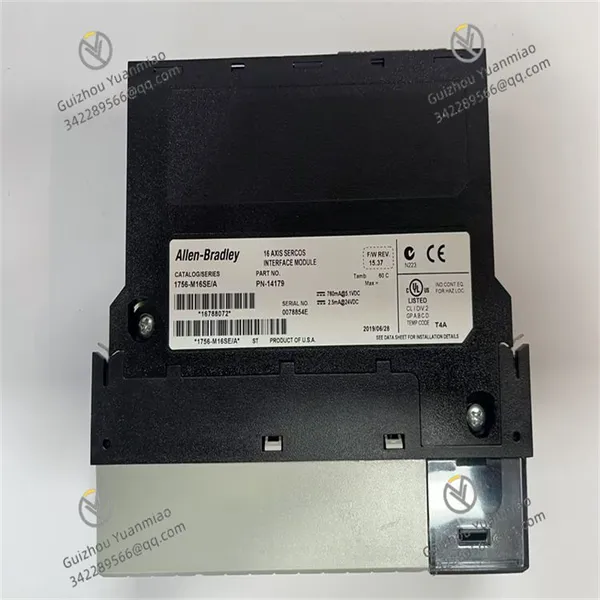
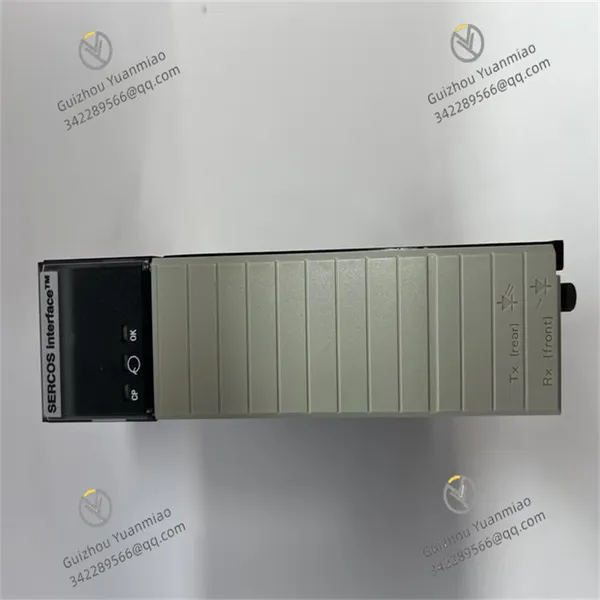
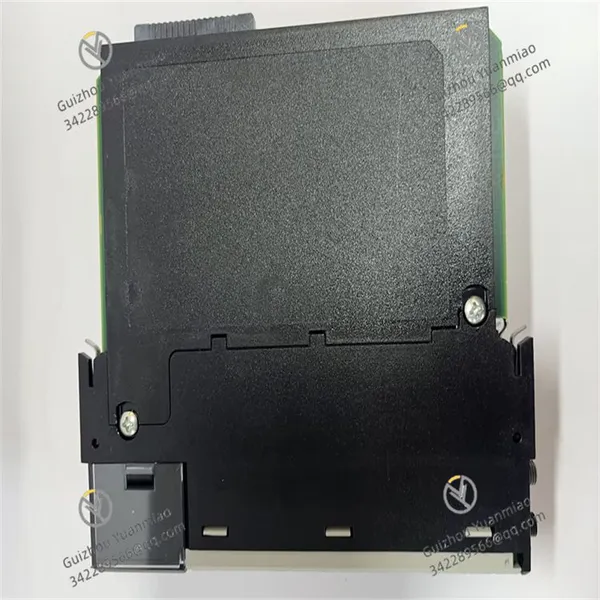
1756-M16SE is a high-performance motion control module in Rockwell Automation's ControlLogix series, specifically designed to meet the multi-axis motion control requirements in complex industrial scenarios. As an important part of the ControlLogix system, it can seamlessly integrate with 1756 series controllers (such as 1756-L73, 1756-L84ES, etc.), providing strong support for high-precision and high-synchronization motion control tasks.
This module can be widely applied in fields that require precise coordination of multi-axis motions, such as precision machine tool processing, automated assembly lines, packaging machinery, printing equipment, etc. Through the precise control of multiple servo axes or stepping axes, it realizes complex motion trajectory planning, speed adjustment, and position synchronization, helping industrial production achieve efficient and precise operation.

II. Technical Parameters
Number of controlled axes: Supports up to 16 independently controlled axes, which can precisely control 16 servo motors or stepping motors simultaneously. It meets the complex motion control needs of multi-axis collaborative work and is suitable for motion control scenarios of large-scale automated equipment or production lines.
Control modes: Supports various advanced motion control modes, including point-to-point motion (PT), linear interpolation, circular interpolation, electronic gear synchronization, electronic cam, etc. It can realize complex motion trajectory control, ensuring that each axis moves precisely according to the preset path and timing.
Position feedback: Compatible with various position feedback devices, such as incremental encoders, absolute encoders (with protocols like SSI, EnDat, etc.). It can obtain the motor's position information in real-time with high feedback accuracy, ensuring the accuracy of position control. The position control accuracy can usually reach the micrometer level (specific accuracy depends on encoder resolution and mechanical transmission structure).
Speed range: Supports a wide range of speed control, and the motor speed can be adjusted according to different application requirements. The maximum speed can reach a relatively high rpm level (specific value is subject to the product manual), meeting the needs of different scenarios from low-speed precision operation to high-speed and efficient production.
Communication interface: Performs high-speed data exchange with the controller through the ControlLogix backplane bus. The data transmission rate is fast, ensuring the real-time transmission of control commands and feedback information. The response time is short, generally within the microsecond range, ensuring the real-time performance of motion control.
Power supply requirements: Needs to be powered by the 1756 series power module of the ControlLogix rack. The typical supply voltage is 5V DC, with low power consumption, which has little impact on the system power load and ensures the stable operation of the module.
Environmental adaptability:
Operating temperature: Can work stably within the temperature range of 0°C - 60°C, and can adapt to the common temperature fluctuation environment in industrial sites.
Relative humidity: Can operate normally in a relative humidity environment of 5% - 95% (non-condensing), suitable for humid production workshops and other occasions.
Vibration and shock resistance: Complies with relevant industrial standards such as IEC 61131-2, has certain vibration and shock resistance capabilities, and can work reliably in industrial environments with slight vibrations (such as near machine tools and production lines).

III. Functional Characteristics
High-precision multi-axis synchronization control: Has excellent multi-axis synchronization performance with minimal synchronization error between axes, enabling high-precision collaborative motion. For example, in an automated assembly line, it can control multiple robotic arms to grab different components simultaneously and complete assembly actions according to precise timing, ensuring assembly accuracy and efficiency.
Rich motion trajectory planning: Supports various complex motion trajectory planning functions, and can customize motion paths according to production needs. Whether it is simple trajectories such as straight lines and arcs, or complex curve trajectories, the module can precisely control the motion of each axis to meet the requirements of precision machining, complex assembly and other scenarios.
Flexible programming and configuration: Can be programmed and configured through Rockwell Automation's Logix Designer programming software. It supports writing motion control programs using programming languages such as Structured Text (ST) and Function Block Diagram (FBD), and provides a rich library of motion control instructions to simplify the programming process and improve development efficiency. Users can flexibly set motion parameters (such as speed, acceleration, deceleration, etc.) according to specific application requirements.
Comprehensive diagnostic and protection functions: Equipped with comprehensive self-diagnostic functions, which can real-time monitor the operating status of the module and the controlled axes, such as fault conditions like overcurrent, overvoltage, overspeed, and position error exceeding limits. When a fault is detected, it will promptly send an alarm signal and upload the fault information through the controller, facilitating maintenance personnel to quickly locate and eliminate the fault. At the same time, the module can trigger corresponding protection actions (such as emergency stop) to prevent equipment damage and personal injury.
Seamless integration and scalability: As part of the ControlLogix system, it can seamlessly integrate with controllers, I/O modules of the ControlLogix series, share system resources, and simplify the system architecture. Meanwhile, when the number of controlled axes needs to be increased, it can be achieved by expanding modules or adding racks, with good scalability to adapt to the needs of expanding production scale or equipment upgrading.

IV. Application Scenarios
Precision machine tool processing: In precision machine tools such as CNC lathes, milling machines, and machining centers, 1756-M16SE can be used to control the feed axes and spindles of tools, realizing precise point-to-point machining, linear interpolation, circular interpolation and other motions. For example, when machining complex curved parts, the module controls the collaborative motion of X, Y, and Z axes to perform cutting according to the preset trajectory, ensuring that the machining accuracy of the parts meets the design requirements.
Automated assembly lines: In automated assembly lines for electronic products, auto parts, etc., it is used to control each motion axis of assembly robots to realize precise grabbing, handling and assembly of components. For example, in the mobile phone battery assembly line, it controls the rotating axis, telescopic axis, etc. of the robot to accurately place the battery into the designated position in the mobile phone case and complete the pressing action, ensuring assembly quality.
Packaging machinery: In high-speed packaging machines (such as food packaging machines, pharmaceutical packaging machines), it controls the motion of feeding axes, sealing axes, cutter axes, etc., to realize precise conveying, sealing and cutting of packaging materials. Through the electronic gear synchronization function, the feeding speed is kept in precise synchronization with the sealing and cutting speeds, ensuring the tightness and dimensional consistency of the packaging, and improving packaging efficiency and quality.
Printing equipment: In equipment such as gravure printing machines and flexographic printing machines, it controls the motion of plate cylinders, impression cylinders, feeding rollers, etc., to realize precise overprinting of printed patterns. By precisely controlling the speed and position synchronization of each axis, it ensures that patterns of different colors on the printed matter can be accurately aligned, improving printing quality.