Material
Other, Global universal model
Condition
Other, Global universal model
Task
Other, Global universal model
Mathematical Model
Other, Global universal model
Signal
Other, Global universal model
Customized
Non-Customized
Structure
Other, Global universal model
Operating temperature
0 to 60°C (32 to 140°F)
Humidity
5% - 95% (non - condensing)
Dimensions
210mm x 35mm x 133mm
I. Product Overview
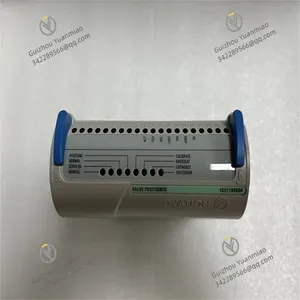
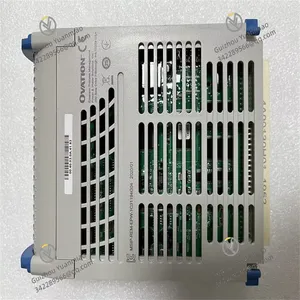
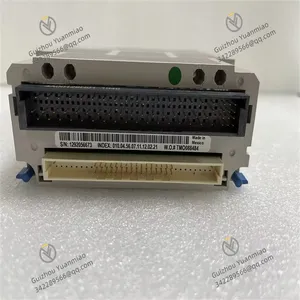
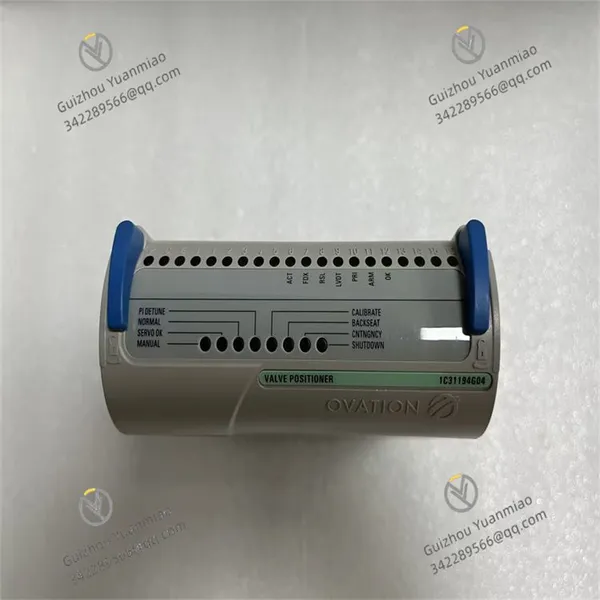
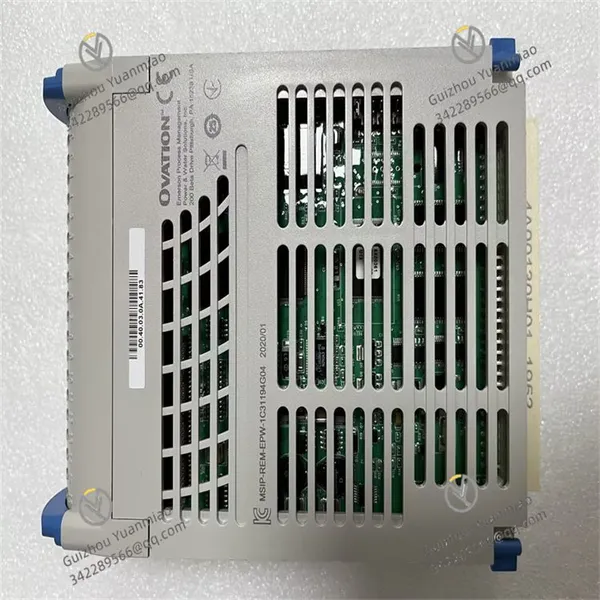
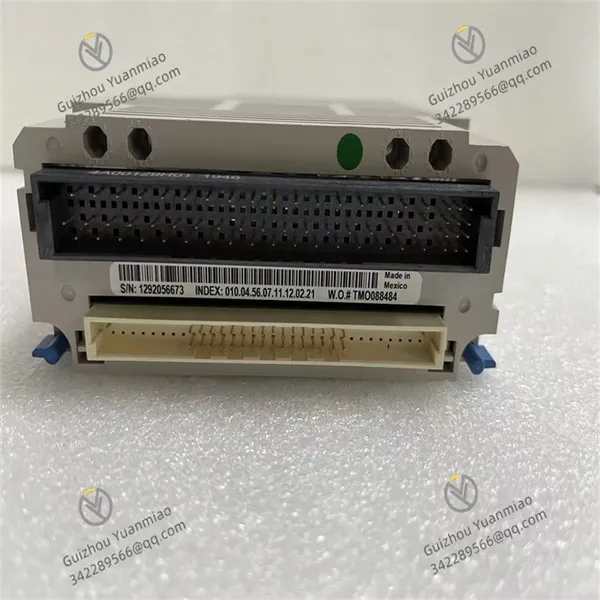
1C31194G04 is a digital input module built for Distributed Control Systems (DCS). It assumes the crucial responsibility of reliably and accurately monitoring digital signals in various industrial processes. It occupies an indispensable position in the industrial automation control system, providing fundamental support for the stable operation and precise control of complex industrial production processes.

II. Technical Parameters
(1) Electrical Parameters
Input Channels: Equipped with 16 digital input channels. This quantity design can meet the demand of monitoring multiple digital signal sources simultaneously in most industrial scenarios. Whether it is the signal feedback from numerous sensors on the production line or the real-time collection of various switch states in complex equipment, it can be connected and processed in an orderly manner.
Input Voltage Range: Supports an input voltage range of 0 to 60V DC, with good voltage compatibility. It can adapt to different types of signal sources, whether it is low-voltage sensor output signals or relatively high-voltage industrial control signals, and can accurately identify and process them, greatly expanding its application range in different industrial environments.
Input Signal Types: Can receive dry contact or voltage input signal types. The dry contact input method is suitable for simple switching signal transmission, such as mechanical limit switches, relay contact states, etc., and can directly sense the physical state changes of equipment; the voltage input method can connect various sensors that output voltage signals, such as proximity switches, pressure sensors (some output digital voltage signal types), etc., to realize digital monitoring of physical quantities.
Isolation Characteristics: Has 1500V DC isolation capability between channels and between channels and ground. In industrial environments, electrical interference is ubiquitous. This strong isolation performance can effectively prevent signal crosstalk between different channels and external electrical interference from affecting the normal operation of the module through the grounding loop, ensuring the accuracy and independence of each input signal, and improving the stability of the module in complex electromagnetic environments.
(2) Performance Parameters
Response Time: The response time for signal change detection is less than 5ms, which can quickly capture the dynamic changes of input signals. In industrial production, the operating state of equipment changes rapidly. A fast response time enables the control system to obtain the latest information and make decisions in a timely manner, which is of key significance for some industrial processes with extremely high real-time requirements, such as start-stop control of high-speed operating equipment, real-time monitoring and adjustment of production lines, etc.
Power Consumption: The maximum power consumption is only 2.5W, which is a low-power design. This not only helps reduce the energy consumption of the entire control system and operating costs, but also has relatively low heat dissipation requirements, which is conducive to stable operation in industrial control cabinets with compact space and limited heat dissipation conditions, and also conforms to the current development trend of energy conservation and emission reduction in the industrial field.
(3) Environmental Parameters
Operating Temperature Range: Can work normally in the temperature range of 0 to 60°C (32 to 140°F). Whether it is in cold industrial plants in northern winter or hot workshops in southern summer without good air conditioning, it can perform stably, and will not affect the signal monitoring accuracy and module reliability due to temperature fluctuations, adapting to various complex industrial environment temperature conditions.
Storage Temperature Range: The storage temperature range is -40 to 85°C (-40 to 185°F). This means that during product transportation and inventory storage, even in extreme temperature environments, the performance and reliability of the electronic components inside the module can be guaranteed, extending the overall service life of the product and reducing the potential failure risk caused by improper storage.
Humidity Adaptation: Can operate normally in an environment with a relative humidity of 5% to 95% (non-condensing). It can cope with humid industrial environments, such as food processing workshops, paper mills and other places with high humidity, effectively preventing faults such as circuit short circuits and corrosion caused by humidity issues, and ensuring long-term stable operation in humid environments.
Dimensions and Weight: The module dimensions are 210mm x 35mm x 133mm (height x width x thickness), and the weight is only 0.5kg. The compact design facilitates flexible installation and layout in industrial control cabinets without occupying too much space. The lightweight also facilitates installation and maintenance operations by on-site operators, reducing labor intensity.

III. Functional Features
(1) High Reliability
In industrial environments, the stable and reliable operation of equipment is crucial. The 1C31194G04 module fully considers reliability factors from hardware material selection to circuit design. High-quality electronic components are selected and undergo strict screening and aging tests to ensure stability under long-term and high-load operation; the circuit design adopts redundant backup and fault-tolerant mechanisms. Even if some components are abnormal, the basic functions of the module can be maintained through backup paths or automatic error correction algorithms, ensuring the continuity and accuracy of digital signal monitoring, and reducing the risk of production interruption caused by module failures.
(2) Modular Design
Adopting a modular design concept, it can be easily integrated into the Ovation DCS architecture system. In the system construction stage, multiple such modules can be flexibly configured according to actual application needs to realize centralized monitoring and management of large-scale digital signals; in the later maintenance process, if a module fails, there is no need to perform large-scale disassembly and debugging of the entire control system, and the normal operation of the system can be restored by quickly replacing the faulty module, which greatly shortens the maintenance time and cost, and improves the maintainability and upgrade scalability of the system.
(3) Advanced Diagnostic Functions
Built-in advanced diagnostic system, which can monitor the health status and working conditions of the module in real-time. Through continuous monitoring of key parameters such as power supply voltage, chip temperature, and signal transmission quality, once an abnormality is found, it can quickly generate a detailed diagnostic report and upload it to the upper computer of the control system. The report includes information such as fault type, fault location, and fault occurrence time, which is convenient for operation and maintenance personnel to quickly locate the root cause of the problem and take targeted repair measures, greatly improving the efficiency of fault detection and resolution, reducing equipment downtime, and ensuring the efficient operation of industrial production.
(4) Flexible Configuration Function
Supports a wide range of digital input configurations, which can be flexibly adjusted according to the specific needs of different application scenarios. Users can customize parameters such as the signal type (dry contact or voltage input) of the input channel, signal polarity, and filter time constant through software settings or hardware jumpers. For example, in industrial environments sensitive to noise, the filter time constant can be appropriately increased to filter out clutter interference in the signal, ensuring that the collected digital signals are accurate and reliable; for equipment with different logic level requirements, the input signal polarity can be flexibly set to achieve seamless connection, meeting the customized needs of diversified industrial applications.

IV. Application Scenarios
(1) Power Generation Industry
In various power generation scenarios such as thermal power generation, hydropower generation, and wind power generation, the 1C31194G04 module plays an important role. In thermal power plants, it is used to monitor various switching signals in the boiler combustion system, such as the start-stop state of the burner, the opening feedback of the damper baffle, the operating state of the coal feeder, etc., providing real-time and accurate equipment operation information for the control system, helping to achieve precise control of the combustion process, and improving power generation efficiency and safety; in hydropower plants, it can monitor signals such as the guide vane opening of the water turbine, the braking state of the unit, and the switch positions of various valves, ensuring the safe and stable operation of the water turbine and realizing the efficient conversion of water energy to electrical energy; in wind farms, it is used to collect signals such as the pitch angle of the wind turbine blades, the position signal of the yaw system, and the status information of various sensors, providing data support for the intelligent control and remote monitoring of wind turbines, ensuring that wind turbines generate electricity stably under complex meteorological conditions.
(2) Water Treatment Industry
In water treatment facilities such as urban sewage treatment plants, industrial wastewater treatment stations, and waterworks, this module is used to monitor digital signals of various pumps, valves, level gauges, water quality sensors and other equipment. For example, by monitoring the start-stop state of the water pump and the operating current feedback signal, the automatic control and fault diagnosis of the water pump can be realized; through the digital signal of the level gauge to monitor the change of the water level in the pool, the opening and closing of the valve can be automatically controlled to realize the reasonable allocation of water and the automatic operation of the treatment process; the digital signals output by the water quality sensors are collected and analyzed to grasp the water quality in real-time, providing a basis for adjusting the water treatment process, ensuring that the effluent quality meets the standards, and ensuring the efficient and stable operation of the water treatment process.
(3) Manufacturing Industry
In manufacturing fields such as automobile manufacturing, electronic production, and mechanical processing, the 1C31194G04 module is widely used in production line automation control systems. In automobile manufacturing production lines, it is used to monitor signals such as the action in-place signals of robots, the working status of welding equipment, and the operation of the conveyor line, ensuring that all links of the production line are closely coordinated, and realizing efficient assembly of auto parts and precise control of vehicle production; in electronic production workshops, it can collect operating parameters and status signals of equipment such as placement machines and insertion machines, as well as digital signal feedback from various sensors for quality inspection of electronic products, realizing automatic monitoring and quality control of the production process, and improving the production efficiency and quality stability of electronic products; in the mechanical processing industry, it is used to monitor the tool status of machine tools, workpiece clamping signals, processing parameter feedback, etc., providing support for the automatic operation and intelligent control of machine tools, and improving the precision and efficiency of mechanical processing.