Material
Other, Global universal model
Condition
Other, Global universal model
Task
Other, Global universal model
Mathematical Model
Other, Global universal model
Signal
Other, Global universal model
Customized
Non-Customized
Structure
Other, Global universal model
Operating temperature
-35°C to 180°C (-31°F to 356°F)
Output voltage
24V DC
Size
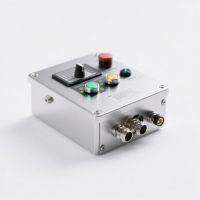
263×58×28mm
I. Overview
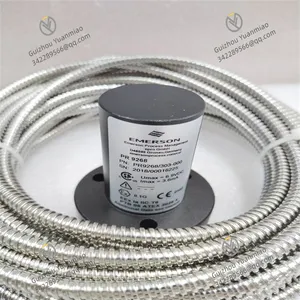
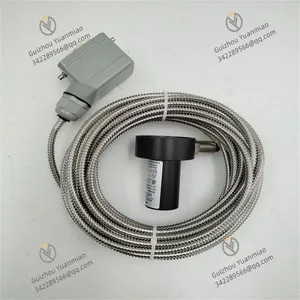
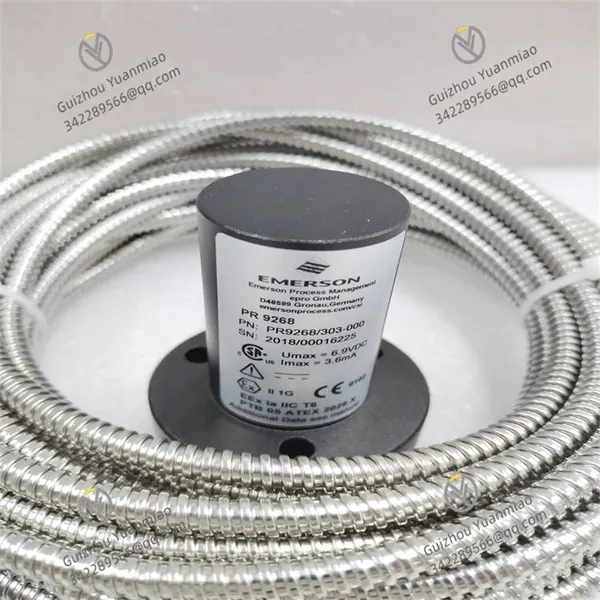
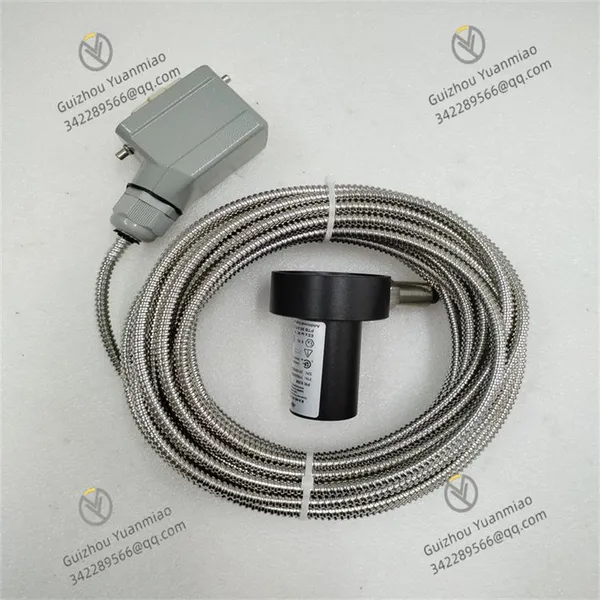
PR9268/303 - 000 is a vibration sensor in the field of industrial equipment condition monitoring. It focuses on accurately measuring the vibration parameters of equipment, and provides key data support for the evaluation of equipment health status by precisely capturing vibration signals. It is an important link in realizing early warning of equipment failures and ensuring production continuity.
In many industrial scenarios, the vibration of equipment directly reflects its operating status. For example, in the operation of large rotating machinery such as steam turbines and fans, PR9268/303 - 000 can monitor the vibration amplitude, frequency and other information of the machinery in real time. Once there are abnormal changes in vibration parameters, it may indicate potential faults in the equipment such as bearing wear and rotor imbalance. By timely feeding back these vibration data to the monitoring system, relevant personnel can quickly take measures, such as arranging equipment maintenance and adjusting operating parameters, to avoid production stagnation caused by sudden equipment failures, thus ensuring the efficient and safe progress of the production process.

II. Technical Parameters
Measurement range: The vibration measurement range of this sensor is excellent. The static measurement range can reach ±2.0mm (0.079″), which can accurately capture the tiny vibration deviation of the equipment in a stable operating state; the dynamic measurement range is 0 to 1,000μm (0 to 0.039″), which can also effectively monitor the vibration changes generated by the equipment during dynamic processes such as start-stop and load changes, meeting the needs of vibration measurement under different working conditions.
Measurement accuracy: The measurement accuracy is as high as ±1.5% FS, ensuring that the collected vibration data has a high degree of accuracy. This high-precision feature enables equipment status evaluation to be based on a reliable data foundation, providing strong support for accurately judging whether there are potential faults in the equipment, and effectively avoiding misjudgment or missed judgment caused by measurement errors.
Frequency response: The frequency response range is 4Hz - 1000Hz, which can quickly and accurately track the dynamic changes of equipment vibration frequency. It can respond and measure accurately in time to both high-frequency vibrations generated by high-speed rotating equipment and low-frequency vibrations caused by reciprocating equipment, truly reflecting the complex dynamic characteristics of the equipment's operating status.
Sensitivity: The sensitivity reaches 4V/mm (101.6mV/mil) ±1.5% max, which means the sensor is extremely sensitive to tiny vibration changes. Even if the equipment has extremely slight vibration abnormalities, it can quickly sense and convert them into corresponding electrical signal outputs, making it possible to detect equipment failures early.
Power supply and output: It supports common industrial power supply standards and can be adapted to a variety of power supply environments. The output signal adopts a standard form, such as 4 - 20mA current signal output. This output mode has the significant advantages of strong anti-interference ability and long transmission distance, facilitating seamless connection with various industrial monitoring systems and ensuring that vibration data can be stably and reliably transmitted to subsequent processing units.
Physical characteristics: The product size is 263×58×28mm, with a compact structural design, occupying little space during installation, and facilitating flexible installation in various complex equipment layouts. It weighs about 0.43kg, which is relatively light and will not bring excessive additional load to the equipment installation position. Its protective shell has good protective performance, which can effectively resist the invasion of dust, water vapor and other pollutants in industrial sites, ensuring that the sensor can work stably in harsh environments.
Working environment: The working temperature range is wide, from -35°C to 180°C (-31°F to 356°F), which can adapt to various industrial environments from extremely cold to high temperature. It can work normally whether it is for outdoor equipment in cold areas or equipment monitoring in high-temperature workshops. At the same time, it can also work stably in an environment with a relative humidity of 5% - 95% (no condensation), and is also applicable to industrial places with high humidity, such as textile factories and beverage factories. In addition, the sensor also has a certain ability to resist impact and vibration. Under the conditions of vibration frequency 10 - 500Hz, acceleration 5g and impact acceleration 15g, it can still ensure the accuracy and stability of measurement.

III. Functional Features
High-precision vibration monitoring: PR9268/303 - 000 adopts advanced sensing technology and precision manufacturing process, and its internal high-sensitivity sensing element can effectively detect extremely tiny vibration changes. In complex industrial environments, the sensor has excellent anti-interference ability, which can effectively suppress external interference factors such as electromagnetic interference and mechanical vibration interference, ensuring that the collected data truly and accurately reflects the actual vibration state of the equipment, and providing a solid data foundation for equipment condition monitoring.
Stable signal transmission: Through optimized circuit design and high-quality transmission lines, the sensor can stably transmit the collected vibration signals to subsequent monitoring and control systems. The output signal has high stability and minimal fluctuation, effectively avoiding data loss or errors caused by unstable signal transmission, and ensuring the reliability and accuracy of the entire monitoring system.
Ease of installation: The product design fully considers the convenience of installation, adopts standardized installation interfaces and structures, and can be easily adapted to various common equipment installation positions. Whether it is the initial installation of new equipment or the addition of sensors when upgrading existing equipment, it can be completed quickly and efficiently, greatly reducing the installation difficulty and time cost.
Durability and reliability: The robust and durable shell design, as well as the high-quality materials and advanced manufacturing processes used internally, make the sensor have excellent durability. It can operate stably for a long time in harsh industrial environments, reducing the interruption of equipment monitoring caused by sensor failures, lowering maintenance costs and production risks, and providing reliable guarantee for the continuous production of enterprises.