Contact Platform Support
 Help Center
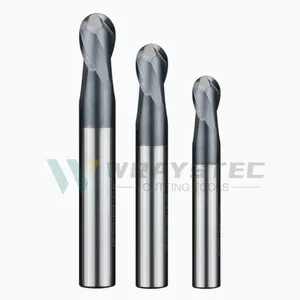
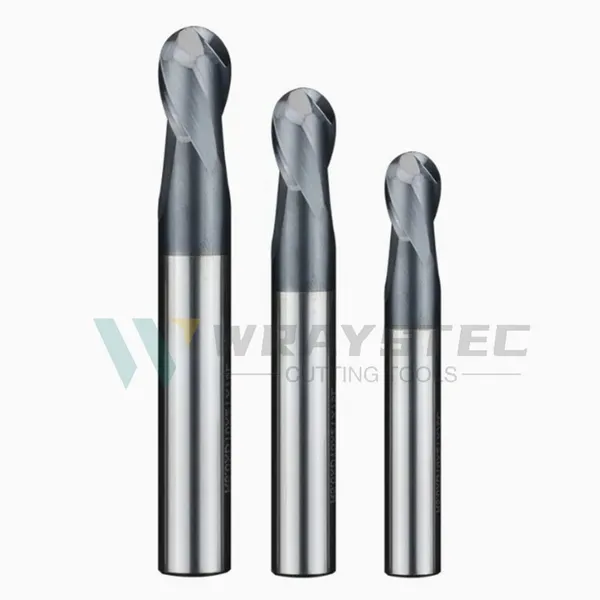
Ball Nose End Mill HRC 45/50/55/60 High-Quality Milling Cutter Tool for Steel







Related Products
-
 HRC 60 Tungsten Carbide Cutter Tool for Industrial Applications With CoatedNegotiableMOQ: 10 Blades
 -
High Precision Cutting Tool Solid Carbide Tools Coating 4 Flute Flat End Mill Square End Mill Milling Cutters for MetalNegotiableMOQ: 10 Blades
-
Micro Diameter Series-Long Neck Round Nose Milling Cutter for CNC Carbide CutterNegotiableMOQ: 10 Blades
-
S600 Series-Flat Milling Cutter U-Groove High-Efficiency Milling Cutter Carbide CutterNegotiableMOQ: 10 Blades
-
Irregular and Non-standard Tungsten Carbide Insert for High-Performance CuttingNegotiableMOQ: 10 Blades
Milling cutters come in a wide variety of types and can be classified according to different dimensions:
By mounting method:
Integral milling cutters: The tool shank and cutting part are a single unit, offering good rigidity. They are commonly used for small diameter tools (such as end mills).
Indexable milling cutters: The tool shank (body) and inserts are separate. The inserts are made of cemented carbide and are fixed to the tool body by mechanical clamping. Inserts can be quickly indexed (using a new cutting edge) or replaced when worn or chipped, making them economical and efficient. They are the mainstream choice for modern roughing and semi-finishing operations.
Welded milling cutters: Cemented carbide cutting heads are welded onto a steel tool body. These have been gradually replaced by indexable milling cutters.
By main processing application (the most common classification):
End mills: The most common type of milling cutter, similar to a drill but with cutting capabilities on the side edges. Used for milling flat surfaces, sides, steps, grooves, and complex three-dimensional contours. They are further subdivided based on the number of flutes, helix angle, and tip shape (flat bottom, ball nose, radius end).
Flat-bottom end mills: Used for finishing vertical sidewalls and flat bottoms.
Ball nose end mills: The end is hemispherical, used for machining three-dimensional curved surfaces and mold cavities.
Radius end mills: The end has a rounded corner, offering higher strength than flat-bottom cutters, used for roughing and contours with rounded corners.
Face mills/Disk mills: Large diameter cutters used for rapidly milling large flat surfaces. They are usually indexable, with multiple square or round inserts mounted on the tool body.
Three-sided milling cutters/Slotting cutters: Both the side and end edges have cutting teeth, specifically designed for milling straight grooves and stepped surfaces.
Keyway cutters: Specifically designed for machining keyways, usually double-edged, capable of direct axial entry (like a drill) followed by lateral milling.
T-slot cutters/Angle cutters: Used for machining specific shaped grooves, such as T-slots, dovetail slots, V-slots, etc.
Form milling cutters: The cutting edge shape matches the final shape of the workpiece, used for mass production of specific contours.

Send Inquiry to This Supplier


You May Also Like
-
12mm Round Carbide Inserts Cutters Knives Blades 12×2.5mm-30° Indexable Carbide Cutters for Woodworking LatheNegotiableMOQ: 10 Blades
-
CB6914-10 Brake Disc Repair Carbide Inserts Ammco Replacement for Cast Iron DoubleUS$ 1.05 - 2MOQ: 10 Blades
-
OEM/ODM Tungsten Carbide Blades Cutting Machine Blades Leather Cutting BladesNegotiableMOQ: 10 Blades
-
G Universal CNC Carbide Thread Insert External Teeth Cutter PVD/CVD Wire Picking Blade for Steel/Stainless OEMNegotiableMOQ: 10 Blades
-
High Quality Lathe Tool Carbide Threading Turning Insert Plastic Threaded Inserts 16ER AG60 for Stainless SteelNegotiableMOQ: 10 Blades
-
HSS Titanium Hinge Self Center Hole Centering Drill Bit High Speed Steel Center Drill Bit Drilling 1mm-5mmNegotiableMOQ: 10 Blades
-
Carbide Turning Tool Cemented Carbide Valve Seat Carbide Cutter for Engine MachineryNegotiableMOQ: 10 Blades
-
Carbide Milling Inserts SNMX1206ANN SNGU WDMW CNC Lathe Cutter Turning Tool SNMX SNGX Cutting InsetNegotiableMOQ: 10 Blades
-
YG8 Tungsten Carbide Jaws Wear Resistant Carbide Inserts for Drilling WellNegotiableMOQ: 10 Blades
-
RCMX RCGX RNGN CNGN WNGN Solid CBN InsertUS$ 1.05 - 5MOQ: 10 Blades