Contact Platform Support
 Help Center
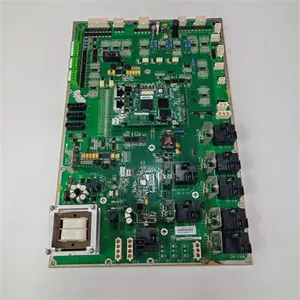
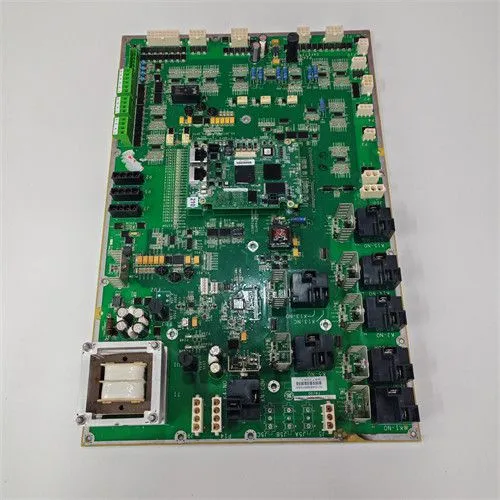
GE IS200WEMAH1AEA WEMA Series I/O Terminal Control Board



Related Products
-
 GE IS200TPROH1BBB TPRO Series Protection Terminal BlocksNegotiableMOQ: 1 Piece
 -
GE SR745-W2-P5-G5-HI 745 Series Transformer Monitoring RelaysNegotiableMOQ: 1 Piece
-
GE IC697PWR724 90-70 Series PLC Power Supply ModulesNegotiableMOQ: 1 Piece
-
GE IC800SSI228RD2-CE SSI Signal Input ModuleNegotiableMOQ: 1 Piece
-
GE IS200TBCIH2CCD Group-isolated Dry Contact Input Terminal BlockNegotiableMOQ: 1 Piece
1. Product Description
Model: IS200WEMAH1AEA
Version: Standard Edition (Functional Revision A)
Global Part Number: IS200WEMAH1AEA
Product Series: GE Speedtronic Mark VI / Mark VIe WEMA Series I/O Terminal Control Board (Wind Turbine optimized, compatible with thermal/gas turbine applications)
Product Category: Industrial-grade high-density mixed I/O terminal control board (integrates digital I/O, analog temperature measurement, relay driving, with signal terminal distribution, electrical isolation and fault diagnosis)
Country of Origin: USA
Core Functions
The IS200WEMAH1AEA is a dedicated WEMA series I/O terminal control board designed by GE Vernova for Mark VI/Mark VIe Speedtronic turbine and wind turbine control systems. Unlike general communication or pure control modules, its core advantage lies in integrated mixed I/O and terminal distribution, enabling direct interconnection between on-site sensors, actuators and controllers without additional adapter boards, while providing complete electrical isolation and fault diagnosis.It adopts industrial-grade high-reliability electronic components and conformal coating, standard with 27 digital isolated inputs, 2 analog thermistor temperature measurement inputs, 9 relay contact outputs, 3 solid-state relay outputs; 4 integrated terminal blocks, reinforced 2500V AC electrical isolation, built-in configurable filtering (0.1–10ms), digital input response ≤1ms, relay output response ≤8ms; integrated wind turbine-specific monitoring algorithms, supporting wind condition top box data collection, main shaft/gearbox/generator bearing vibration and temperature monitoring; communication compatible with GE proprietary backplane bus, Modbus RTU, seamlessly linking with Mark VIe controllers, HMIs and historians, plug-and-play without additional drivers.Front-mounted LED diagnostic array and graded alarm system, real-time monitoring of I/O channels, relay status, power health and communication links; supports three-level authority management (Administrator/Operator/Read-only), generating complete operation/fault/status logs; dual redundant 24VDC (±10%) power input, enhanced EMI/EMC design, compliant with IEC 61000-6-2 industrial standards, resistant to strong electromagnetic interference, salt spray and dust in wind power/thermal power sites, adapting to harsh outdoor/workshop environments, ensuring continuous and stable transmission of I/O signals and accurate execution of control commands.
Application Scenarios
Widely used in wind power (wind farm main control, pitch/yaw systems), gas turbines, steam turbines, combined cycle power plants, distributed energy and other energy industrial scenarios requiring high I/O density, system reliability and anti-interference capabilities, especially suitable for the joint deployment of Mark VIe wind power-specific control systems and Mark VI thermal/gas turbine control systems.Specific scenarios include: wind farm main shaft/gearbox/generator bearing temperature and vibration monitoring, pitch system digital interlock control; gas/steam turbine auxiliary system logic control, temperature/pressure/flow signal collection; combined cycle power plant multi-unit I/O centralized management; can be seamlessly integrated with GE CIMPLICITY HMI/SCADA, historians, HART smart instruments and third-party PLCs, deployed in on-site control station racks, working in conjunction with controllers through high-speed backplanes to achieve integrated on-site signal collection, interlock logic execution, control command output, equipment status monitoring and rapid fault alarm.
2. Specifications
| Parameter Category | Details |
|---|---|
| Software Specifications | Supported protocols: GE proprietary backplane bus, Modbus RTU; Functions: 27 digital inputs, 2 thermistor inputs, 9 relay outputs, 3 solid-state outputs, wind turbine vibration/temperature monitoring algorithms, adjustable filtering 0.1–10ms, three-level authority management, complete log export; Compatibility: seamless adaptation to Mark VI, Mark VIe controllers, supporting CIMPLICITY, GE Control System Toolbox; Diagnostics: I/O channel failure, relay sticking, power abnormality, communication interruption alarm, LED locates fault point and outputs error code |
| Hardware Requirements | Compatible control station racks: Mark VI 13/21-slot standard racks, Mark VIe cabinets; Interfaces: GE proprietary backplane interface, 2500V AC electrical isolation, 4 integrated terminal blocks, USB local configuration port; Installation: rack-mounted, standard rail size, fits 19-inch industrial control cabinets, weight approx. 0.5kg, protection class IP20 (card level) |
| Environmental Adaptability | Operating temperature: -30℃~+70℃; Storage temperature: -40℃~+85℃; Relative humidity: 5%~95% (non-condensing); Immunity: compliant with IEC 61000-6-2, built-in dual-stage EMI filter, conformal coating; MTBF≥12000 hours, dual redundant 24VDC power input, with CE, UL, RoHS certification, resistant to mechanical vibration and shock |
3. Installation and Maintenance Guide
Pre-installation Requirements
Environment: Must be installed in a dust-free, non-condensing, well-ventilated Mark VI/VIe standard cabinet, strictly prohibited near inverter power modules and high-voltage busbars; temperature -30℃~+70℃, humidity 5%–95% non-condensing; configure online UPS to ensure uninterrupted 24VDC power supply, strictly prohibited deployment with programming computers in the same cabinet to reduce interference risks.
System Preparation: The control station is pre-installed with the corresponding version of GE Control System Toolbox; necessary communication ports are opened; I/O mapping and filtering parameters are configured in advance, and backplane communication connectivity with Mark VIe controllers is tested.
Installation Procedure: Fix on the rack rail, ensure the backplane interface is fully inserted; connect dual redundant 24VDC power (reverse polarity strictly prohibited!), on-site signal lines; run Toolbox to complete firmware identification and parameter download, paths without spaces/Chinese characters; select "Keep configuration" during upgrades, confirm all LEDs are green, no alarms after restart.
Parameter Configuration: Set communication address and backplane rate; configure I/O channel mapping, filtering values, relay action delay; configure three-level permissions; test digital/analog acquisition, relay output, wind turbine vibration/temperature monitoring functions; specify log storage path and enable diagnostics.
Routine Inspection Points
Operating Status: Check LED indicators (green for normal power/communication/I/O, red for alarms), no abnormal overheating on the module surface (≤45℃); confirm I/O data is consistent with the field through CIMPLICITY, relays act normally, no sticking alarms.
Log Inspection: Export logs regularly, filter and handle I/O abnormalities, communication packet loss, permission change records in a timely manner; clean up expired logs to avoid storage overflow.
Network and Environment: Check terminal blocks, backplane connections, power lines for looseness; cabinet temperature and humidity meet requirements; UPS and redundant power supplies operate normally; recheck grounding resistance
Parameter Verification: Confirm model and part number (IS200WEMAH1AEA); no abnormal modifications to communication, filtering, I/O configurations; test I/O response and relay action reliability.
Periodic Maintenance
Monthly: Remove dust from the module and cabinet (focus on cleaning terminal blocks and backplane interfaces); back up I/O configurations and control programs; check power and communication interfaces for looseness; test LED diagnostics and alarm functions.
Quarterly: Check CPU, memory, disk usage of the control station; update system and Toolbox patches; recheck permissions; fine-tune filtering parameters according to season/load; troubleshoot potential hardware risks and implement GE official safety recommendations.
Semi-annually: Perform full backup of configurations and historical logs; verify module firmware integrity; validate and install GE official patches in a test environment; restart to release resources; check electrical isolation performance and redundant power switching; evaluate module health, perform preventive replacement if necessary.
4. Common Faults and Troubleshooting
| Fault Symptom | Possible Causes | Troubleshooting & Solutions |
|---|---|---|
| Module fails to start, initialization error | Missing driver/configuration components; incompatible version; corrupted configuration file; poor backplane contact | Install the complete Control System Toolbox; confirm version compatibility with Mark VI/VIe; import backup configuration; reinsert the module and fasten the backplane interface |
| Unable to communicate with Mark VIe controller | Incorrect address/rate configuration; backplane bus failure; damaged communication module | Verify communication parameters and test connectivity; check backplane cables and slots; replace with a spare communication module |
| No I/O response/large data deviation | Incorrect wiring/loose terminals; unreasonable filtering; channel failure; sensor fault | Recheck and tighten wiring; adjust filtering to 1–3ms; switch to a spare channel for testing; check on-site sensors |
| Abnormal relay output/sticking | Overloaded load; aging relay; short circuit in output loop | Verify the load is within the rated range; replace the faulty relay; troubleshoot the short circuit in the output loop and repair |
| Frequent module restart/power alarm | Voltage fluctuation beyond 24VDC±10%; poor grounding; excessive EMI interference; faulty power module | Check UPS and redundant power supply; repair grounding resistance |

Send Inquiry to This Supplier


You May Also Like
-
GE IS200TRLYH1B Relay Output Terminal BoardNegotiableMOQ: 1 Piece
-
GE IS200TCATH1ABA Simulation Terminal BoardNegotiableMOQ: 1 Piece
-
GE IS420ESWAH2A Unmanaged Ethernet / IONet SwitchesNegotiableMOQ: 1 Piece
-
GE IS200AEPGG1AAA Drive Control ModuleNegotiableMOQ: 1 Piece
-
GE DS6800CCIE1F1D Digital Input/Output (I/O) ModulesNegotiableMOQ: 1 Piece
-
GE IS200TVIBH2BBB Vibration Terminal Board (TVIB)NegotiableMOQ: 1 Piece
-
GE IS200EPMCH1 EPMC Card, PCI Mezzanine CardNegotiableMOQ: 1 Piece
-
GE 531X304IBDAMG1 Isolated Terminal Block for Contact Input GroupsNegotiableMOQ: 1 Piece
-
GE DS200IQXSG1AAA Inverter Snubber Board,IQXSNegotiableMOQ: 1 Piece
-
GE IS215WEMAH1A WEMA and BPPS BoardNegotiableMOQ: 1 Piece