


 Contact Platform Support
 Help Center
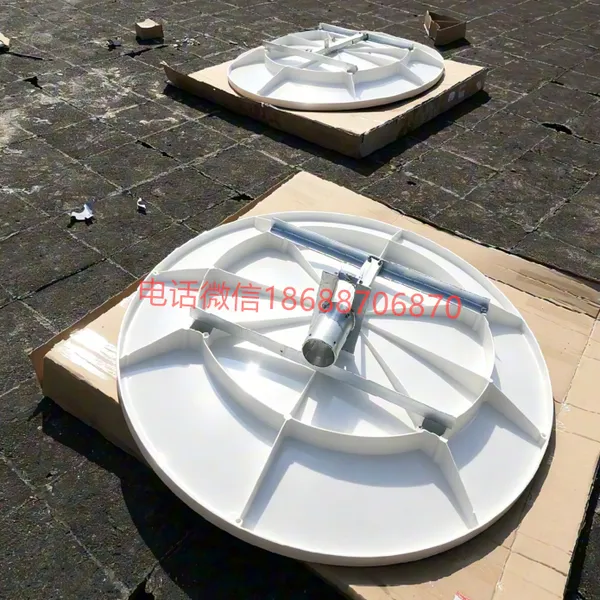
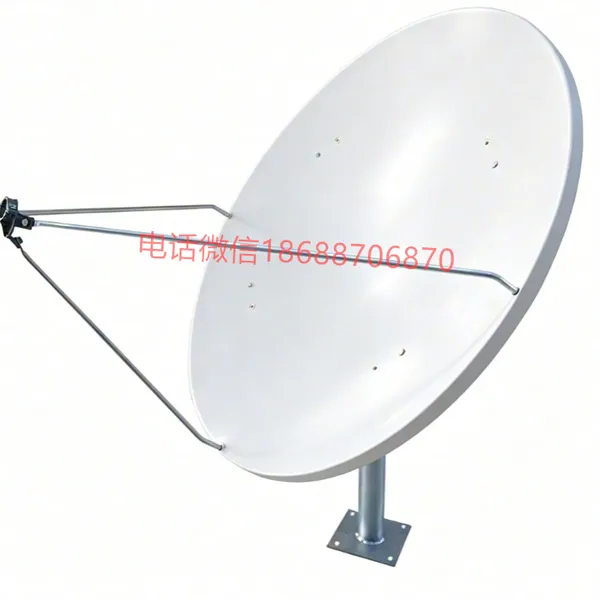
SMC Fiberglass Satellite Dish Antenna Satellite Dishes 0.45m, 0.75m, 1.2m, 1.8m, 2.4m, 3m, 3.7m, 4.5m, 6m, 6.7m and 16m
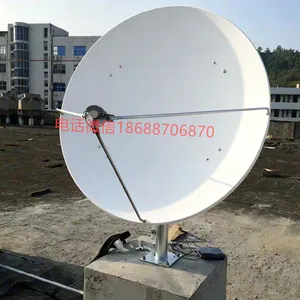
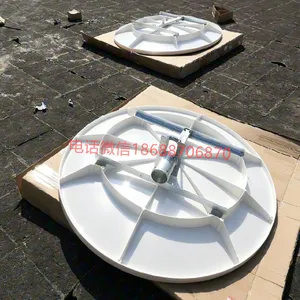
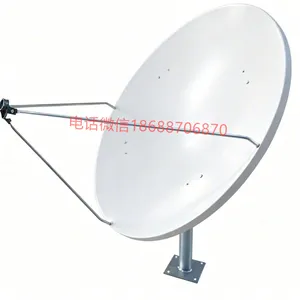
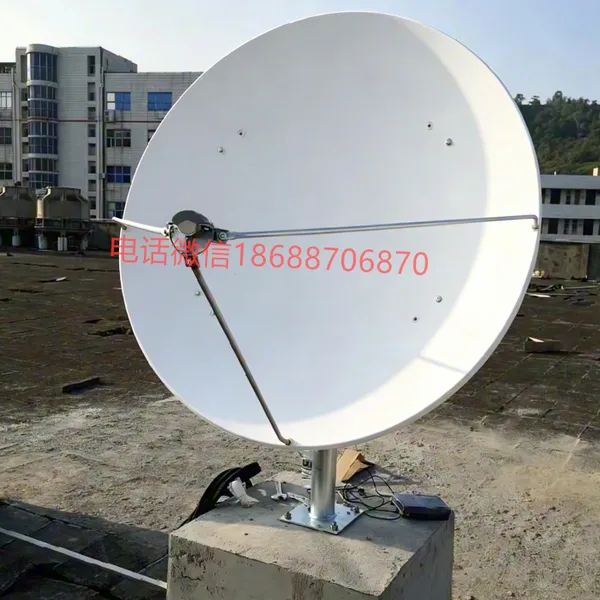
Product Spotlights







Related Products
Shenzhen Huashi Digital Technology Co., Ltd.
Supplies satellite dishes in sizes of 0.45m, 0.75m, 1.2m, 1.8m, 2.4m, 3m, 3.7m, 4.5m, 6m, 6.7m and 16m, supporting C, Ku, Ka, Q, V Bands.
Satellite antenna features and parameters:
Main tech parameters:
Frequency range:10.75-12.95GHZ,3.4-4.2GHz
Gain:44.0 dB
3dB:0.9°
First sidelobe :-20dB
Polarization isolation:>30dB
VSWR:Noise temperature (30 ° elevation angle): 35 ºk
Pitching/Orientation:manual adjustment
Bearing the adjusting rang is :0°—360°
The adjusting range of elevation :5°—85°
Feed interface:WR75
Wind loading rating:operation under 10 wind ,normal under 12 wind
Temperature :-45℃ - 120℃ Humidity :5% -95% Atmospheric Conditions:Salt , Pollutants and Contaminants as encountered in coastal and industrial areas
Reflector material:Glass fiber reinforced unsaturated polyester sheet molding compound(SMC)
Reflective surface thickness:3mm
I. Background & Industry Pain Points Addressed by Huashi Fiberglass Satellite Antennas
In coastal salt-fog zones, acid rain regions, high-humidity areas, and open-air environments exposed to intense solar radiation, traditional metal antennas (aluminum sheet, steel plate) suffer from widespread defects as follows:
Rapid corrosion: Metals degrade noticeably within 3 to 5 years under the erosion of salt mist and acid rain.
Signal attenuation: Rust layers alter surface electrical conductivity, reducing signal reflection efficiency.
High maintenance costs: Regular rust removal and anti-corrosion repainting are mandatory, and downtime maintenance disrupts continuous communication.
Limited wind resistance: Thin stamped metal sheets tend to deform or even fracture under strong winds.
These flaws pose critical risks for high-reliability scenarios including satellite earth stations, railway communication systems, offshore platforms, and border surveillance facilities.
II. Material Advantages of SMC Fiberglass Antennas from Shenzhen Huashi Digital Technology Co., Ltd.
SMC (Sheet Molding Compound) is manufactured by hot-pressing a blend of unsaturated polyester resin, glass fiber, and ultra-fine inorganic fillers under high temperature and pressure. Its non-metallic nature fundamentally eliminates metal oxidation issues.
1. Corrosion Resistance Test Data
Chemical immersion test: Specimens soaked in 130 types of highly corrosive chemical media at 50°C for extended periods showed nearly zero physical deterioration, with only minor color aberration on individual samples.
Salt spray test: No corrosion spots after 1,000 consecutive hours of testing (compliant with GB/T 10125 standard).
2. Environmental Tolerance Specifications
Item Parameter
Operating Temperature -30℃ ~ +70℃
IP Rating IP67 (Dustproof & Waterproof)
Wind Resistance Up to 45 m/s
Acid & Alkali Resistance Stable long-term performance at pH 3–11
UV Resistance No obvious aging for over 10 years
III. Structural & Process Innovations
Multi-directional Reinforcement Rib Design
Radial and circumferential rib reinforcements greatly boost overall structural rigidity, delivering superior wind load capacity compared to metal antennas of the same size.
Embedded Aluminum Mesh Reflective Layer
An aluminum mesh is fully encapsulated inside the SMC shell. This design preserves electromagnetic reflection performance while completely isolating the reflective layer from atmospheric corrosion, delivering consistent long-term signal stability.
High-Temperature High-Pressure Compression Molding
Excellent batch consistency and ultra-high geometric precision, eliminating the need for on-site calibration;
Ultra-smooth surface that minimizes wind drag and water droplet accumulation.
IV. Typical Application Scenarios
1. Satellite Communication
Earth & ground station systems: High-precision reflective surfaces ensure precise signal focusing, while superior corrosion resistance delivers maintenance-free long-term operation.
Shipborne satellite systems: Resists salt fog and UV radiation, ideal for ocean-going vessels.
2. Railway & Rail Transit
Signal transmission radomes for high-speed trains, supporting real-time communication at speeds over 300 km/h; vibration-resistant construction withstands persistent track impact loads.
3. Offshore Engineering
Communication equipment for offshore drilling platforms and floating storage units; island base station antennas engineered to withstand typhoons and salt fog erosion.
4. Automotive & Intelligent Transportation
Vehicle-mounted radar housings for ADAS and autonomous driving; monitoring antennas for smart urban traffic systems.
5. Military & Aerospace
Zero-expansion composite support structures reinforced with carbon fiber; spherical and annular pressure vessels reinforced with aramid fiber, deployed in spacecraft and deep-sea submersibles.
V. Full Lifecycle Economic Benefit Analysis
Indicator Metal Antenna SMC Fiberglass Antenna
Initial Procurement Cost Low Slightly Higher
Average Service Life 1–2 Years ≥20 Years
Annual Maintenance Expense High Minimal
Signal Stability Degrades Over Time Long-Term Consistent
Replacement Frequency Frequent Extremely Low
Conclusion: Despite marginally higher upfront investment, SMC fiberglass antennas cut total lifecycle costs by over 50% and drastically mitigate operational risks stemming from equipment malfunctions.
VI. Selection & Procurement Guidelines
Clarify operating environments: Specify anti-weather grades for salt-fog, acid rain, and frigid zones.
Evaluate reflective layer specifications: Aluminum mesh thickness and grid density directly impact signal gain.
Verify supplier credentials: Prioritize manufacturers with military and aerospace project track records.
Inspect official certification and test reports: Salt spray resistance, wind tunnel, and IP rating test documentation.
Confirm installation compatibility: Standardized vertical/horizontal mounting interfaces simplify on-site construction.
VII. Future Industry Development Trends
Material Optimization: Nanofiller-modified SMC to enhance dielectric performance and mechanical strength.
Intelligent Manufacturing: Automated compression molding paired with AI quality inspection to shorten delivery lead times.
Integrated Multifunctionality: Combined antenna-sensor modules to deliver both communication and environmental monitoring capabilities.
Eco-Friendly Production: Recyclable resin formulations to lower carbon emissions during manufacturing.

Send Inquiry to This Supplier


You May Also Like
-
 X Band LNAUS$ 200MOQ: 1 Combo
 -
C Band LNAUS$ 176 - 500MOQ: 1 Combo
-
S Band LNA,Huashi LNA,LNAUS$ 108 - 118MOQ: 1 Combo
-
L Band LNA,LNA,Huashi,Huashi LNAUS$ 880 - 1165MOQ: 1 Combo
-
P Band LNA,LNA,GARDINER,Huashi LNAUS$ 1165MOQ: 1 Combo
-
Q Band LNA,GARDINER LNA,LNA,Huashi LNAUS$ 200MOQ: 1 Combo
-
V Band LNA,LNA,GARDINER LNA,Huashi LNAUS$ 200MOQ: 1 Combo
-
5G Interference Mitigation LNA | C-Band Low Noise Amplifier | GARDINERUS$ 780 - 855MOQ: 1 Combo
-
P/L/S/C/X/ku/Ka/Q/V/W Band Lo ConvertorUS$ 118MOQ: 1 Combo
-
Ku-Band LNA 10.7-14.5GHzUS$ 1300 - 2000MOQ: 1 Combo


