Contact Platform Support
 Help Center
Waste Heat Evaporator



Related Products
-
 TVR EvaporatorNegotiableMOQ: 1 Set
 -
Multiple-effect Evaporator (MEE)NegotiableMOQ: 1 Set
-
Tubular Falling Film EvaporatorNegotiableMOQ: 1 Set
-
Mutiple-effect Forced Circulation EvaporatorNegotiableMOQ: 1 Set
-
Triple-effect Evaporating Crystalizer for Inorganic Salt ProductionNegotiableMOQ: 1 Set
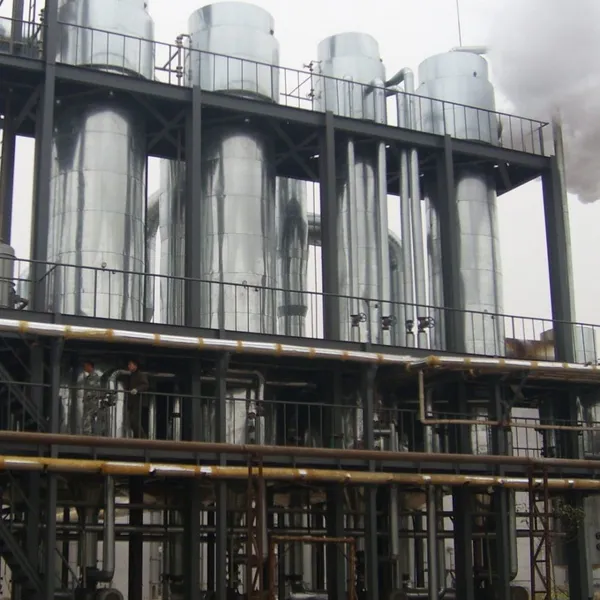
A Waste Heat Evaporator utilizes waste heat generated from other industrial processes as its energy source for evaporation and concentration. By recovering otherwise unused thermal energy, it significantly reduces steam consumption and operating costs while improving overall energy efficiency and supporting sustainable production.
Our waste heat evaporation systems are custom-engineered for each application, ensuring reliable operation and maximum heat recovery across a wide range of industrial processes.
Key Benefits
Energy-efficient operation through recovery of waste heat
Reduced steam consumption and lower operating costs
Improved overall plant energy efficiency
Environmentally friendly by reducing energy waste and carbon emissions
Customized design based on the characteristics of the available waste heat source
Suitable for a wide range of industrial concentration and wastewater treatment applications
Design Considerations
To achieve optimum performance, the waste heat source should be thoroughly evaluated during the engineering stage. Typical design parameters include:
Waste heat flow rate
Temperature (dry-bulb and wet-bulb)
Pressure
Gas composition
Dust or particulate content
Other process-specific operating conditions
If the waste heat contains dust or other contaminants, appropriate pretreatment or dust removal equipment is recommended to protect the heat exchange surfaces and ensure long-term stable operation.
Since waste heat generally has a lower energy density than saturated steam, waste heat evaporators require a larger heat transfer area. As a result, the installation footprint is typically 2–3 times larger than that of a conventional steam-heated multiple-effect evaporator.
The overall capital investment depends on the quality of the available waste heat. Higher-temperature waste heat enables a more compact system with lower equipment costs, while lower-grade waste heat generally requires a larger heat transfer area and correspondingly higher investment.
Although the initial investment is typically higher than that of a steam-heated evaporator, the substantial reduction in steam consumption and operating costs often provides an attractive return on investment over the system’s lifetime.
Capacity Range
Each system is individually designed to meet customer requirements, with evaporation capacities ranging from 0.1 to 200 tons/hour.

Send Inquiry to This Supplier


You May Also Like
-
Falling Film Evaporator With Molten Salt System for Caustic Soda 50% - 99% ConcentrationNegotiableMOQ: 1 Set
-
Triple-effect Forced Circulation Evaporator for Calcium Chloride ConcentrationNegotiableMOQ: 1 Set
-
Triple-effect Forced Circulation Evaporator for Industrial Wastewater TreatmentNegotiableMOQ: 1 Set
-
Double-effect Forced Circulation Evaporator for Crystallization of Inorganic SaltNegotiableMOQ: 1 Set
-
Multiple-effect Crystallization Evaporator for Wastewater DesalinationNegotiableMOQ: 1 Set
-
Triple-effect Falling Film Evaporator for Sodium SulphideNegotiableMOQ: 1 Set
-
Five-effect Falling Film Evaporator for Glucose ConcentrationNegotiableMOQ: 1 Set
-
TVR (Thermal Vapor Recompression) Evaporator for Evaporation and ConcentrationNegotiableMOQ: 1 Set
-
Double-effect Forced Circulation Evaporator for Electroplating Effluent TreatmentNegotiableMOQ: 1 Set
-
Multiple-effect TVR (Thermal Vapor Recompression) Evaporator for Juice ConcentrationNegotiableMOQ: 1 Set