Contact Platform Support
 Help Center
Flammable Storage Cabinet for Manufacturing Plants — Vents You Can Set, Not Just Seal Them
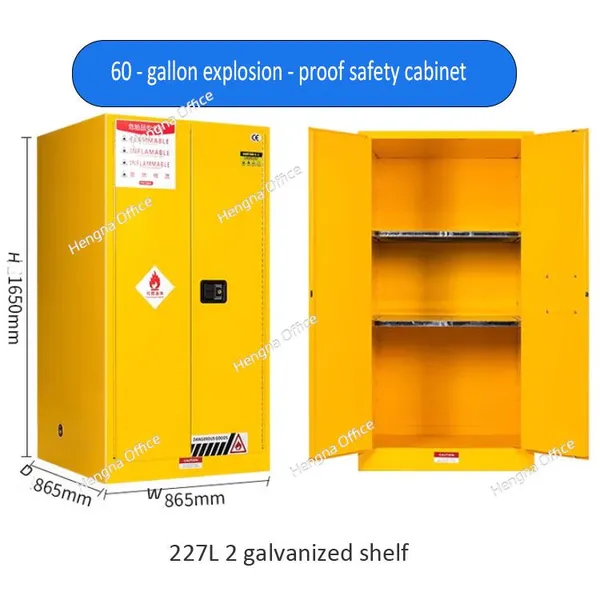
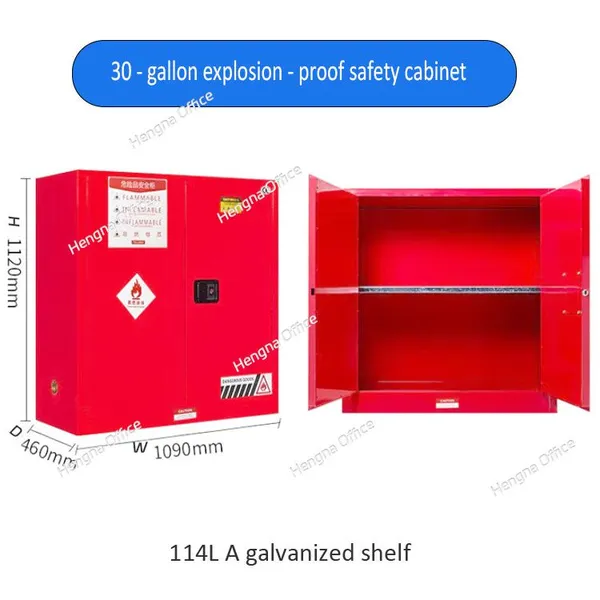
Product Spotlights





Related Products
-
 4-110 Gallon Fire Resistant Chemical Safety Cabinets for Industrial Storage | Luoyang HengnaUS$ 68 - 400MOQ: 2 Combos
 -
Factory-direct 45 Gallon OSHA Compliant Flammable Cabinet – Fire-Resistant Chemical StorageUS$ 68 - 400MOQ: 2 Combos
-
90 Gallon Flammable Safety Cabinet – 30 Approved Fire-Resistant Chemical Storage SolutionUS$ 68 - 400MOQ: 2 Combos
-
Large Capacity Flammable Liquid Storage Cabinet – Explosion-Proof Safety Cabinet for Laboratory & Workshop UseUS$ 68 - 400MOQ: 2 Combos
-
Explosion-Proof Industrial Flammable Cabinet – Heavy Duty Fireproof Storage for Hazardous Liquids (30/45/60 Gallon)US$ 68 - 400MOQ: 2 Combos
Flammable Storage Cabinet for Manufacturing Plants — Vents You Can Set, Not Just Seal Them
Short answer: most flammable storage cabinets fail a plant walkthrough on things an inspector can check in thirty seconds. A missing label. A door that does not latch. A vent left open. A grounding wire still in its bag. The cabinet itself is rarely the problem. So buy one where the details are adjustable and visible. Everything below is what those details are.
1. What an inspector sees in the first thirty seconds
Walk a plant with an EHS manager the week before an audit and you learn where the time goes. Not the inside of the cabinet. The outside.
| What they look at | What they are checking | What you need to show |
|---|---|---|
| The label | That it reads Flammable, Keep Fire Away, in a language your team reads | A label visible at floor level |
| The doors | That they close and latch without being held | A latch that engages on its own |
| The vents | Whether the vent state matches your written procedure | A vent that can be set either way |
| The ground wire | That it runs to a real earth point, not coiled on the lid | A fixed, visible grounding run |
| What is inside | That flammable and corrosive liquids are not sharing shelves | A colour code the team follows without thinking |
| Where it sits | Distance from exits, heat and spark sources | A marked position, not wherever it fits |
None of that is exotic, and all of it is visible. Every item was decided when you bought the cabinet.
2. The vent is the part everyone gets wrong
If one item on that list gets argued about, it is the vent.
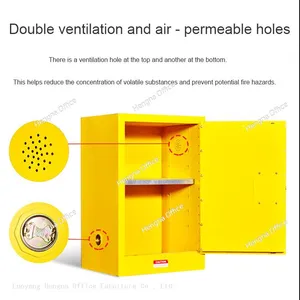
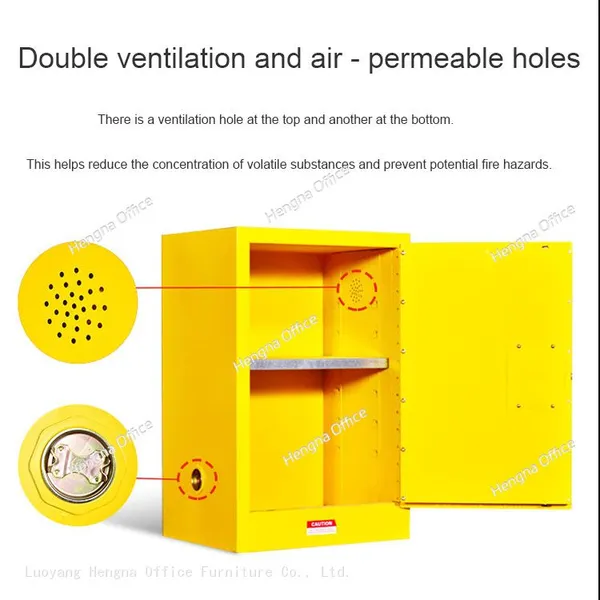
A vent on a flammable liquid cabinet has one job: to let you connect the cabinet to an exhaust system if the installation requires it. It is not a permanent opening. A cabinet permanently open to the room has traded away part of its fire performance to solve a problem you may not have.
Three states, and only one is right for a given plant.
Closed. The default for most manufacturing plants. Vapour stays contained, the fire envelope stays intact, and room ventilation handles the rest.
Ducted. For a cabinet in a small enclosed room, or where the liquids inside have a low odour threshold and the room cannot clear vapour on its own.
Open to the room. Almost never correct. It is what people do when the vent cannot be closed and they want the smell gone.
The right answer changes with the installation, and the inspector knows it. What gets tested is whether the vent state matches your written procedure, not whether it is open.
So at the buying stage, you want a vent you can set, with a flame arrester either way and a cap that closes properly. A fixed perforated panel removes an option you may need.
3. Colour is not decoration
Manufacturing plants rarely store one kind of liquid. A single maintenance room can hold solvents, cutting fluid and a few drums of something corrosive. Mixing them is the shortest route to a finding.
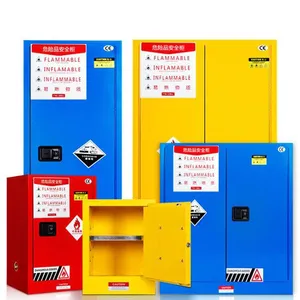
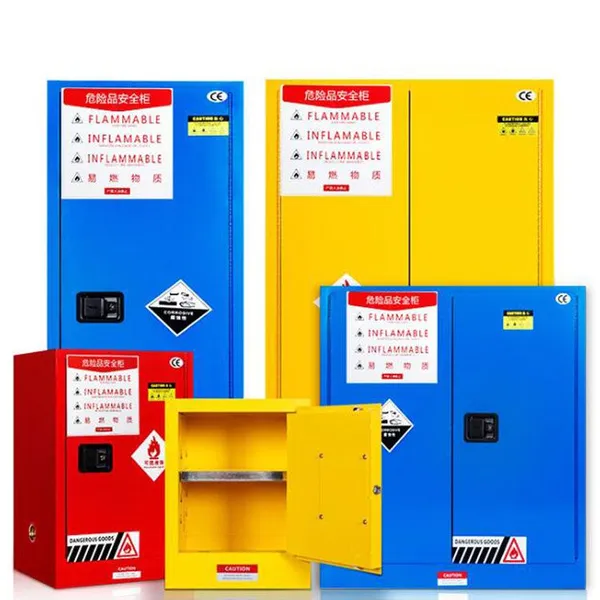
| Cabinet colour | What it is for | Typical plant contents |
|---|---|---|
| Yellow | Flammable liquids | Solvents, thinners, parts washer fluid, aerosols |
| Red | Combustible liquids | Paints, inks, coatings, higher flash oils |
| Blue | Weak acids and bases | Small quantities of plating and cleaning chemicals |
One supplier covering all three classes matters more than it sounds. Three classes from three sellers means three lead times and three sets of spares.
4. What the cabinet itself has to have
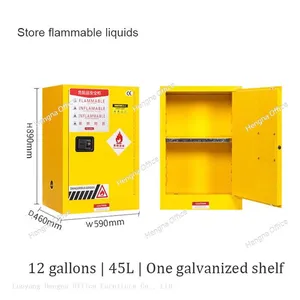
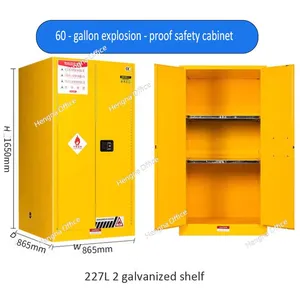
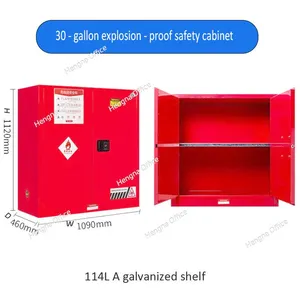
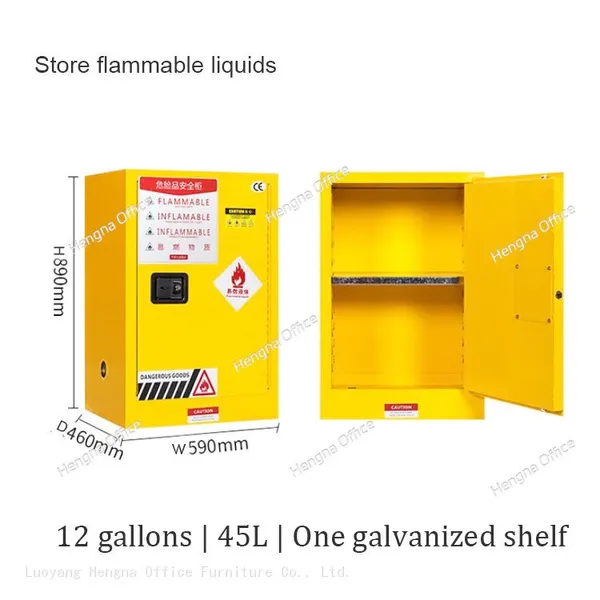
The 2026 Hengna range runs six capacities on the same construction, from a 22 gallon unit for one maintenance bay up to a 110 gallon cabinet for a central store. The 45 gallon flammable storage cabinet is the size most plants settle on. But a fire resistant chemical cabinet is judged on more than gallons.
Three-point latch on a continuous piano hinge. The door engages at three points when pushed shut, not one, and the hinge does not sag over years of use. A sagging door stops latching.
Adjustable vent with a flame arrester and closing cap. Set it closed, or duct it. Either way the arrester stays in the path.
Grounding wire and terminal. Fixed, visible, connected, not coiled on the lid.
Reflective label plus the standard Flammable warning. The reflective part earns its place in a power outage.
Three colour options. Yellow, red and blue, so one order covers every liquid class on site.
Any model can ship as a CE certified safety cabinet. Warranty is one year, and MOQ is a single unit, which matters when you are replacing one cabinet rather than fitting out a building.
5. Turning the cabinet into an inspection item, not an inspection risk
Write the vent state into your procedure. Closed unless ducted is one sentence. Without it, the vent becomes a matter of opinion on walkthrough day.
Give the cabinet a marked position. Painted outline on the floor, clear of exits and heat. A cabinet tucked behind pallets gets written down.
Test the ground wire once a year. A grounding terminal is only worth having if somebody checks it.
Post the liquid classes and keep a simple log. What belongs in the cabinet on one page on the door. The log is for you, so you know when it reaches 80% and you need a second unit.
6. Four things that come back as findings
Vent left open to stop the smell. The cabinet was never the problem. The room's ventilation was.
Aerosols in a yellow cabinet, unlisted. Nobody objects to the cans. They object that the inventory does not mention them.
Cabinet in the wrong place. If it blocks a route to an exit, nothing else about it matters.
Grounding wire still in the bag. Common enough that inspectors ask for it by name.
7. FAQ
Do flammable cabinets need to be vented? Not by default. The vent exists so the cabinet can be ducted if the installation needs it. In most plants the cabinet stays closed and room ventilation does the work. What gets checked is whether the vent state matches your procedure.
What is a flammable storage cabinet for? Holding flammable and combustible liquids in a fire resistant enclosure, so a fire inside stays inside long enough for the plant to respond. It buys time. It does not extinguish anything.
How do I choose one? Match the colour to the liquid class, the capacity to what you actually hold, then check the three things you cannot retrofit: vent design, latch mechanism and hinge.
Can acids and solvents share a hazardous material storage cabinet? No. Different classes belong in different cabinets, ideally in different parts of the room.
MOQ, terms and lead time? One unit minimum. EXW, FOB and CIF. Standard units ship in 7 to 15 working days, custom work in 20 to 30. We confirm the details with your quote.
Warranty and after-sales? One year, with shelves, vents, latches and grounding terminals available as spares.
OEM and ODM? Yes. Silk-screen logo, custom packaging, custom manuals, plus custom sizes and colours.
Packaging and quote speed? Moisture film, corner protectors, separate packing for the body, doors and shelves, hardware bagged on its own. Quote within 24 hours.
Who are you? Luoyang Hengna Office Furniture Co., Ltd. Nine years in steel furniture, working directly with the production facilities that build our range. Our own trademark.

Send Inquiry to This Supplier



You May Also Like
-
Flammable Storage Cabinet for Flammable Liquids – OSHA Certified Safety Cabinet With Fireproof Double WallsUS$ 68 - 400MOQ: 2 Combos
-
45 Gallon Explosion-Proof Flammable Liquid Storage Cabinet – Fire-Resistant Steel Safety Cabinet for FactoriesUS$ 68 - 400MOQ: 2 Combos
-
90 Gallon Industrial Fireproof Flammable Storage Cabinet – Dual-Lock Security With Anti-Static DesignUS$ 68 - 400MOQ: 2 Combos
-
Hengna Office 90 Gallon Fireproof Flammable Cabinet – Heavy-Duty Hinges & Triple-Lock ProtectionUS$ 68 - 400MOQ: 2 Combos
-
Yellow 30 Gallon Fire-Resistant Safety Cabinet for Flammable Liquids With Adjustable Shelves & VentilationUS$ 68 - 400MOQ: 2 Combos
-
Red 30 Gallon Fireproof Flammable Storage Cabinet With Adjustable Shelving System - Color Coded for SafetyUS$ 68 - 400MOQ: 2 Combos
-
Hengna Office Industrial Explosion-Proof Safety Cabinet With Spill Sump & Grounding Port - (22-110 Gallons)US$ 68 - 400MOQ: 2 Combos
-
Fireproof Chemical Safety Cabinet & Adjustable Ventilation - Industrial Grade Hazardous Material StorageUS$ 68 - 400MOQ: 2 Combos
-
110 Gallon Explosion-Resistant Chemical Safety Cabinet - Color-Coded for Flammable/Combustible/Corrosive Liquid StorageUS$ 68 - 400MOQ: 2 Combos
-
Juntuo-FGB Explosion-Resistant Hazardous Liquid Cabinet (4-110 Gal) - Reinforced Hinges & Dual-LockUS$ 68 - 400MOQ: 2 Combos