Material
Other, Global universal model
Condition
Other, Global universal model
Task
Other, Global universal model
Mathematical Model
Other, Global universal model
Signal
Other, Global universal model
Customized
Non-Customized
Structure
Other, Global universal model
Operating Temperature
-40℃~+85℃
Relative Humidity
5%~95% (non-condensing)
Dimensions
160mm × 100mm × 25.5mm
Storage Temperature
-55℃~+125℃
I. Overview
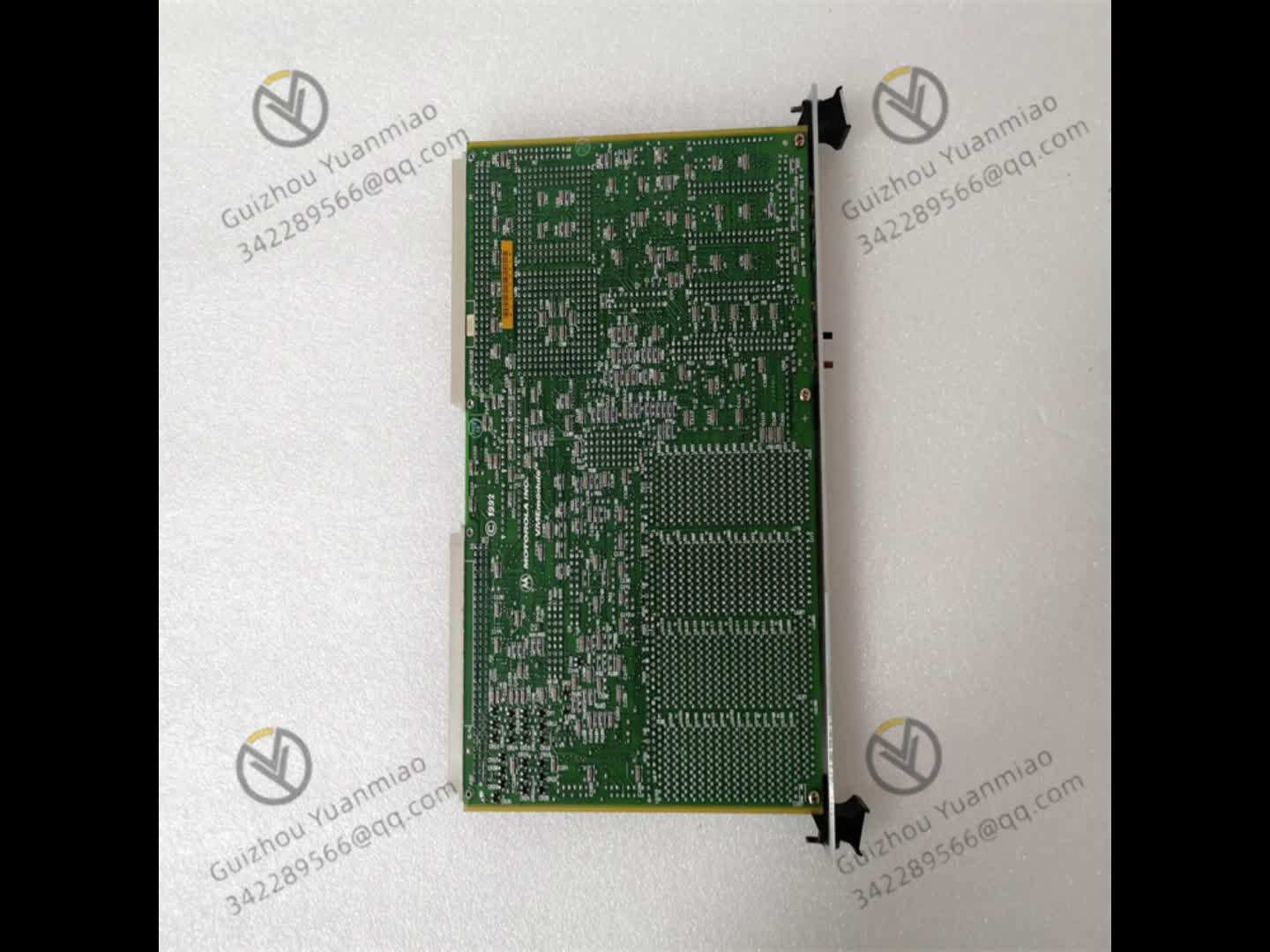
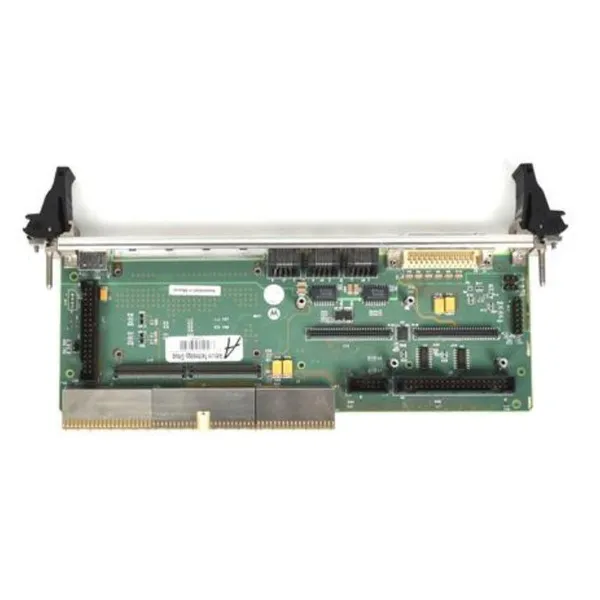
The MOTOROLA CPCI-6020TM is a Single-Board Computer (SBC) based on the CPCI (Compact PCI) architecture. Its core positioning is a "high-performance computing and multi-interface control core for embedded control systems in harsh industrial environments". It mainly serves fields with extremely high requirements for system reliability, real-time performance, expandability, and environmental adaptability, such as industrial automation control, rail transit signal processing, energy equipment monitoring, and aerospace ground testing. It undertakes the core tasks of "complex data computing and processing - multi-type peripheral management - real-time control command output - system stable operation guarantee".
With its core advantages of "high-performance computing core + standardized CPCI expansion + industrial-grade environmental adaptation + full-interface compatibility", this single-board computer has irreplaceable value in scenarios such as the construction of new embedded control systems (e.g., large-scale distributed industrial control nodes) and the upgrading of outdated systems (e.g., upgrading from traditional VME architecture to CPCI architecture). Its core role is to solve the three major pain points in industrial embedded control: "low efficiency of complex computing", "difficulty in compatibility with multiple peripheral interfaces", and "system instability in harsh environments". Through high-performance processors, standardized CPCI expansion slots, and industrial-grade protection design, it realizes real-time and precise control of on-site equipment (command response time ≤ 1ms) and efficient data processing (computing performance up to more than 500 MIPS), avoiding production interruptions caused by insufficient performance of the core control unit or poor environmental adaptability (the loss of a single interruption can reach hundreds of thousands of yuan) and ensuring the continuous and stable operation of industrial systems.
II. Technical Specifications
(1) Core Computing and Storage Parameters
Processor and Chipset
Processor: Adopts PowerPC 750FX/FXe processor with optional clock frequencies of 400MHz/533MHz. It is equipped with a 32-bit address bus and a 64-bit data bus, with integer computing performance of 400-533 MIPS and floating-point computing performance of 1.2-1.6 GFLOPS. It can efficiently handle complex logical operations in industrial control (such as multi-axis motion control algorithms), real-time data analysis (such as vibration data analysis in equipment condition monitoring), and multi-device collaborative control logic.
Chipset: Integrates Motorola MPC107 northbridge chip and customized southbridge chip, incorporating interrupt controller, DMA controller, timer, and PCI bus controller. This simplifies the design of external circuits, improves system bus bandwidth (CPCI bus rate up to 66MHz), and ensures data transmission efficiency.
Cache Configuration: L1 cache (separate data/instruction) of 32KB/32KB, and L2 cache of 256KB/512KB (fully associative, operating at the same frequency as the processor). This significantly reduces memory access latency and improves the response speed of complex computing.
Storage System
Memory: Standard configuration includes 256MB DDR SDRAM (expandable to 1GB), using industrial-grade wide-temperature memory chips and supporting ECC (Error-Checking and Correction) function. It can automatically detect and correct single-bit errors, and detect double-bit errors, avoiding system crashes caused by memory data errors.
Storage Media: Built-in 512KB Flash ROM (for storing system boot programs and solidified firmware) and 1GB/2GB industrial-grade CF card (optional, for storing application programs and configuration data). It supports permanent data storage after power failure, without relying on mechanical hard drives, making it suitable for high-reliability industrial scenarios without moving parts.
Storage Expansion: Supports 1 Ultra ATA/100 interface (can connect 2.5-inch industrial hard drives) and 1 SATA II interface (data transmission rate of 300MB/s), meeting the needs of large-capacity historical data storage (such as equipment operation logs and process parameter databases).
(2) Interface and Expansion Parameters
Standard Communication Interfaces
Serial Ports: 4 RS-232/RS-422/RS-485 switchable serial ports (mode configured via software) with a maximum baud rate of 921.6kbps. They support industrial communication protocols such as Modbus, Profibus-DP, and CANopen, and can be connected to devices like remote IO modules, intelligent meters, and serial printers.
Ethernet Interfaces: 2 10/100/1000Base-T Gigabit Ethernet interfaces (RJ45 ports), supporting protocols such as TCP/IP, UDP, and IPX/SPX. They support link aggregation and redundant backup, and can be connected to industrial Ethernet switches to realize high-speed data interaction between devices and remote monitoring.
USB Interfaces: 2 USB 2.0 interfaces (1 on the front panel, 1 on the backplane), supporting high-speed data transmission (480Mbps). They can be connected to peripherals such as USB storage devices and USB-to-serial adapters.
Other Interfaces: 1 VGA interface (supports 1280×1024 resolution, for connecting industrial displays) and 1 PS/2 interface (compatible with keyboards/mice, for on-site debugging).
CPCI Expansion and Module Interfaces
CPCI Expansion Slots: 2 32/64-bit CPCI bus expansion slots (compatible with CPCI 2.2 specification), supporting bus rates of 33MHz/66MHz. They can be connected to CPCI series expansion modules (such as CPCI-7450 digital IO module and CPCI-8154 analog acquisition module) to expand the number of interfaces and functions, adapting to control requirements of different scales.
Local Bus Expansion: 1 local bus interface (supporting 16-bit data width), which can be connected to dedicated functional modules (such as high-speed data acquisition cards and motion control cards) to meet functional expansion needs in special scenarios.
Backplane Interface: Standard J1/J2/J3 connectors conforming to CPCI specification, supporting hot-swap function (requires system support). Modules can be replaced without shutting down the system, reducing maintenance downtime.

(3) Physical and Environmental Parameters
Physical Specifications
Dimensions: 160mm (length) × 100mm (width) × 25.5mm (height), conforming to 3U CPCI standard card size. It can be installed in a 19-inch standard CPCI cabinet (3U height) or an embedded equipment chassis, saving installation space.
Weight: Approximately 350g. The lightweight design is suitable for scenarios sensitive to equipment weight, such as vehicle-mounted and shipborne applications.
Installation Method: Supports CPCI cabinet rail installation and panel fixed installation, with standard mounting holes compatible with the slide rails and fixed brackets of industrial cabinets.
Environmental Adaptability
Operating Temperature: -40℃~+85℃ (industrial wide-temperature range), meeting the operation requirements of extremely cold areas (such as outdoor control cabinets in Northeast China) and high-temperature workshops (such as near rolling mills in metallurgical plants). No preheating is required for startup at -40℃, and the startup time is ≤ 20s.
Storage Temperature: -55℃~+125℃, adapting to harsh transportation and storage environments (such as equipment warehouses in plateau and coastal areas).
Humidity: 5%~95% RH (non-condensing, conforming to IEC 60068-2-3 standard). In coastal high-humidity and high-salt-fog environments, the circuit board is coated with nano-scale three-proof paint (waterproof/dustproof/corrosion-proof), and key interfaces are gold-plated (corrosion rate ≤ 0.1μm/year) to avoid corrosion and poor contact.
Vibration and Shock Resistance: Vibration resistance grade of 15g (10Hz~2000Hz, conforming to IEC 60068-2-6), capable of withstanding continuous vibration during the operation of industrial equipment (such as vibration transmission from fans and compressors); shock resistance grade of 100g (1ms pulse, conforming to IEC 60068-2-27), able to resist instantaneous shocks during equipment handling and maintenance, as well as bumping shocks in rail transit scenarios.
(4) Power Supply and Reliability Parameters
Power Supply Requirement: Single-channel +5V DC/+12V DC dual-rail power supply (+5V current ≤ 5A, +12V current ≤ 2A), supporting a wide voltage input range (+4.75V~+5.25V/+11.4V~+12.6V), suitable for industrial on-site power environments with large fluctuations. It is equipped with overvoltage protection (automatic output cut-off when +5V ≥ 6V/+12V ≥ 14V), overcurrent protection (current limiting triggered when +5V ≥ 6A/+12V ≥ 2.5A), and reverse connection protection to prevent core components from being damaged by abnormal power supply.
Electromagnetic Compatibility (EMC): Conforms to EN 55022 Class B (radiated emission) and EN 55024 (immunity) standards. It has electrostatic discharge (ESD) protection of ±15kV (air discharge)/±8kV (contact discharge), radio frequency radiation immunity of 20V/m (80MHz~1GHz), and fast transient burst immunity of ±2kV (power supply terminal)/±1kV (signal terminal). In strong interference environments such as high-voltage motors and frequency converters, the system operates without crashes and data loss.
Reliability Index: Mean Time Between Failures (MTBF) ≥ 500,000 hours (Telcordia SR-332 standard, at 25℃), with a design life of ≥ 15 years. Key components (processors, memory, interface chips) adopt industrial-grade wide-temperature selection (operating temperature: -40℃~+125℃), and pins are gold-plated to improve long-term operation stability.
Fault Diagnosis: Built-in dual fault diagnosis functions at the hardware and software levels. At the hardware level, it can detect issues such as "memory errors", "power supply abnormalities", and "CPCI expansion module connection failures"; at the software level, it supports outputting fault codes through system logs (e.g., "E02 = Memory ECC Error", "E05 = CPCI Bus Interruption") and intuitively displays the system status through front-panel LED indicators (power/operation/fault/network), facilitating quick fault location.
III. Functional Features
(1) High-Performance Computing and Real-Time Control, Improving System Efficiency
Powerful Computing Core Support: The PowerPC 750FX/FXe processor features a high-frequency and large-cache design, with integer computing performance of 533 MIPS and floating-point computing performance of 1.6 GFLOPS. It can efficiently handle complex algorithms in industrial control (such as multi-axis linkage motion control algorithms and PID adaptive adjustment algorithms). For example, in the control of precision robotic arms in semiconductor production lines, it can calculate the motion trajectory of the robotic arm in real time (computing delay ≤ 50μs) with a control accuracy of ±0.01mm, improving the product processing qualification rate.
Real-Time Response Optimization: Adopts priority interrupt controller and DMA (Direct Memory Access) technology, with an interrupt response time ≤ 50μs, enabling priority processing of key control commands (such as emergency stop signals and equipment fault alarms); the CPCI bus rate reaches 66MHz, and the data transmission bandwidth is ≥ 528MB/s, ensuring no delay in data interaction between multiple modules and meeting the needs of real-time control scenarios (e.g., in rail transit signal processing, the interval between signal reception and command output is ≤ 1ms).
(2) Standardized CPCI Expansion, Compatible with Various Peripherals
Flexible Expansion Capability: The 2 CPCI standard expansion slots support connection to the full range of CPCI functional modules (digital IO, analog acquisition, motion control, communication expansion, etc.). During the expansion process, there is no need to modify the core program; only the module address and interrupt priority need to be configured via software, adapting to the functional upgrading of the control system. For example, in an energy monitoring system, adding a CPCI-8154 analog acquisition module (8-channel 4-20mA input) can add the function of collecting 8-channel current signals, realizing real-time monitoring of power grid current, with an expansion cycle of only 1 day.
Multi-Interface Compatibility: Integrates all types of industrial interfaces such as serial ports, Gigabit Ethernet, USB, and VGA. The serial ports support RS-232/RS-422/RS-485 mode switching, and the Ethernet supports link redundancy. It can simultaneously connect multiple types of peripherals such as remote IO modules, industrial switches, touch screens, and USB storage devices, without the need for additional adapter cards. This simplifies the system architecture and reduces integration costs (40% lower than traditional multi-interface splicing solutions).
(3) Industrial-Grade Environmental Adaptation, Ensuring Stable Operation
Wide-Temperature and Harsh Environment Resistance Design: Core components adopt wide-temperature models with a range of -40℃~+85℃, and the circuit board is coated with nano-scale three-proof paint (thickness ≥ 50μm), which can resist erosion from harsh environments such as high temperature, high humidity, and salt fog. In the monitoring equipment of outdoor wind farms in Northeast China, the system operates stably at -35℃ in winter, with a data collection error ≤ 0.1%; in the high-salt-fog environment of coastal petrochemical plants, it operates continuously for 5 years without interface corrosion or circuit board damage.
Strong Anti-Interference and Electromagnetic Compatibility: The power module is equipped with an EMC filter circuit (common-mode rejection ratio ≥ 80dB), and the signal interfaces adopt optocoupler isolation (isolation voltage ≥ 2500Vrms), which can effectively block ground loop interference and electromagnetic coupling interference. In the rolling mill control system of a steel plant, when installed close to a 200kW frequency converter, the system still operates stably, with no delay in control commands and no packet loss in data transmission (packet loss rate ≤ 10⁻⁹).
(4) Convenient Operation, Maintenance and Upgrading, Reducing Costs
Visual Status Monitoring: The front panel is equipped with 4 types of LED indicators: power (green), operation (blue, blinking = normal), fault (red, steady on = fault), and network (yellow, steady on = connected). On-site personnel can quickly judge the system operation status through the indicator light status; built-in debugging serial port and Ethernet remote debugging function allow viewing system logs and real-time data through terminal software or remote desktop, enabling fault troubleshooting without disassembling the equipment.
Convenient Firmware and Program Upgrading: Flash ROM and CF card support in-circuit programming (via Ethernet or USB), allowing remote upgrading of system firmware and application programs without on-site equipment disassembly. This is especially suitable for equipment in remote areas (such as oilfield wellhead monitoring units), reducing operation and maintenance costs by 60%; it supports the "dual firmware backup" function, which automatically switches to the backup firmware when the upgrade fails, avoiding system paralysis.


 Contact Platform Support
 Help Center