Material
Other, Global universal model
Condition
Other, Global universal model
Task
Other, Global universal model
Mathematical Model
Other, Global universal model
Signal
Other, Global universal model
Customized
Non-Customized
Structure
Other, Global universal model
Operating Temperature
-40℃~+70℃
Relative Humidity
5%~95% (non-condensing)
Dimensions
238mm × 160mm × 25.5mm
Storage Temperature
-55℃~+85℃
I. Overview
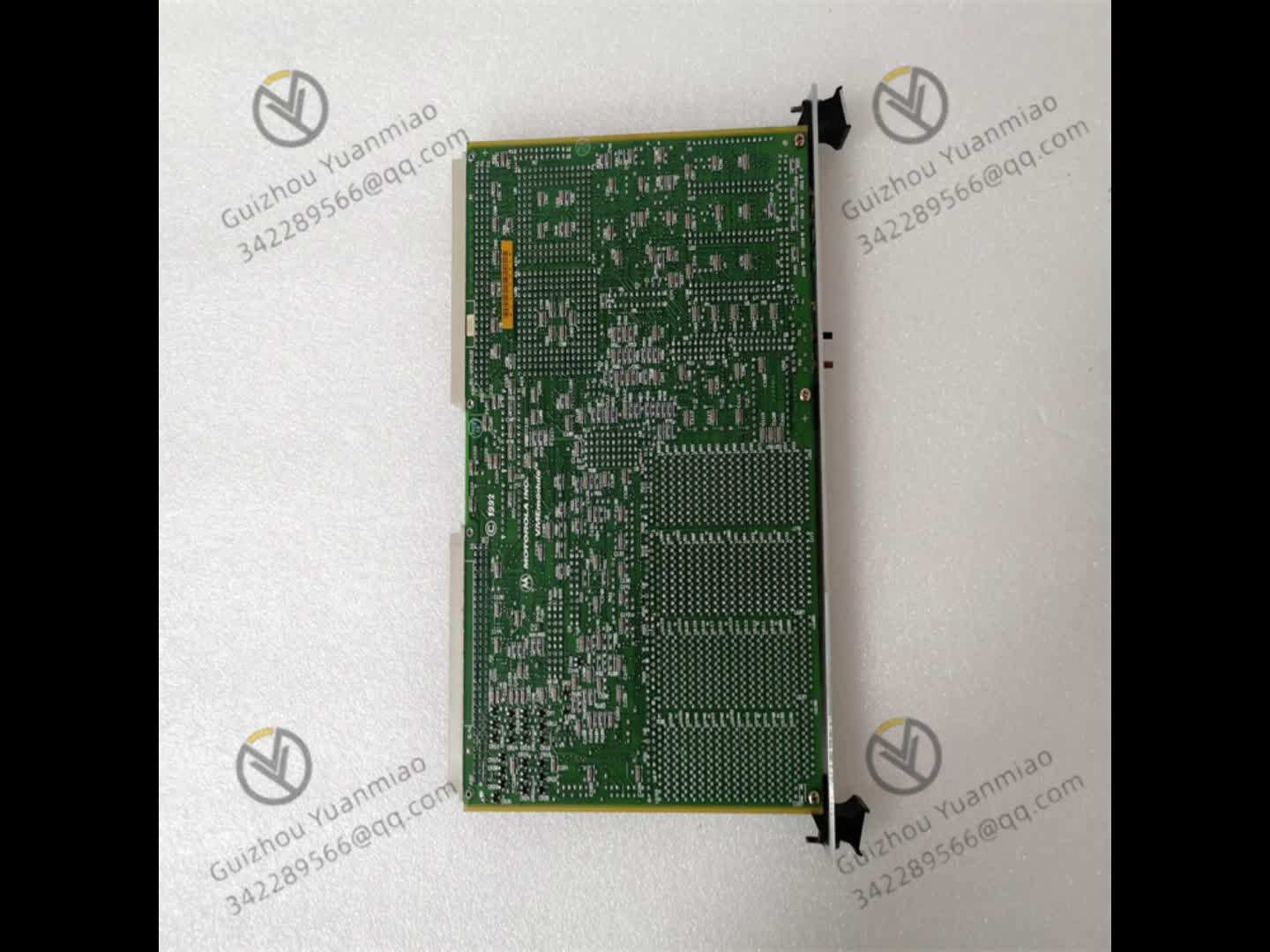
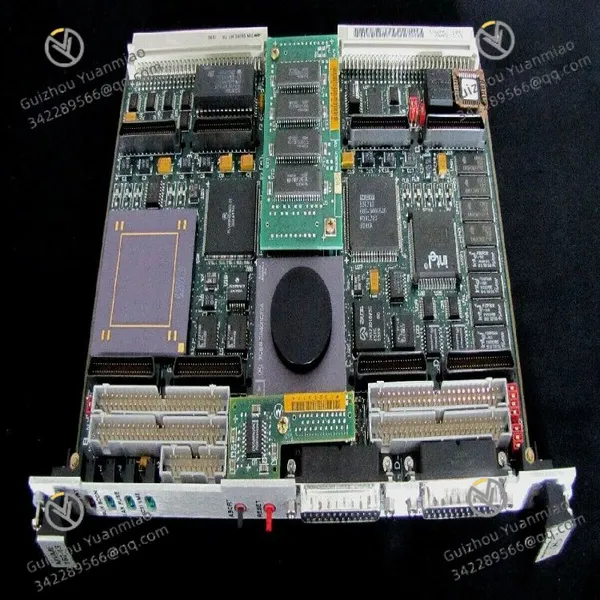
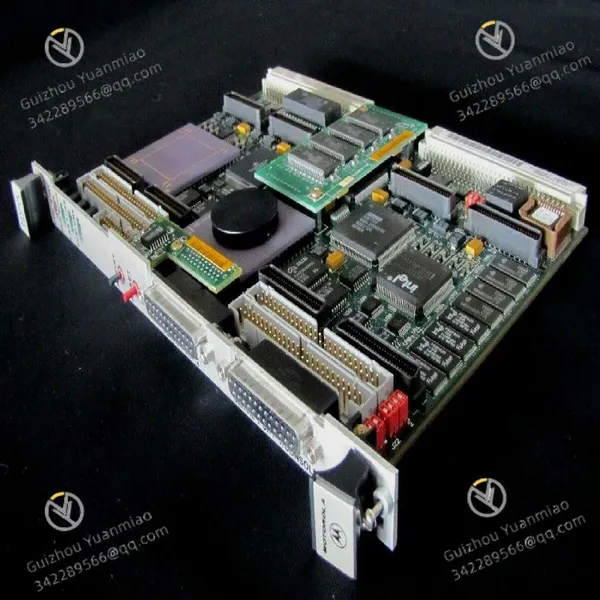
The MOTOROLA MVME162-10 is a Single-Board Computer (SBC) based on the VMEbus (VersaModule Eurocard bus) architecture. As a classic basic model in the MVME162 series, its core positioning is "a highly reliable computing and control core for embedded control systems in harsh industrial environments". It mainly serves fields with extremely high requirements for system stability, anti-interference capability, and environmental adaptability, such as power system monitoring, chemical process control, rail transit signal acquisition, and industrial equipment status monitoring. It undertakes the full-process core tasks of "equipment operation data collection - complex logic computing - real-time control command output - system fault monitoring".
With its core advantages of "industrial-grade stable hardware architecture + standardized VME expansion compatibility + wide-temperature and harsh environment-resistant design + low operation and maintenance costs", this single-board computer has significant value in scenarios such as the upgrading of outdated industrial control systems (e.g., replacing computing modules in traditional PLC control cabinets) and the construction of small and medium-sized embedded control nodes (e.g., single-machine equipment control, local process management and control). Its core role is to solve the three major pain points in industrial control: "equipment is prone to shutdown in extreme environments", "difficulty in compatibility with multiple peripheral interfaces", and "poor adaptability in upgrading outdated systems". Through mature processor architecture, standardized VME expansion slots, and industrial-grade protection design, it realizes precise control of on-site equipment (command response time ≤ 3ms) and stable data processing (computing performance up to 15 MIPS), avoids production interruptions caused by the failure of the core control unit (the loss of a single interruption can reach tens of thousands of yuan), and ensures the continuity and stability of industrial production.

II. Technical Specifications
(1) Core Computing and Storage Parameters
(2) Interface and Expansion Parameters
(3) Physical and Environmental Parameters
(4) Power Supply and Reliability Parameters

III. Functional Features
(1) Industrial-Grade Stable Operation, Adaptable to Extreme Environments
Wide-Temperature and Anti-Interference Design
Core components (processor, memory, interface chip) all adopt industrial-grade wide-temperature models with a range of -40℃~+70℃; the circuit board is coated with thin-type three-proof paint (moisture-proof, dust-proof, anti-corrosion), enabling stable operation in coastal high-humidity salt-fog environments and cold outdoor environments in northern regions; the power module is equipped with an EMC filter circuit (common-mode rejection ratio ≥ 70dB) to reduce external electromagnetic interference (such as interference from frequency converters and high-voltage motors). In the high-electromagnetic environment of chemical workshops, the data transmission distortion rate is ≤ 0.1%, and there is no delay in control commands.
Redundancy and Fault-Tolerance Mechanism
The memory supports parity check function, which can automatically detect and correct single-bit errors, avoiding program crashes caused by memory data errors; the system boot program (in EPROM) has built-in "fault self-recovery" logic. When the application program crashes, it can automatically restart and load the backup program within 5 seconds, reducing manual intervention; the power interface adopts an anti-reverse connection design, preventing equipment damage caused by on-site personnel's wiring errors and reducing maintenance costs.
(2) Standardized VME Expansion, Compatible with Various Peripherals
Flexible Expansion Capability
Through the VMEbus slot, it can access the full range of MVME expansion modules. There is no need to modify the core program; functions can be expanded quickly only by configuring the module address and interrupt priority through software. For example, in power equipment monitoring, adding an MVME460 analog acquisition module (4-channel 4-20mA input) can add the function of collecting 4-channel current signals, realizing real-time monitoring of transformer current, with an expansion cycle of only 1-2 days; the local bus slot supports connection to dedicated functional modules to meet the needs of special scenarios (such as high-speed counting and pulse output).
Multi-Interface Compatibility and Adaptation
It integrates basic industrial interfaces such as serial ports and parallel interfaces. The serial ports support RS-232/RS-422 mode switching and can be connected to peripherals of different communication types (such as distributed IO modules connected via RS-422 bus and intelligent meters connected via RS-232); the optional Ethernet module can be connected to the factory local area network (LAN) to realize bidirectional data interaction with upper computers (SCADA, MES systems). No additional adapter cards are required, which simplifies the system architecture and reduces integration costs (35% lower than the traditional multi-interface splicing solution).
(3) Efficient Computing and Real-Time Control, Ensuring Control Precision
Mature Computing Core Support
The Motorola 68030 processor (25MHz) has an integer computing performance of 15 MIPS. Matched with the optional 68882 floating-point coprocessor (0.8 MFLOPS floating-point performance), it can efficiently process complex logic in industrial control (such as PID control algorithms and equipment linkage logic). For example, in the temperature control of chemical reactors, it can calculate temperature deviations in real time and adjust heating power, with a control precision of ±1℃, ensuring stable reaction processes; in the rail transit signal acquisition scenario, it can quickly process sensor signals, with a command response time ≤ 3ms, meeting real-time control requirements.
Low-Latency Data Transmission
The VMEbus rate reaches 32MB/s, providing sufficient data transmission bandwidth to ensure no delay in data interaction between expansion modules and the core board; it integrates a DMA controller that supports direct data transmission between "expansion module and memory", reducing the processor occupancy rate (to below 20%) and improving system real-time performance. It is especially suitable for multi-module collaborative work scenarios (such as synchronous data processing of digital IO modules and analog modules).
(4) Convenient Operation, Maintenance and Upgrading, Reducing Costs
Visual Status Monitoring
The front panel is equipped with 3 types of indicators: power indicator (green, steady on = normal power supply), operation indicator (blue, blinking = normal operation), and fault indicator (red, steady on = fault). On-site personnel can quickly judge the equipment operation status through the indicator status (e.g., "operation indicator off + fault indicator on" indicates a core fault); the debugging serial port supports viewing system logs, real-time data, and fault codes through terminal software (such as HyperTerminal), enabling fault troubleshooting without disassembling the equipment and shortening downtime (from an average of 2 hours to 30 minutes).
Flexible Firmware and Program Upgrading
The Flash memory supports in-circuit programming (via serial port or Ethernet), allowing remote upgrading of application programs and system firmware without on-site equipment disassembly. This is especially suitable for equipment in remote areas (such as oilfield wellhead monitoring units), reducing operation and maintenance costs by 50%; it supports the "firmware backup" function, which automatically backs up the current firmware before upgrading. If the upgrade fails, it can be restored with one click, avoiding the risk of system paralysis.
IV. Common Faults and Solutions