Material
Other, Global universal model
Condition
Other, Global universal model
Task
Other, Global universal model
Mathematical Model
Other, Global universal model
Signal
Other, Global universal model
Customized
Non-Customized
Structure
Other, Global universal model
Operating Temperature
0℃-70℃
Relative Humidity
5%~95% (non-condensing)
Storage Temperature
-55℃~+125℃
I. Overview
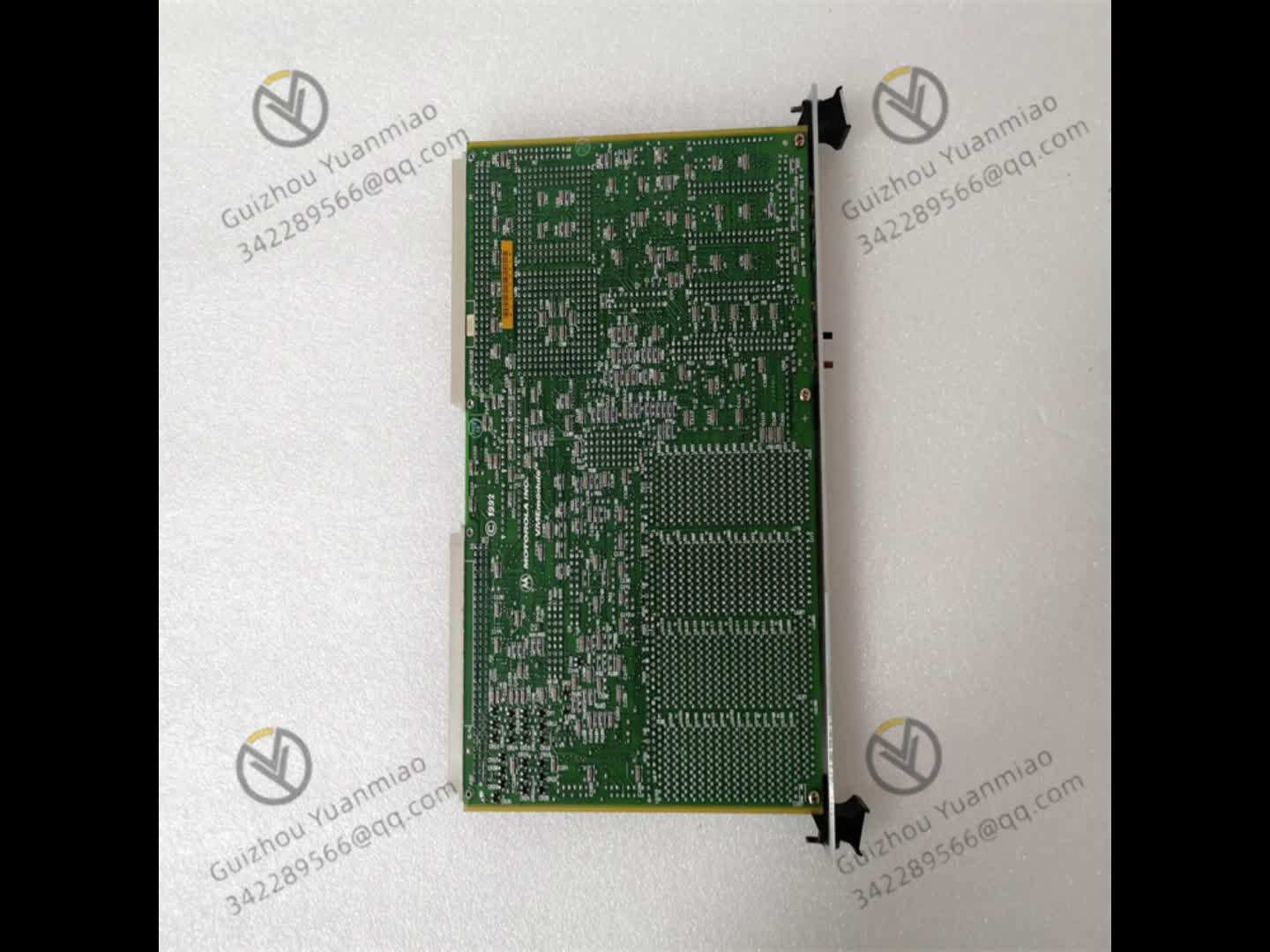
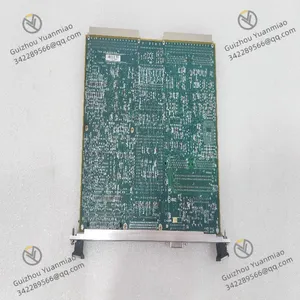
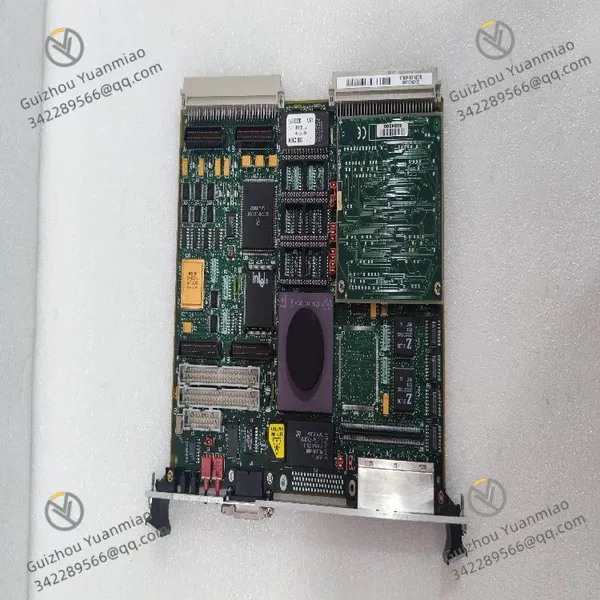
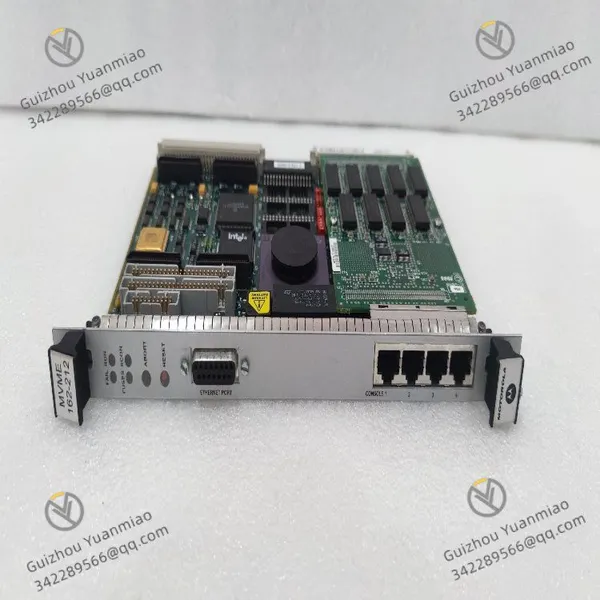
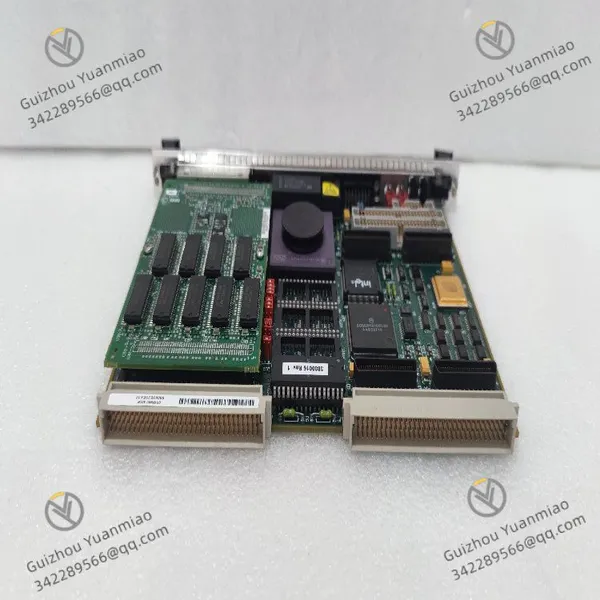
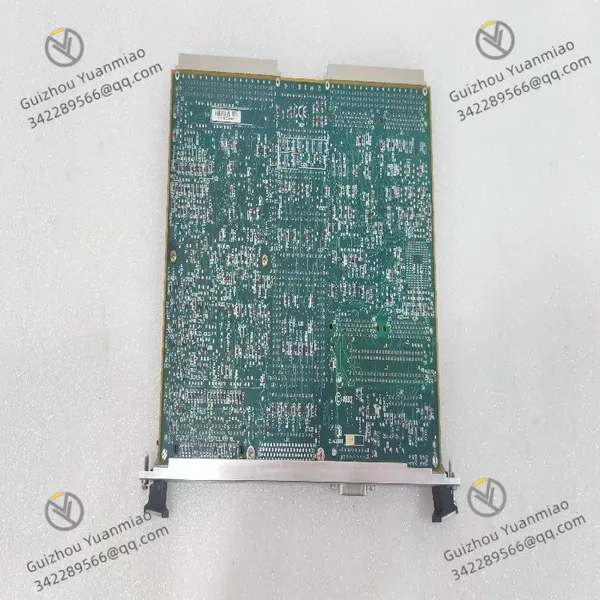
The MOTOROLA MVME162-212 is an industrial-grade real-time control Single-Board Computer (SBC) developed based on the VME bus architecture. It belongs to the classic industrial embedded product line of the MVME162 series, with its core positioning as "a core hardware unit in VME bus-based distributed industrial control systems, responsible for multi-node collaborative control, large-scale data acquisition and processing, and centralized management of on-site equipment".
As an upgraded configuration model in the MVME162 series, this device retains the advantages of high reliability and bus compatibility of the series products while enhancing computing performance and expandability. It mainly serves fields with extremely high requirements for "bus coordination, real-time control accuracy, and industrial-grade durability", including medium and large-sized industrial automation distributed systems (e.g., distributed control networks for metallurgical production lines, multi-equipment collaborative systems in chemical parks), high-end equipment control nodes (e.g., control units for precision CNC machine tools, main control modules for large wind power equipment), military and aerospace ground test equipment (e.g., control cores for spacecraft component test benches, radar signal processing nodes), and legacy system upgrade scenarios (e.g., performance improvement and transformation of traditional VME bus systems). It undertakes the full-process core tasks of "real-time acquisition of multi-node sensor data - execution of complex control logic operations - realization of cross-node data interaction via VME bus - output of precise control commands to drive actuators - global monitoring of equipment status and fault early warning".
With the core advantages of "full VME bus compatibility + enhanced real-time computing core + industrial-grade high redundancy design + multi-dimensional expandability", the MVME162-212 can not only solve the four major pain points in traditional distributed industrial control systems: "multi-node data synchronization lag", "low operation efficiency of complex control algorithms", "insufficient reliability under extreme working conditions", and "poor system upgrade compatibility", but also be compatible with classic real-time operating systems such as VxWorks and pSOS, building an integrated solution of "VME bus distributed network + real-time collaborative control + large-scale data processing". Through high-performance processors, hardware-level real-time interrupt scheduling, and full-link anti-interference design, the device achieves a control command response time of ≤15μs and a Mean Time Between Failures (MTBF) of ≥120,000 hours, ensuring the continuous and stable operation of medium and large-sized VME bus industrial systems and reducing production interruption losses caused by core control unit failures (the loss from a single shutdown of a medium or large-sized production line can reach millions of yuan).

II. Core Configuration
(I) Processor and Computing Performance
Enhanced High-Performance Processor
It is equipped with an enhanced version of the Motorola MC68040 microprocessor, with the clock frequency upgraded to 33MHz (some later versions support a 40MHz overclocking mode). Adopting a CISC (Complex Instruction Set Computing) architecture, it has a built-in 16KB L1 cache (8KB instruction cache + 8KB data cache) and an enhanced Floating-Point Unit (FPU). Its integer computing performance reaches 18 MIPS (Millions of Instructions Per Second), and the floating-point computing performance reaches 0.8 MFLOPS, which is a 50% improvement compared with the basic models in the same series. It can efficiently handle complex control algorithms (such as multi-variable PID control, fuzzy control, and motion trajectory planning) and large-scale data operations (such as concurrent processing of 500-point sensor data and multi-node data fusion analysis), meeting the high computing power requirements of medium and large-sized distributed systems.
Real-Time Control Optimization
It integrates a dedicated Programmable Interrupt Controller (PIC) and a Real-Time Clock (RTC) controller, supporting 32 levels of interrupt priority (8 of which are dedicated interrupts for the VME bus, used for emergency signal interaction between nodes). The interrupt response time is ≤15μs, enabling priority handling of emergency control tasks such as equipment overload, emergency stop, and data synchronization anomalies. The RTC clock accuracy is improved to ±2ppm (with temperature compensation), and it can maintain a time error of ≤1 second per day within the wide temperature range of -40℃~+85℃, providing an accurate time reference for multi-node task synchronization in distributed systems (such as timing alignment of cross-node data acquisition).
(II) Memory and Storage Configuration
Upgraded Three-Level Memory Architecture
Main Memory: 4MB DRAM (expandable up to 16MB at maximum), adopting parity check + ECC dual error detection and correction technology (single-bit errors are automatically corrected, double-bit errors trigger alarms). The data storage reliability is 3 times higher than that of basic models, enabling stable operation of large-scale control programs and multi-tasking operating systems (such as the full-featured version of VxWorks 5.5).
High-Speed Cache: 512KB SRAM (Static Random-Access Memory), adopting a pipelined access architecture with an access speed of 33ns, which is 40% faster than the basic models in the same series. It is used to store frequently accessed control parameters (such as PID tuning coefficients and equipment state variables) and real-time data (such as instantaneous sensor acquisition values and actuator feedback signals), reducing processor waiting time.
Solidified Storage: 1MB EPROM (Erasable Programmable Read-Only Memory) + 2MB Flash. The EPROM is used to store the system boot program (Bootloader) and core control firmware, while the Flash is used to store user application programs and configuration files. It supports online erasing and writing (≥100,000 times) and data retention without power supply, enabling automatic system startup upon power-on and fast program loading.
Data Backup and Redundancy
It is equipped with 32KB FRAM (Ferroelectric Random-Access Memory) with lithium battery backup. Compared with the traditional SRAM backup solution, the data retention life is increased to ≥10 years (no need for battery replacement). It is used to store key control parameters (such as system calibration data and node communication configuration), fault logs (the latest 50 fault records, including timestamps and fault codes), and VME bus topology information, avoiding control disorders caused by parameter loss after system power failure or abnormal restart.
(III) VME Bus and Expandability
Enhanced VME Bus Compatibility
It is fully compatible with the VMEbus standard (ANSI/IEEE 1014-1987) and the VME64 extended standard, supporting dynamic switching of 16-bit/32-bit/64-bit data buses. The bus transmission rate reaches 80MB/s in 32-bit mode (double that of the basic model) and up to 160MB/s in 64-bit mode. It supports multi-master device bus arbitration (priority arbitration + fair arbitration) and can connect up to 32 VME bus nodes (including other MVME series boards, third-party I/O modules, and intelligent sensors), enabling the construction of large-scale distributed control networks (e.g., deploying 8-12 MVME162-212 nodes in a metallurgical production line, respectively responsible for heating, rolling, cooling, quality inspection and other links).
Multi-Dimensional Expansion Interfaces
2 IndustryPack (IP) Expansion Slots: Compatible with the IP-68 standard and supporting hot-swapping, functional modules can be inserted:
Analog I/O modules (e.g., 16-channel 16-bit AI/8-channel 16-bit AO) to realize high-precision acquisition and control of analog signals such as temperature, pressure, and flow;
Digital I/O modules (e.g., 32-channel DI/32-channel DO) to adapt to digital equipment such as high-frequency solenoid valves and servo motor drivers;
Communication expansion modules (e.g., RS-485/Profibus-DP dual-mode modules) to enhance compatibility with fieldbus equipment.
1 P2 Backplane Interface: Compatible with the VME64x standard, it can connect to MVME series dedicated backplanes to realize power supply and data sharing among multiple boards, simplifying the wiring of distributed systems.
III. Communication and Interfaces
(I) VME Bus Interface (Core Communication Link)
It adopts a 160-pin DIN 41612 high-density connector (compatible with the VME64 standard) and supports five core bus cycles:
Address Cycle: Realizes accurate addressing between nodes (supporting 32-bit/64-bit address spaces), allowing the master node to quickly access the I/O registers and memory data of slave nodes;
Data Cycle: Supports 16-bit/32-bit/64-bit data transmission (with a rate of up to 160MB/s in burst transmission mode), meeting the massive data interaction between multiple nodes (such as sensor data aggregation and control command issuance);
Interrupt Cycle: Supports vectored and non-vectored interrupts, enabling emergency event linkage between nodes through interrupt signals (e.g., when a device fails, the faulty node sends an interrupt request to the master node, which immediately dispatches a standby node to take over the task);
Bus Lock Cycle: Prevents data conflicts caused by multiple master nodes accessing shared resources simultaneously, ensuring data consistency in distributed systems;
Broadcast Cycle: The master node can send control commands (such as production line start-stop commands and parameter calibration commands) to all slave nodes synchronously, realizing multi-node collaborative operations.
It also supports the VMEbus System Controller function, which can act as a bus master controller (System Controller) to manage the bus access rights of other nodes, optimize bus resource allocation, and reduce data transmission latency.
(II) Local I/O and Communication Interfaces
Enhanced Basic I/O Interfaces
Digital I/O: 16-channel isolated DI (24V DC, input impedance 10kΩ, isolation voltage ≥2.5kV DC) and 16-channel isolated DO (24V DC, maximum output current 1A per channel, supporting short-circuit protection). They can be directly connected to high-frequency sensors (such as photoelectric encoders) and actuators (such as servo motor brake units), adapting to high-load industrial scenarios;
Analog I/O: 8-channel 12-bit AI (optional 0-10V/4-20mA, sampling frequency 500Hz, accuracy ±0.1% FS, common-mode rejection ratio ≥80dB) and 4-channel 12-bit AO (optional 0-10V/4-20mA, output impedance ≤0.1Ω, accuracy ±0.2% FS). They are compatible with high-precision equipment such as temperature transmitters and pressure sensors, meeting the requirements of precision control.
Serial Communication Interfaces (Multi-Protocol Support)
2 EIA-232-D Serial Ports (RS-232): The baud rate is adjustable from 300bps to 38400bps, supporting hardware flow control (RTS/CTS) and software flow control (XON/XOFF). They are used to connect local debugging terminals (such as industrial serial screens and laptops) or low-speed peripherals (such as barcode scanners and micro-printers);
2 RS-485 Serial Ports (Full-Duplex/Half-Duplex Adjustable): The baud rate is adjustable from 300bps to 115200bps, supporting networking of up to 64 nodes (transmission distance ≤1500m). They can connect to distributed I/O modules (such as remote digital acquisition modules and intelligent meters), expanding the control range of on-site equipment.
Other Auxiliary Interfaces
1 Centronics Parallel Printing Interface: Supports ECP/EPP modes and can connect to industrial high-speed printers for real-time printing of production reports (such as hourly output statistics and equipment fault records);
1 JTAG Debug Interface (Compliant with IEEE 1149.1 Standard) + 1 BDM (Background Debug Mode) Interface: The JTAG is used for program burning and hardware fault diagnosis (such as fault detection of processors, memory, and bus interfaces); the BDM supports real-time debugging during system operation (without interrupting production), facilitating on-site maintenance and program optimization.
IV. Environmental Adaptability and Reliability
(I) Industrial-Grade Environmental Tolerance
Wide Temperature and Humidity Adaptability
Operating Temperature: The standard model operates within 0℃~70℃; the optional wide-temperature model operates within -40℃~+85℃ (adopting industrial-grade wide-temperature components such as military-grade DRAM and high-temperature capacitors). It can operate stably in high-temperature industrial workshops (e.g., hot rolling workshops in iron and steel plants) and low-temperature outdoor equipment rooms (e.g., wind power control cabinets in northern China);
Storage Temperature: -55℃~+125℃, meeting the requirements for long-distance transportation (e.g., high-temperature exposure and low-temperature freezing environments) and long-term idle storage of the equipment;
Relative Humidity: 5%~95% RH (non-condensing, compliant with IEC 60068-2-3 standard), effectively preventing circuit corrosion in humid environments (e.g., chemical workshops and hydropower station control rooms).
Full-Link Anti-Interference Design
Electromagnetic Compatibility (EMC): Compliant with EN 55022 Class A + EN 61000-6-2 standards, with radio frequency radiation ≤30dBμV/m (30MHz-1GHz) and radio frequency immunity ≥40V/m (80MHz-1GHz). The Electrostatic Discharge (ESD) protection reaches ±25kV (air discharge)/±15kV (contact discharge), capable of withstanding strong electromagnetic interference generated by on-site equipment such as frequency converters, welding machines, and high-voltage motors;
Protection Level: Board-level protection reaches IP20. Key circuits (processors, bus interfaces) adopt metal shielding covers (shielding effectiveness ≥40dB); connectors are designed with dust and water resistance; circuit boards are coated with conformal coating (oil-resistant, salt spray-resistant, and mildew-resistant), adapting to dusty and oily industrial environments (e.g., automobile manufacturing workshops and mechanical processing workshops);
Vibration and Shock Resistance: Supports 10g vibration (10Hz-2000Hz, compliant with IEC 60068-2-6) and 50g shock (1ms pulse, compliant with IEC 60068-2-27). It can withstand bumps during equipment transportation and vibrations in industrial sites (e.g., vibrations from machine tool operation and fans), ensuring stable hardware structure and reliable data transmission.
(II) High-Reliability Redundancy Design
Full-System Redundancy Mechanism
Power Supply Redundancy: Supports dual-channel 5V DC power input (±5% fluctuation) and is equipped with a power monitoring and switching circuit. When one power supply fails (e.g., overvoltage, overcurrent, or power outage), the other can switch to supply power seamlessly within 5ms. The core circuit remains powered during the switching process, ensuring continuous operation of control programs;
Bus Redundancy: Supports dual-link backup for the VME bus (requires matching with a redundant backplane). When the main bus link fails (e.g., poor connector contact or cable damage), it automatically switches to the standby link, with bus communication interruption time ≤10ms, avoiding distributed system paralysis;
Hardware Watchdog: Built-in dual-channel programmable hardware watchdog (with independent clock sources), with an adjustable timeout period of 1ms-10s. When the control program crashes or the system is abnormal, one watchdog triggers device restart, and the other records fault information to FRAM, realizing "fault self-recovery + fault traceability".
Long-Life and Easy-Maintenance Design
Mean Time Between Failures (MTBF): ≥120,000 hours (Telcordia SR-332 standard, 25℃ environment), with a design life of ≥10 years. Key components (such as connectors, capacitors, and resistors) adopt industrial-grade long-life models (with ≥1000 temperature cycles and ≥500 humidity cycles);
Intelligent Status Monitoring: On-board LED status indicators (power, operation, bus, fault, expansion module) + voltage/temperature monitoring chips can real-time monitor the voltage of core circuits (±5V, ±12V) and processor temperature. When parameters are abnormal (e.g., excessive voltage fluctuation or processor overheating), an alarm signal is sent to the master node via the bus, and the fault indicator is lit simultaneously, facilitating on-site maintenance personnel to quickly locate problems;
Modular Maintenance: Vulnerable components such as expansion slots and connectors adopt standardized designs, supporting on-site quick replacement without professional tools. The maintenance time is ≤30 minutes, reducing equipment downtime losses.


 Contact Platform Support
 Help Center