Contact Platform Support
 Help Center
22 Gallon PP Corrosive Chemical Storage Cabinet With Safety Lock and Warning Labels







Related Products
-
 Environmental Lab PP Acid Cabinet, Zero-Metal Anti-Oxidation Design|30 Gallon PP Acid CabinetUS$ 500 - 600MOQ: 5 Combos
 -
University Lab PP Reagent Storage Cabinet With Clear Door | Acid Corrosive Safety CabinetUS$ 500 - 600MOQ: 5 Combos
-
22 Gallon PP Acid Corrosive Storage Cabinet | University Lab Reagent Cabinet With VentilationUS$ 500 - 600MOQ: 5 Combos
-
PP Multi-Door Acid and Base Cabinet With Double Lock System - OEM/ODM Available for Corrosive ChemicalUS$ 500 - 600MOQ: 5 Combos
-
30 Gallon PP Multi-Door Acid Base Cabinet With Ventilation Holes - Customizable OEM/ODM Lab Safety Storage SolutionUS$ 500 - 600MOQ: 5 Combos
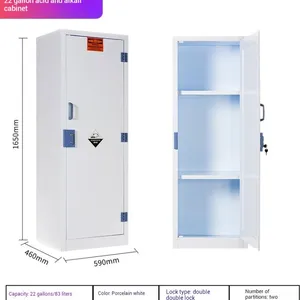
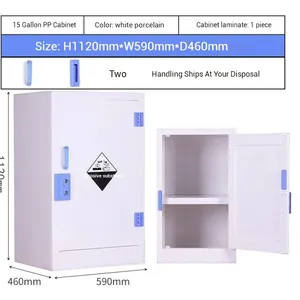
PP Corrosive Chemical Storage Cabinet with Safety Lock and Warning Labels is designed to address these risks, providing a comprehensive solution for secure, compliant, and efficient management of hazardous materials.
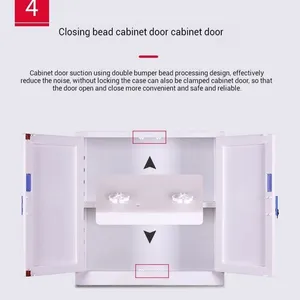
1. Core Features: Unmatched Safety and DurabilityThe cabinet is crafted from high-quality polypropylene (PP), a material renowned for its exceptional resistance to corrosion, acid/alkali erosion, and oxidation. Unlike metal cabinets, which can react with corrosive substances and degrade over time, PP ensures long-term structural integrity—even when storing highly reactive chemicals like sulfuric acid, hydrochloric acid, or sodium hydroxide. This “zero-metal” design eliminates the risk of rust, pitting, or chemical reactions that could compromise safety.
For added durability, the cabinet features reinforced hinges and a sturdy frame, capable of supporting heavy loads (up to 200 kg) while maintaining stability. The smooth, non-porous surface of PP is easy to clean and resistant to stains, ensuring the cabinet remains hygienic and visually appealing in busy lab environments.
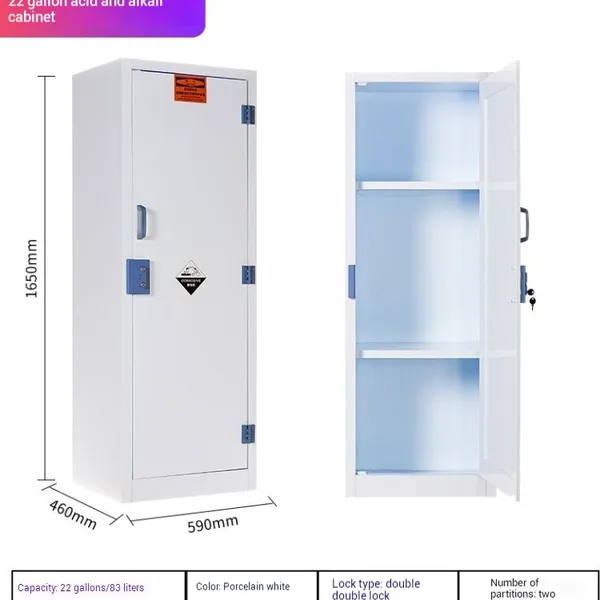
2. Advanced Security: Dual-Lock Management SystemOne of the most critical aspects of corrosive chemical storage is access control. The cabinet is equipped with a dual-lock management system, requiring two independent keys to open. This design adheres to industry best practices for “two-person verification,” ensuring that no single individual can access the cabinet alone. Such a system is essential for preventing unauthorized use, theft, or accidental exposure—especially in settings where multiple researchers or technicians share workspace.
The locks are made from high-strength steel, resistant to tampering, picking, or forced entry. Each lock is independently operable, allowing administrators to assign separate keys to different personnel (e.g., lab managers and safety officers) while maintaining accountability.
Clear communication of hazards is vital in emergency situations. The cabinet is adorned with prominent warning labels that comply with global standards (e.g., GHS—Globally Harmonized System of Classification and Labeling of Chemicals). These labels include:
Hazard pictograms: Symbols for corrosion (e.g., a test tube with liquid eating through a hand), toxicity, and reactivity, instantly conveying the nature of the stored chemicals.
Text warnings: Phrases like “Corrosive—Handle with Care” or “Keep Away from Heat” provide explicit instructions for safe handling.
Color coding: Bright orange or yellow labels stand out against the white cabinet, ensuring visibility even in low-light conditions.
These labels serve as a first line of defense, reminding users of potential risks and guiding them to take appropriate precautions (e.g., wearing gloves, goggles, or using fume hoods).
Practical Design: User-Friendly and Space-Efficient
Beyond safety, the cabinet is designed for practicality:
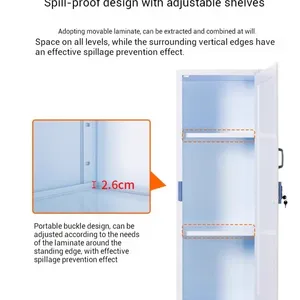
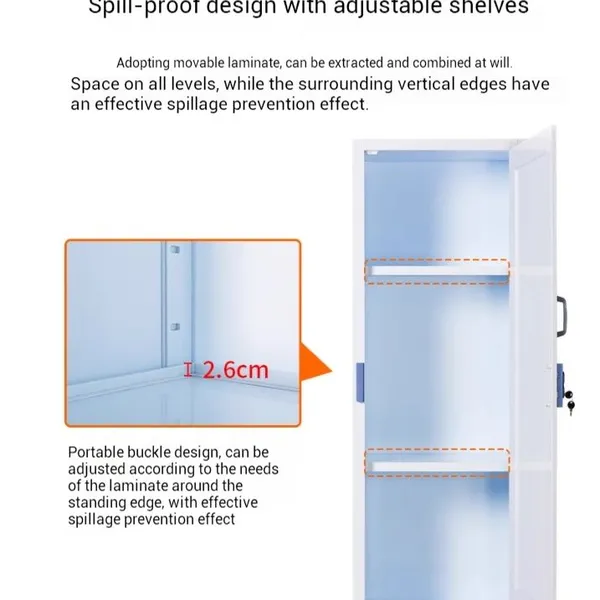
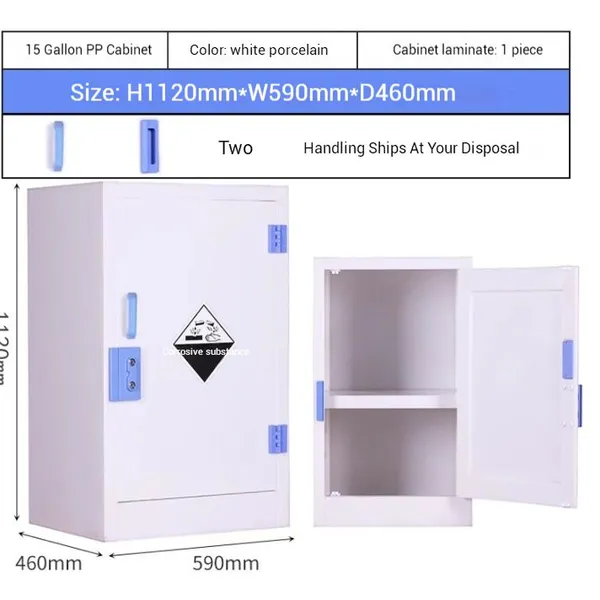
Adjustable shelves: Users can customize the interior layout to accommodate bottles of various sizes (from small vials to large carboys), maximizing storage capacity.
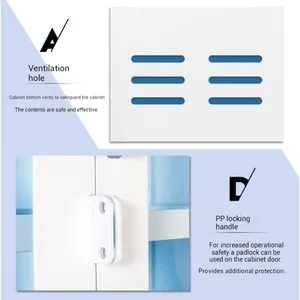
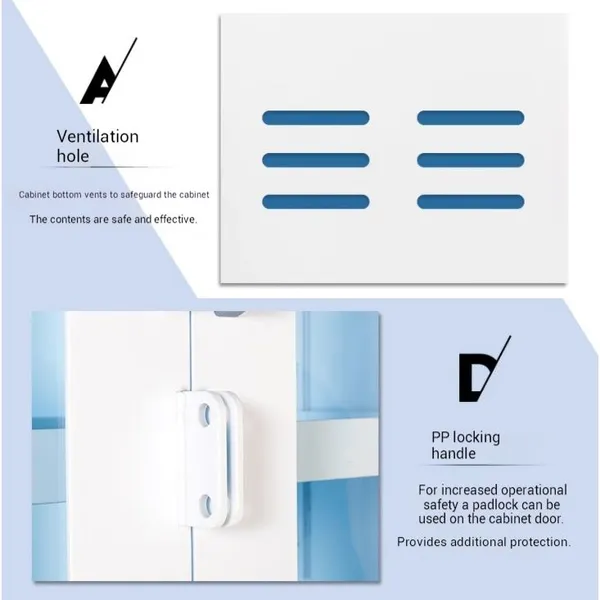
Ventilation slots: Strategically placed at the top and bottom, these slots allow for air circulation, reducing the buildup of vapors and minimizing the risk of pressure accumulation.
Ergonomic handles: Easy-grip handles make opening and closing the doors effortless, even when wearing gloves.
Compact footprint: The vertical design saves floor space, making it ideal for labs with limited room.
This cabinet is suitable for a wide range of applications:
Laboratories: Storing reagents, solvents, and experimental chemicals.
Industrial facilities: Managing cleaning agents, process chemicals, or waste streams.
Educational institutions: Safely housing teaching chemicals in schools or universities.
Healthcare: Storing disinfectants or other corrosive medical supplies.
To ensure the cabinet remains in optimal condition:
Regular cleaning: Wipe the exterior with a damp cloth and mild detergent; avoid abrasive cleaners that could scratch the PP surface.
Lock maintenance: Lubricate locks annually to prevent stiffness.
Inspection: Check for signs of wear (e.g., cracks, loose hinges) every six months.

Send Inquiry to This Supplier



You May Also Like
-
Lab PP Reagent Storage Cabinet With Vapor-Resistant Sealing|Hazardous Chemical PP Cabinet, Leak-ProofUS$ 500 - 600MOQ: 5 Combos
-
Large Capacity PP Acid and Alkali Safety Cabinet for High-Volume Labs|Up to 500 Liters (300L, 400L, 600L Options)US$ 500 - 600MOQ: 5 Combos
-
15 Gallon PP Corrosion-Resistant Cabinet for Electroplating Workshops - Spill-Proof Design With Long Service LifeUS$ 500 - 600MOQ: 5 Combos
-
Electroplating Workshop PP Cabinet With Adjustable Shelves - Durable Corrosion-Resistant Storage SolutionUS$ 500 - 600MOQ: 5 Combos
-
PP Acid Cabinet With Glass Doors for Laboratory Buildings - Safety Compliant With 3 Adjustable ShelvesUS$ 500 - 600MOQ: 5 Combos
-
Safety Compliant PP Acid Cabinet With Upper/Lower Glass Doors - Laboratory Storage Solution With 3 LaminatesUS$ 500 - 600MOQ: 5 Combos
-
Customizable PP Anti-Corrosion Cabinet for Large Research Projects - 3 Ventilated Shelves, White PorcelainUS$ 500 - 600MOQ: 5 Combos
-
Large Research Project PP Cabinet With Custom Design - Anti-Corrosion Storage, H1800mmW900mmD450mmUS$ 500 - 600MOQ: 5 Combos
-
Large Research Project PP Cabinet With Custom Design - Anti-Corrosion Storage, H1800mmW900mmD450mmUS$ 500 - 600MOQ: 5 Combos
-
Customizable 1800mm PP Chemical Cabinet With Ventilated Shelves | White Porcelain OEM/ODM SupportedUS$ 500 - 600MOQ: 5 Combos