


 Contact Platform Support
 Help Center
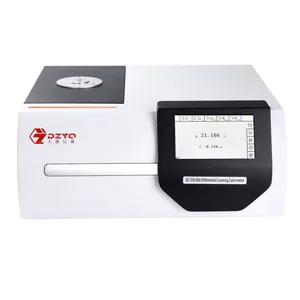
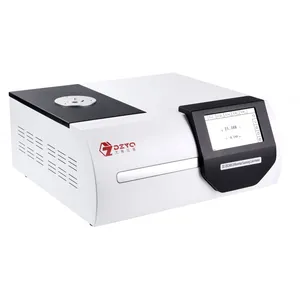
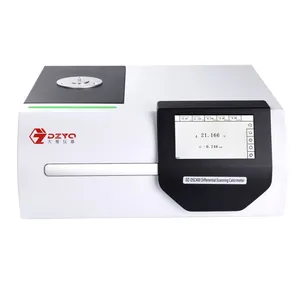
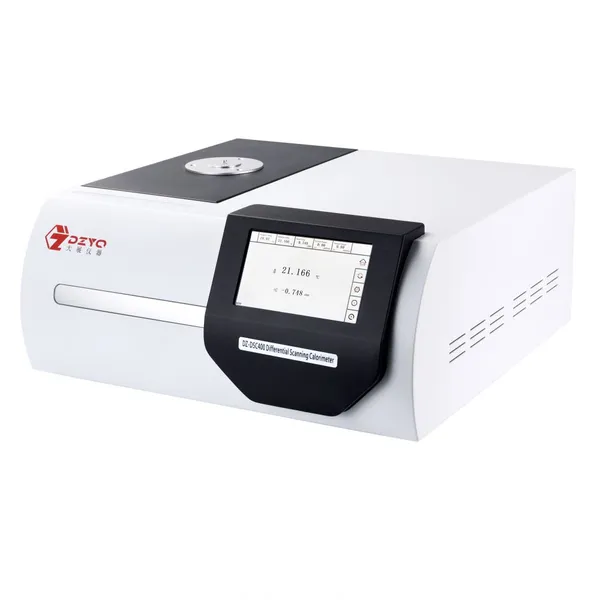
Differential Scanning Calorimeter; DSC400 Differential Scanning Calorimeter; Mechanical Refrigeration Differential Scanning Calorimeter

Related Products
-
 DTA 500degree ,DSC Differential Scanning Thermal Analyzer,Differential Scanning CalorimeterNegotiableMOQ: 1
 -
DSC Differential Scanning CalorimeterUS$ 20000 - 40000MOQ: 1 Piece
-
XINFU Differential Scanning CalorimetersNegotiableMOQ: 1
-
HRC-115 Differential Scanning CalorimetersUS$ 10000 - 50000MOQ: 1 Set
-
Diamond Dsc Differential Scanning CalorimeterUS$ 6000 - 8000MOQ: 1 Set
Product Introduction:
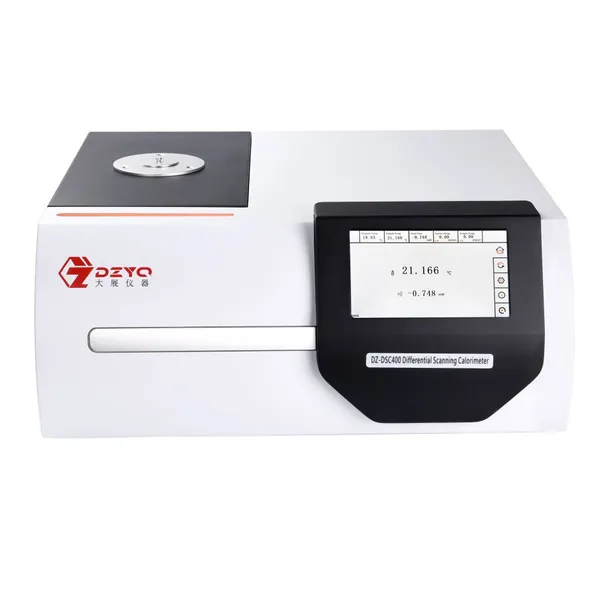
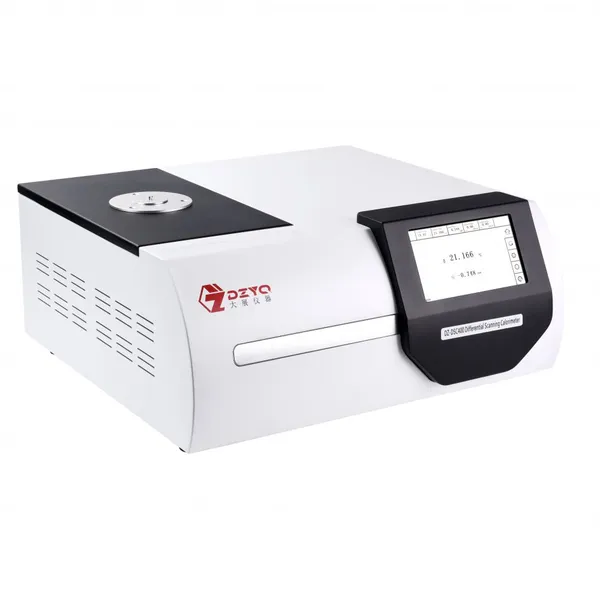
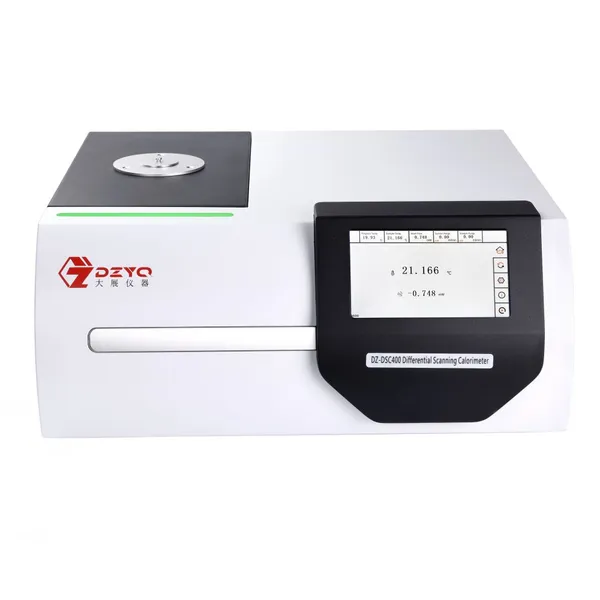
The DZ-DSC400 series is a high-precision differential scanning calorimeter launched by the company. The sensor is made of imported material E-couple, which has high accuracy, sensitivity, and repeatability. The signal acquisition circuit has shielding protection, strong anti-interference ability, and extremely high baseline stability and repeatability.
The DZ-DSC400 series differential scanning calorimeter can perform tests on glass transition temperature, phase transition temperature, melting point, enthalpy value, curing temperature, product stability, specific heat capacity, crystallization, oxidation induction period, etc. Capable of conducting research in various fields such as pipes, polymers, chemicals, food, and healthcare, providing product services to universities, enterprises, research institutes, and quality inspection institutions, with a wide range of applications to meet the testing needs of various industries.
Technical features:
1.Industrial grade 7-inch touch screen with rich display information
2. A brand new furnace structure with better baseline and higher accuracy. Heating
adopts indirect conduction method, which has high uniformity
and stability, reduces pulse radiation, and is superior to traditional heating mode.
3.USB communication interface mode, strong universality, reliable and uninterrupted communication, supports self recovery connection function.
4.Automatically switch between two atmospheric flow rates, with fast switching speed and short stabilization time. Simultaneously add a protective gas input.
5.Rich software features, covering corresponding test case databases
6.Ultra high sensitivity, accuracy, ≤0.5uw
(Comparison chart with imported equipment testing, PA6 sample with a crystallinity of about 30%)
Differential DSC400 series technical parameters:
Technical Parameter |
Basic DSC400 |
Upgraded DSC400C |
Advanced DSC400D |
Customized DSC400L |
temperature range |
RT-600℃ |
-50℃-600℃ |
-70℃-600℃ |
-170℃-600℃ |
DSC range |
± 1000mw (expandable) |
|||
Temperature repeatability |
0.001 |
|||
heating rate |
0.1~100℃/min |
0.1~100℃/min |
0.1~100℃/min |
0.1~100℃/min |
cooling rate |
1~20℃/min(550℃~100℃) |
0.1~40℃/min |
0.1~60℃/min |
0.1~80℃/min |
DSC sensitivity |
≤0.5uw |
|||
Data collection frequency |
Programmable customization, 1 second data collection ≤ 20 |
|||
temperature control |
Intelligent PID temperature control, intelligent memory temperature control mode, temperature accuracy combines the advantages of dynamic and static algorithms, with self-tuning and self optimization functions |
|||
Cooling method |
Cooling method |
Semiconductor refrigeration |
mechanical refrigeration |
Liquid nitrogen refrigeration |
Flow meter |
mass flow meter, range 0~200ml/min |
|||
Atmosphere device |
Built in two-way gas |
Built in three-way gas, capable of passing nitrogen, oxygen, air, carbon dioxide, argon, etc |
||
sensor type |
E-type |
|||
Sensor technology |
Thermal diffusion process |
|||
Furnace body process |
Anti corrosion and antioxidant treatment |
|||
Operating software |
The experiment can be exported in Excel format, PDF format, etc; The software comes with automatic analysis function, which can analyze specific heat capacity, enthalpy, melting point, glass transition temperature, curing degree, crystallization, oxidation induction period, etc; A database with standard testing methods for software; The software can compare more than 10 sets of data simultaneously |
|||
Program Settings |
≥ 50 segments, expandable |
|||
Comparison test |
Can conduct standard sample comparison and set reasonable error values; Exceeding the error value, the comparison indicates that it is not qualified |
|||
tablet press |
Optional |
standard configuration |
||
Is it customizable |
Yes |
|||
Instrument image |
|
|
|
|
Application examples:
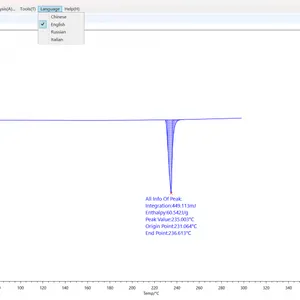
Sample testing of indium and tin spectra
Graph analysis:
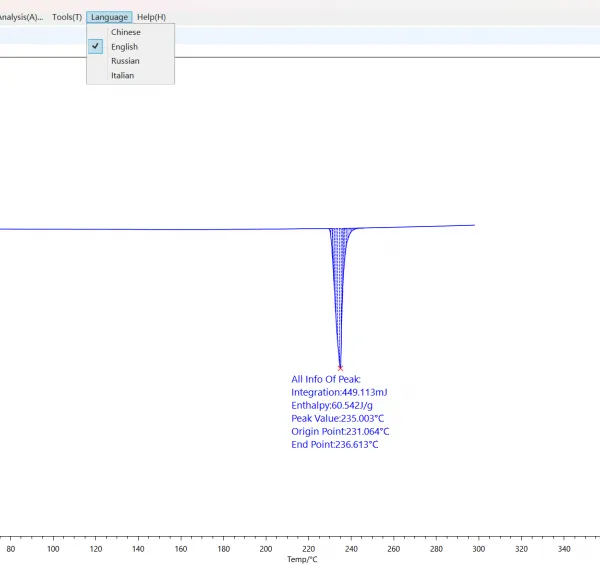
The above figure shows the test spectra of indium and tin. In the figure, enthalpy value → energy absorbed when the test material melts; Peak value → maximum melting of test
Material Intense temperature points; Starting point → The temperature point at which the test material transitions from a solid state to a liquid state (calibrated from the starting point during
equipment factory calibration Sample melting point); Termination point → The temperature point at which the test material completely changes from solid to liquid.
From the above figure, it can be concluded that the melting point of indium particles in this experiment is 156.5 ℃, and the enthalpy value is 28.6013J/g. The melting point of tin
particles is: 231.93 ℃, enthalpy value: 60.5618J/g.
Sample Testing Specific heat capacity test chart
Graph analysis:
According to the standards ISO 11357-4 and ASTM E 1269, the specific heat capacity is tested by the sapphire method, and the theoretical basis of the sapphire method is equal
The definition of specific heat capacity under pressure is the amount of heat required to raise a unit mass of material by 1 ℃. DSC measures the sample and sapphire under the same
heating conditions Derive the specific heat capacity of the sample using a formula based on the difference in heat flux.
The blue color in the figure represents the empty crucible test baseline, the purple red color represents the standard sapphire test baseline, and the gray color represents the sample
test baseline,After calibrating three baselines, the software can intelligently analyze the specific heat capacity at different temperatures. For example, the specific heat capacity of the
sample at 80 ℃ is 0.7449J/(g * ℃).
Sample Testing epoxy powder chart
Graph analysis:
Set the experimental parameters according to the experimental steps in Appendix B of the standard GB/T23257-2017 for the thermal characteristics test method of epoxy powder and its like layer ,After deducting the cooling curve, the above figure is obtained. The gray line represents the third stage test chart of the sample, which shows the glass transition temperature of Tg1 The point is 72.339 ℃, the curing temperature of epoxy powder is 123.52 ℃, and the curing enthalpy is 48.9806J/g. The green line represents the fifth stage measurement of the Sample Attempt, as shown in the figure, the glass transition temperature point of Tg2 is 104.588 ℃.
According to the thermal characteristics requirements in Table 2 of the performance indicators of epoxy powder coatings in standard GB/T23257-2017, the curing enthalpy of epoxy powder is ≥ 45J/g,Tg2 ≥ 98 ℃. Based on the above experimental data, the epoxy powder coating tested meets the standard requirements.
ample testing oxidation induction period spectrum
Spectrum analysis:
Oxidation induction time (OIT) was detected by DSC (differential scanning calorimetry). The sample is usually heated to a specified temperature and kept at a constant temperature under a nitrogen atmosphere, and then switched to an oxygen atmosphere. After a period of time, the material begins to oxidize and release heat. This released heat is detected by sensors, and through software analysis, the induced oxidation time (OIT) is obtained. The length of the oxidation induction time is a parameter of the reaction material's ability to resist oxidative decomposition, which is very meaningful. Usually, this parameter must be tested for buried plastic pipelines.
From the above figure, it can be concluded that the oxidation induction time (OIT) of the material at 200 ℃ is 44.35 minutes.
Focus on the production and research and development of thermal analysis instruments
Nanjing Dazhan Testing Instrument Co., Ltd. is located in Jiulong Lake Manufacturing Innovation Port, Liandong U Valley, Jiangning District, Nanjing City; It is an enterprise that integrates research and development, production, sales, and technology. Received honors and qualifications such as Gazelle Enterprise, National High tech Enterprise, and Technology based Small and Medium sized Enterprise, and has been deeply involved in the thermal analysis instrument industry for many years, becoming a well-known brand in the field of thermal analysis.
Core Technology:
• Deeply involved in the research and development of thermal analysis technology, possessing over 30 patents and software copyrights
• Participated in the development of national standards related to Differential Scanning Calorimetry (DSC) - Glass Transition Temperature Testing
• The product line covers high-end testing equipment such as differential scanning calorimetry (DSC), differential thermal analysis (DTA), thermogravimetric analysis (TGA), carbon black content tester, thermal conductivity tester, etc
Application areas:
We provide precise testing solutions for over 20 industries including power energy, petrochemicals, polymer materials, new energy, biomedicine, scientific research and education. Our clients include systems from the Chinese Academy of Sciences, university laboratories, and Fortune 500 companies
Market recognition:
• Accumulatively serving over 5000 users worldwide
• Passed ISO9001 quality management system certification
• Products exported to over 30 countries and regions
Core values:
Adhere to high-quality after-sales service, focus on research and innovation in the field of thermal analysis instruments, and create high-precision and intelligent thermal analysis detection equipment
Nanjing DaZhan Testing Instrument Co., Ltd
Email: @dzjcyq.com

Send Inquiry to This Supplier


You May Also Like
-
Differential Scanning Calorimeter (DSC) With High Temperature Range Manufacturer, Differential Scanning CalorimetryUS$ 7,990 - 8,890MOQ: 1 Set
-
Differential Scanning Calorimeter Dsc 300 Caliris Select-pNegotiableMOQ: 0
-
LCD Display Differential Scanning Calorimeter DSC Equipment ISO 11357US$ 5000 - 8000MOQ: 1 Piece
-
Differential Scanning Calorimeter; DSC400 Differential Scanning Calorimeter; Mechanical Refrigeration Differential Scanning CalorimeterUS$ 9000MOQ: 1 Carton
-
Oxidation Induction Time of Lubricating Oils Tester Differential Scanning Calorimetry ASTM D6186NegotiableMOQ: 1 Set
-
HDSC-N1 Differential Scanning Calorimeter With Best QualityNegotiableMOQ: 1
-
Lab Differential Scanning CalorimeterUS$ 20000 - 40000MOQ: 1 Piece
-
DIL-1500 Differential Scanning CalorimetersUS$ 10000 - 50000MOQ: 1 Set
-
Differential Scanning Calorimeter Calorimetry Price Industrial Instrument CalorimeterUS$ 6000 - 8000MOQ: 1 Set
-
Automatic Differential Scanning Calorimeter DSC Price For Plastics, Rubber, CoatingsUS$ 7,990 - 8,890MOQ: 1 Set


