Contact Platform Support
 Help Center
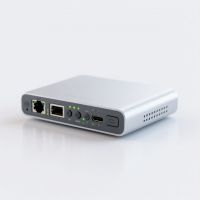
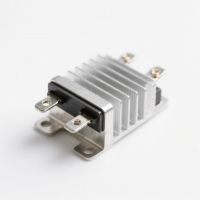
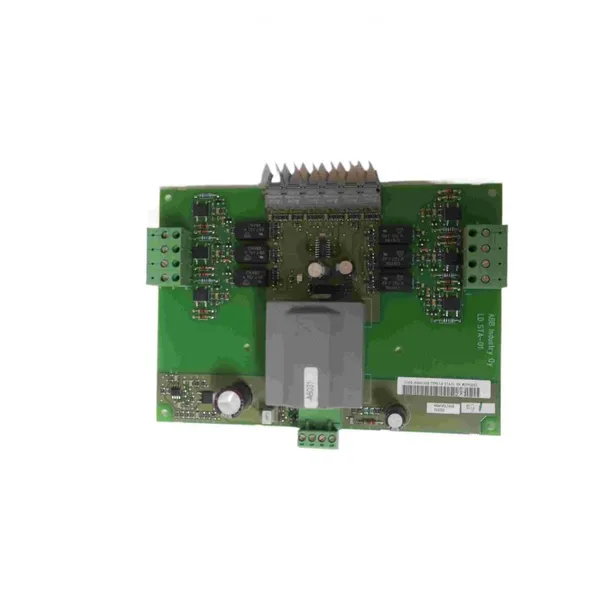
ABB LDSTA-01 63940143B Excitation Controller Module



Related Products
-
 ABB L003748-AR 3BSX108237R300 Voltage Regulation ModuleNegotiableMOQ: 1 Piece
 -
ABB PM866-2 3BSE050201R1 Processor UnitNegotiableMOQ: 1 Piece
-
ABB OKYM175W22 Power Module/Drive Assistance ModuleNegotiableMOQ: 1 Piece
-
ABB DSQC609 3HAC14178-1 Power SupplyNegotiableMOQ: 1 Piece
-
ABB UBC717AE01 HIEE300927R0101 High-voltage Inverter Board/power ModuleNegotiableMOQ: 1 Piece
ABB LDSTA-01 (Order No.: 63940143B) is an industrial-grade intelligent status indication and operation module, belonging to the core component series of ABB S800 I/O. It is positioned as an integrated intelligent terminal for "on-site status visualization + local convenient operation" in industrial automation systems, integrating three core functions: status indication, local operation, and bus communication. It combines equipment status feedback, manual operation control, and data interaction transmission, and also has advantages such as high reliability, strong anti-interference, flexible configuration, and seamless integration. As a key component connecting the main control unit and on-site operators in ABB 800xA, Freelance and other control systems, it is widely applicable to harsh industrial scenarios in process industry, discrete manufacturing, energy management, robot control and other industries.
This module mainly undertakes four core tasks: on-site status indication, local operation control, fault feedback, and bus data interaction. It breaks the limitation of the traditional "control room monitoring + no centralized operation point on site", integrates distributed I/O technology with small human-computer interaction functions, and can be directly installed in remote I/O stations or on-site cabinets, realizing the core value of "bringing control signals to the site and extending operation points to the equipment side". The module is equipped with 4 high-brightness programmable LED indicators and 2 physical buttons with LED backlight. The indicators can dynamically display equipment running, stopping, fault and other states, and the buttons can customize operation functions such as start, stop, and alarm confirmation. Relying on the integrated LONWORKS fieldbus interface, it exchanges data with the LIO communication module in the S800 I/O station, seamlessly connects to the main control system, and effectively solves problems such as inconvenient on-site status viewing, cumbersome local operation, and communication delay. Compatible with ABB 800xA DCS, Freelance control system and S800 I/O series base, it is widely used in chemical reactor control, automobile assembly line, power plant auxiliary machine monitoring, robot control and other scenarios, providing core hardware support for improving on-site operation efficiency and ensuring safe production.
It adopts an industrial-grade compact modular design with a corrosion-resistant high-strength material surface, suitable for 35mm DIN rail installation or on-site cabinet embedded installation, facilitating dense deployment in control cabinets and layout beside on-site equipment, saving installation space. Equipped with a dedicated connector, it can be quickly connected to the S800 I/O base (such as TU847) or LIO module, greatly improving installation, commissioning and maintenance efficiency. The enclosure and circuit design comply with IEC 61000-6-2 and IEC 61000-6-4 electromagnetic compatibility standards, with IP20 protection level (must be installed in the electrical cabinet, relying on the cabinet protection), offering excellent dustproof and anti-electromagnetic interference performance, which can withstand high-frequency noise from inverters and electromagnetic fields from high-power equipment on industrial sites. It supports online configuration, parameter setting and fault diagnosis through ABB Control Builder and other special configuration software. The indicator color, flashing mode and button function can be flexibly programmed to adapt to different on-site needs, making operation and maintenance convenient and efficient. It also supports hot-swappable function (needs to be realized with the base), which can reduce production loss during maintenance without shutdown.
1. Technical Specifications
1.1 Power Specifications
Power Supply Voltage: Powered by the backplane of the connected S800 I/O system, standard 24VDC (compatible with 24V DC ±15% wide range), meeting the needs of voltage fluctuations on industrial sites;
Power Protection: Equipped with overvoltage and undervoltage protection functions; electrical isolation between power circuit and signal circuit to suppress ground loop interference and prevent damage to the module and connected equipment;
Typical Power Consumption: Low power consumption design, rated power consumption ≤1W, suitable for long-term continuous operation without additional heat dissipation burden, no need to install heat dissipation devices;
Power Indication: The power supply status is synchronously displayed through the panel LED indicator, which can intuitively judge whether the module power supply is normal, facilitating quick troubleshooting of power supply faults;
Power Compatibility: Seamlessly compatible with S800 I/O series bases, no additional power module is needed, simplifying system wiring and deployment.
1.2 Core Function Parameters
Status Indication: Equipped with 4 high-brightness LED indicators, the color is programmable (conventional red/green/yellow), supporting two modes: steady on and blinking, which can dynamically display equipment running, stopping, fault, maintenance and other states;
Operation Buttons: 2 physical buttons with LED backlight, the functions are fully programmable, which can be customized as local operation functions such as start, stop, alarm confirmation, and mode selection;
Response Speed: The button operation response time ≤1ms, and the indicator state switching response time ≤500μs, ensuring the real-time performance of operation and state feedback;
Configuration Capability: Supports online configuration through ABB Control Builder and other engineering tools, the meaning of indicators and button functions can be flexibly modified to adapt to the needs of process changes;
Fault Self-diagnosis: Built-in perfect fault diagnosis mechanism, which can real-time monitor the module's own state, bus communication state and button/indicator abnormalities, and upload fault information in a timely manner.
1.3 Communication & Compatibility Parameters
Communication Interface: Integrates LONWORKS fieldbus interface, equipped with a dedicated connector, which can be quickly connected to the LIO communication module in the S800 I/O station;
Communication Protocols: Native support for LONWORKS bus protocol, and compatible with mainstream industrial protocols such as Modbus, Profibus, and Ethernet/IP, ensuring seamless connection with various automation equipment;
Data Transmission: No data loss during data transmission, parameter refresh cycle ≤1s, which can real-time transmit button operation signals and indicator control signals, ensuring the real-time performance of data interaction;
System Compatibility: Deeply compatible with ABB 800xA DCS, Freelance control system, S800 I/O series modules and bases (such as TU847), can be directly connected to the existing automation network without additional conversion modules;
Expansion Capacity: Supports multi-module cascading deployment, and can flexibly expand status indication and operation nodes according to the number of on-site equipment, adapting to control scenarios of different scales.
1.4 Environmental Parameters
Operating Temperature: 0℃ to +55℃ (typical value), compatible with -25℃ to +70℃ wide temperature range, can adapt to extreme working conditions such as high-temperature workshops and low-temperature warehouses;
Operating Humidity: 5%–95% (non-condensing), capable of stable operation in humid industrial environments, adapting to humid scenarios such as chemical industry and water treatment;
Anti-Interference Level: Complies with IEC 61000-6-2 (industrial environment immunity) and IEC 61000-6-4 (industrial environment emission) standards, has excellent anti-electromagnetic interference performance, and can withstand strong electromagnetic interference on industrial sites;
Reliability: Certified by CE, UL and other relevant certifications, mean time between failures (MTBF) >50,000 hours, natural heat dissipation, maintenance-free operation, adapting to long-term continuous production needs;
Protection Performance: The enclosure is made of corrosion-resistant high-strength materials, which has certain dustproof and corrosion-resistant capabilities, adapting to high-dust and corrosive industrial environments.
1.5 Physical & Installation Parameters
Overall Dimensions: Compact design, approximately 100mm×80mm×50mm (subject to actual product), adapting to installation scenarios with limited space;
Installation Method: Supports 35mm DIN rail installation, can be directly installed in remote I/O stations or on-site cabinets, or connected to S800 I/O bases through dedicated connectors;
Connection Method: Connected with dedicated connectors, reliable plugging and unplugging, facilitating quick installation and module replacement, reducing wiring workload;
Status Indication: In addition to function indicators, the panel is also equipped with power and communication status indicators, which can intuitively display the module's operation, communication and fault status, facilitating quick fault location;
Weight: Net weight of a single module is about 0.2kg, lightweight and easy to install, convenient for spare part management and on-site replacement.
2. Features
Integration of Status Visualization and Local Operation: Integrates 4 programmable LED indicators and 2 function buttons, combining on-site equipment status feedback with local operation control. Without relying on the control room operation station, operators can directly view the status and perform operations beside the equipment, reducing communication misunderstandings and improving on-site operation efficiency and safety.
High Flexibility and Configurability: The indicator color, blinking mode and button function can be flexibly programmed through ABB special configuration software, which can be personalized according to the needs of different equipment (pumps, fans, valves, robots), and supports online modification, adapting to process changes or equipment function adjustments with strong adaptability.
Seamless Integration and Convenient Communication: As a native S800 I/O module, it can be seamlessly connected to S800 I/O bases, LIO communication modules and ABB 800xA, Freelance control systems. Configuration, diagnosis and maintenance are fully integrated into the ABB engineering and operation environment, without the need for third-party software or special drivers, ensuring system unity and ease of use.
High Reliability and Strong Anti-Interference: Industrial-grade circuit design, complying with international electromagnetic compatibility standards, with excellent anti-electromagnetic interference, overvoltage and undervoltage protection capabilities; made of high-quality materials, wide-temperature, moisture-proof and corrosion-resistant design, can operate stably in harsh industrial environments for a long time, with long mean time between failures, reducing fault downtime.
Energy Saving, High Efficiency and Convenient Operation and Maintenance: Low power consumption design, which can save energy during long-term operation; adopts modular design and dedicated connectors, convenient for installation and disassembly, supports hot-swappable function (needs to be realized with the base), which can reduce production loss during maintenance without shutdown; panel indicators can quickly locate faults, support online configuration and fault diagnosis, with high maintenance efficiency, greatly reducing maintenance costs.
3. Operating Principle
Initialization and Link Establishment: After the module is connected to the S800 I/O base through a dedicated connector, it is powered by the system backplane. After power-on, it completes a full self-test, initializes the indicators, buttons, communication interface and internal control circuit, and loads the built-in firmware and pre-configured configuration parameters. It establishes a connection with the LIO communication module in the S800 I/O station through the LONWORKS fieldbus interface, and after parameter calibration and state synchronization, it is connected to the ABB 800xA or Freelance main control system and enters the normal working state.
Status Indication and Signal Feedback: The main control system transmits the operation status (such as running, stopping, fault) instructions of on-site equipment to the module through the bus. The module controls the color and blinking mode of the 4 LED indicators according to the instructions, intuitively feeding back the equipment status for on-site operators to quickly identify. At the same time, the module real-time monitors the working status of the indicators and feeds back abnormal information to the main control system through the bus to ensure the accuracy of status indication.
Local Operation and Command Transmission: On-site operators perform operations such as start, stop, and alarm confirmation through 2 programmable buttons. The module quickly collects button operation signals, processes them internally, and transmits them to the main control system through the LONWORKS bus. The main control system issues corresponding control instructions according to the operation signals to drive on-site equipment to complete corresponding actions, realizing the linkage between local operation and the main control system and reducing dependence on the control room.
Fault Monitoring and Alarm Handling: The module has a built-in perfect fault self-diagnosis mechanism, which real-time monitors its own operation status (such as indicator fault, button abnormality), bus communication status and power supply status. If an abnormality is detected, it immediately triggers an alarm, prompts the fault through the panel indicator, and uploads the fault information (fault type, fault location) to the main control system through the bus, facilitating operation and maintenance personnel to quickly locate and troubleshoot faults and avoid fault expansion.
Configuration Update and Maintenance Management: Supports online modification of the function configuration of indicators and buttons through ABB Control Builder and other special configuration software, without disassembling the module, adapting to the needs of process changes; supports online fault diagnosis and status monitoring, and can remotely view module operation data and fault information; supports hot-swappable function (needs to be realized with the base), and the module can be replaced without shutdown during maintenance, reducing production loss and maintenance costs.
4. Applications and Case Examples
Process Industry Process Control: In the control system of reactors and storage tanks in chemical, petroleum, pharmaceutical and other industries, the module is installed in the on-site cabinet. The indicators real-time display the temperature, pressure abnormality of the reactor and the valve switch status. Operators can start/stop the feed pump and confirm the alarm on site through the buttons, without going back and forth to the control room, improving operation efficiency and ensuring production safety.
Discrete Manufacturing Equipment Control: In automobile assembly and mechanical processing production lines, the module is installed beside the equipment. The indicators display the operation status of actuators such as motors and cylinders. The buttons are used to start/stop the equipment and switch the operation mode on site, realizing local convenient control of the production line, reducing the operation pressure of the control room and improving the response speed of the production line.
Energy Management System: In the energy monitoring scenarios of power plants, substations and industrial enterprises, the module is used to collect the status of electrical parameters such as voltage, current and power, and the operation status of water pumps and fans. The indicators intuitively display the operation status of energy equipment, and the buttons are used to control the start and stop of equipment on site, providing on-site operation support for energy consumption statistics and optimal scheduling.
Robot and Automation Equipment Control: In the robot production line, the module is installed beside the robot workstation. The indicators display the robot's running, fault and standby status. The buttons are used to start/stop the robot and confirm the fault alarm on site, realizing local convenient operation and status monitoring of the robot and improving the operation and maintenance efficiency of the workstation.
Intelligent Upgrade of Old Equipment: Installing this module for traditional industrial equipment can realize the visualization of equipment operation status and local operation control. Without large-scale transformation of the original system, the intelligence level of old equipment can be improved, the upgrade cost can be reduced, and it is suitable for the needs of industrial intelligent upgrading

Send Inquiry to This Supplier


You May Also Like
-
ABB TVOC-2-240 1SFA664001R1001 Arc MonitorNegotiableMOQ: 1 Piece
-
ABB XVC772A102 3BHE032285R0102 Embedded Control BoardNegotiableMOQ: 1 Piece
-
ABB REF615E_E HBFHAEAGNCA1BNN1XE Digital Feeder Protection RelayNegotiableMOQ: 1 Piece
-
ABB REU615E_D HBUAEAADNCA1BNN1XD Voltage Protection and Control RelayNegotiableMOQ: 1 Piece
-
ABB SYN5201A-Z,V277 Single-channel Synchronisation Controller / Synchronisation UnitNegotiableMOQ: 1 Piece
-
ABB 3BHB006714R0277 Synchronisation UnitNegotiableMOQ: 1 Piece
-
ABB REF615C-E HCFFAEAGABC2BAA11E Feeder Protection and Control DeviceNegotiableMOQ: 1 Piece
-
ABB 3BHB005245R0101 Power Supply BoardNegotiableMOQ: 1 Piece
-
ABB HIEE401807R0001 Advanced Power Electronics ModuleNegotiableMOQ: 1 Piece
-
ABB CI534V02 3BSE010700R1 Communication Interface ModuleNegotiableMOQ: 1 Piece