Contact Platform Support
 Help Center
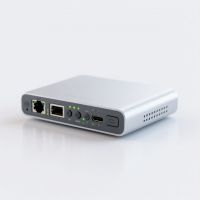
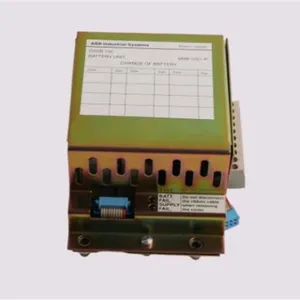
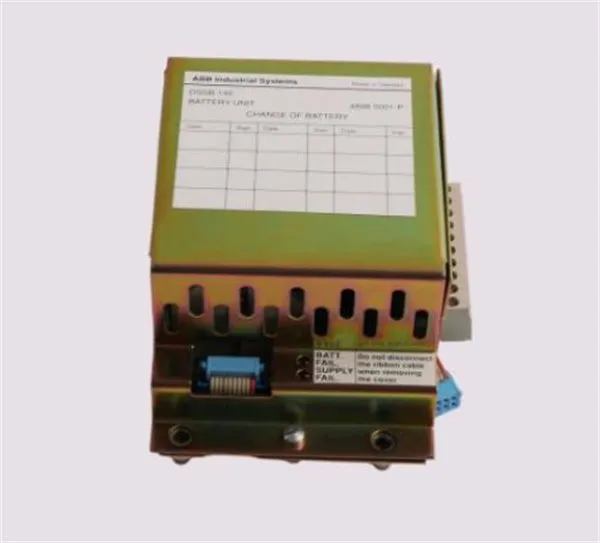
ABB DSSB140 48980001-P Serial Communication Interface Module



Related Products
-
 ABB XO08R2 1SBP260109R1001 Relay Output Expansion ModuleNegotiableMOQ: 1 Piece
 -
ABB SB510 3BSE000860R1 Digital Input/Output Hybrid ModuleNegotiableMOQ: 1 Piece
-
ABB PFTL101A-0.5KN 3BSE004160R1 Tension SensorNegotiableMOQ: 1 Piece
-
ABB CI535V26 3BSE022161R1 Ethernet/IP Communication Interface ModuleNegotiableMOQ: 1 Piece
-
ABB 1TGB302003R0003 Contactor Auxiliary Contact ModuleNegotiableMOQ: 1 Piece
ABB DSSB140 48980001‑P is a high‑performance serial communication interface module belonging to the ABB AC 800M Distributed Control System (DCS) I/O module series. Its core purpose is to solve the integration challenge between serial devices and modern DCS systems in industrial automation scenarios. It provides a stable and efficient data communication channel for serial‑based equipment such as smart meters, relay protection devices, legacy PLCs, inverters, and analytical instruments. As a key component for achieving legacy device compatibility + synchronized data acquisition in industrial process automation systems, it is widely used in demanding industrial environments including power, petrochemical, and metallurgical industries.
1. Basic Parameters
The module features a standardized industrial design that balances compatibility, reliability, and practicality. Its key parameters are listed below, enabling precise adaptation to various complex industrial serial communication scenarios and ensuring seamless integration with existing systems:
Model Identification: Core model DSSB140, complete order / material number 48980001‑P. It can be directly used for spare part matching and replacement in ABB AC 800M control systems without major modifications to the original system.
Product Type: Serial Communication Interface Module. It is not a simple protocol converter, but a native I/O module deeply embedded in the AC 800M control architecture, ensuring serial data enters the controller logic in a deterministic manner.
Communication Specifications: Equipped with 2 electrically isolated, independent RS‑485/RS‑422 channels; interface standards are software‑selectable. Maximum baud rate up to 115.2 kbps. Supports 5–8 data bits, 1–2 stop bits, and odd/even/no parity formats to match communication requirements of different serial devices.
Electrical Isolation: Channel‑to‑channel and channel‑to‑backplane isolation voltage ≥ 500 VRMS, effectively blocking ground loops and surge conduction, improving anti‑interference performance for high electromagnetic interference environments.
Environmental Adaptability: Operating temperature range 0°C to +60°C (‑20°C to +60°C for extended applications). Protection class IP20 (upgradable to IP65 upon request). Suitable for harsh industrial environments including temperature variations, dust, and humidity, with stable operation without additional protection devices.
Power Supply: Operating voltage 24VDC ±10%, complying with industrial standard power requirements. It can be directly connected to the existing control cabinet power supply and supports modular power distribution to reduce power failure risks.
2. Structural and Functional Features
(1) Mechanical Design
The module features a compact, modular industrial package with small size and light weight, complying with standard industrial mounting dimensions. It supports DIN‑rail or rack mounting and is compatible with TK811A / TK821A bases, allowing direct installation in standard control cabinets to save space.The enclosure uses industrial‑grade, corrosion‑resistant and high‑temperature‑resistant materials with good mechanical protection, effectively resisting dust and vibration in industrial environments. It also supports hot‑swap replacement, reducing maintenance time by up to 70%, greatly improving later operation and maintenance efficiency, and extending service life.
(2) Core Functions
Native AC 800M Integration: Unlike third‑party serial device servers, this module acts as a standard I/O module directly mounted on the AC 800M rack, managed uniformly by the controller. Serial data shares the same update cycle and fault diagnostics as local DI/DO/AI signals, greatly improving system determinism and maintainability while avoiding delays, single points of failure, and maintenance complexity caused by external gateways.
Flexible Serial Communication and Protocol Support: Supports Modbus RTU (master/slave), custom ASCII protocols (configurable via Control Builder M), and Profibus‑DP in some applications. It can connect both standard serial devices and non‑standard or legacy instruments, effectively extending the lifecycle of existing assets and solving the “last‑mile” integration challenge on industrial sites.
Dual‑Channel Full Isolation: Both communication channels include independent optical isolation and transient suppression circuits, effectively resisting strong electromagnetic interference from motors, inverters, and other field equipment, and blocking ground loops and surges. It performs well in high dv/dt environments such as power system booster stations and GIS rooms, preventing protection information loss due to communication interruptions.
Advanced Intelligent Diagnostics: The module continuously monitors communication status of each channel, including timeouts, frame errors, parity failures, and other abnormalities, mapping these statuses to boolean variables in the controller. Engineers can directly view serial port health and quickly locate faults via HMI or Control Builder M without logging into external devices, improving O&M efficiency with fault location accuracy up to 99.9%.
Redundancy and Security: Supports redundant CPU operation with failover time
High Integration and Scalability: The module integrates a high‑performance microprocessor, sensors, and communication chips with multiple interfaces for convenient external data exchange and control. It can be flexibly expanded according to system requirements; for example, in petrochemical projects, system I/O capacity can be expanded from 256 points to 1024 points, eliminating control blind spots.
3. Application Areas
With advantages of native integration, strong anti‑interference capability, and wide compatibility, the module is widely used in distributed control systems (DCS), safety instrumented system (SIS) auxiliary communication, energy management system (EMS) data acquisition, and other applications across power generation, metallurgy, petrochemical, municipal engineering, and high‑end manufacturing. It provides reliable solutions for seamless connection between various industrial serial devices and modern DCS systems. Typical applications include:
Power Industry: Compatible with AC 800M DCS systems in thermal power plants, hydropower stations, and nuclear power plants, used to connect serial devices such as relay protection equipment and smart meters, providing stable communication for data acquisition in turbine control and boiler feedwater monitoring systems. Working with ABB REL670 relays, it achieves 100% fault location accuracy and reduces annual maintenance costs by 35%. In 600MW coal‑fired unit DCS upgrades, it efficiently connects dozens of third‑party protection relays with real‑time data synchronization to the controller.
Metallurgy: Used for serial device integration in rolling mills and continuous casting lines, connecting inverters, temperature monitoring instruments, and other equipment. It resists workshop dust and strong electrical interference, ensuring stable data transmission during production, avoiding defective products or equipment damage caused by communication failures, and guaranteeing rolling precision and production continuity.
Petrochemical: Suitable for DCS system expansion in petrochemical projects, providing communication interfaces for serial devices such as pressure/level analytical instruments and emergency shut‑off valve control units in reactors. The native integration architecture simplifies system design. When used with explosion‑proof cabinets, it meets hazardous area safety requirements, ensuring safe and stable operation and preventing reaction runaway caused by communication delays.
Municipal Engineering: Used in automation systems of wastewater treatment plants and waterworks, connecting various serial sensors, fan and pump control units. It operates stably in humid and dusty environments, supporting continuous water treatment processes, real‑time data acquisition and transmission, and enabling intelligent operation of municipal facilities.
Other Fields: Can be applied in energy storage systems, UPS systems, electric vehicle charging stations, wind power systems, etc., as a battery unit controller or serial communication interface for charge/discharge control, status monitoring, and data exchange. It also supports building automation systems, providing communication for controllers and sensors to maintain normal operation of lighting, ventilation, security, and other subsystems.

Send Inquiry to This Supplier


You May Also Like
-
ABB 216BM61B HESG448267R1021 Process Control ModuleNegotiableMOQ: 1 Piece
-
ABB UNC4672AV1 HIEE205012R1 Analogue I/O ModuleNegotiableMOQ: 1 Piece
-
ABB 3BHB004661R0001 KUC711AE Power Control UnitNegotiableMOQ: 1 Piece
-
ABB PM556-TP-ETH Programmable Logic Controller (PLC) CPU ModuleNegotiableMOQ: 1 Piece
-
ABB AO2000 Modular Continuous Gas Analysis SystemNegotiableMOQ: 1 Piece
-
ABB 3BHB000652R0101 High-voltage Variable-frequency Control BoardNegotiableMOQ: 1 Piece
-
ABB 1MRK002311-AAR02 Relay ModuleNegotiableMOQ: 1 Piece
-
ABB REM615C_D HCMJAEADAND2BNN1CD Motor Protection and Control UnitNegotiableMOQ: 1 Piece
-
ABB XFD213A 3BHE028122R0001 SSI Speed Sensor Interface ModuleNegotiableMOQ: 1 Piece
-
ABB TU810V1 3BSE013230R1 Compact MTU, 50VNegotiableMOQ: 1 Piece