


 Contact Platform Support
 Help Center
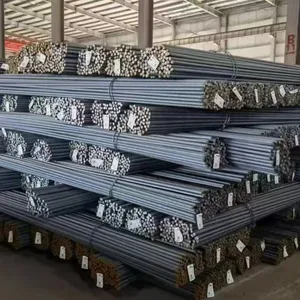
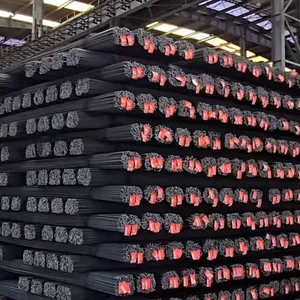
Steel Rebar & Deformed Steel Bar,HRB335 HRB400 HRB500


Related Products
-
 Steel Rebar & Deformed Steel Bar,HRB335 HRB400 HRB500NegotiableMOQ: 5 Metric Tons
 -
Steel Rebar & Deformed Steel Bar,HRB335 HRB400 HRB500NegotiableMOQ: 5 Metric Tons
-
Steel Sheet & Plate & Steel Plate Export,Q235B、Q355B、Q355C、SS400、A36、S235JR、S355JRNegotiableMOQ: 5 Metric Tons
-
Steel Sheet & Plate & Steel Plate Export,Q235B、Q355B、Q355C、SS400、A36、S235JR、S355JRNegotiableMOQ: 5 Metric Tons
-
Steel Sheet & Plate & Steel Plate Export,Q235B、Q355B、Q355C、SS400、A36、S235JR、S355JRNegotiableMOQ: 5 Metric Tons
I. Core Definition of the Product
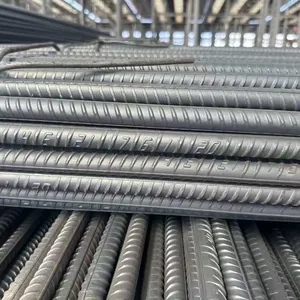
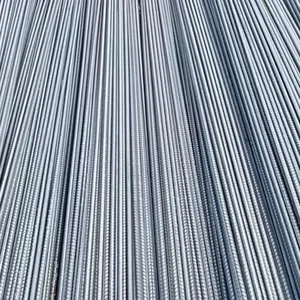
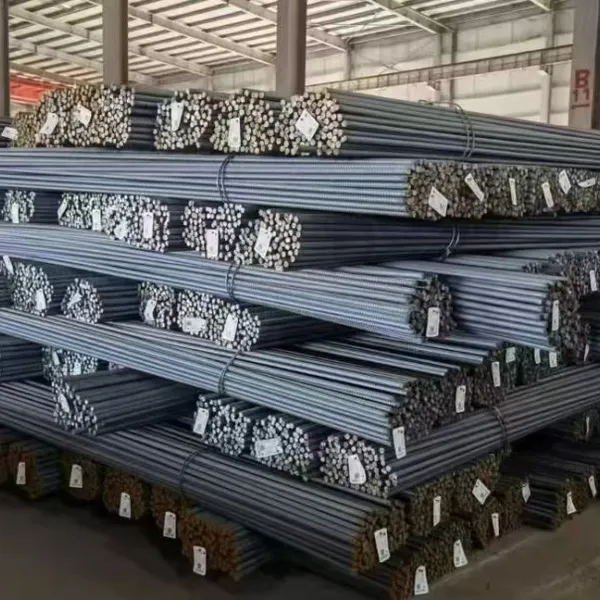
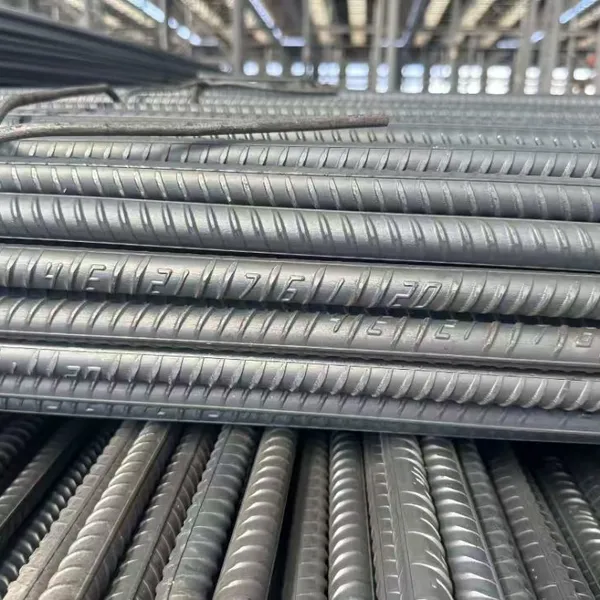
Deformed steel bar is a strip-shaped steel product produced by hot rolling process, with two longitudinal ribs and uniformly distributed transverse ribs (threaded shape) on the surface. Its material is mainly ordinary carbon structural steel or low-alloy high-strength structural steel. It is naturally cooled and formed after high-temperature rolling, with high strength, good toughness and processability. It can effectively resist external forces such as tension and bending, work synergistically with concrete, and improve the bearing capacity and seismic performance of the structure.
II. Core Product Features
Strong Bonding Force: The unique thread (transverse ribs + longitudinal ribs) design on the surface can greatly increase the contact area and friction with concrete, avoid relative sliding between steel bar and concrete, ensure effective stress transmission, improve the integrity and stability of concrete structure, and is especially suitable for projects with high requirements for earthquake resistance and crack resistance.
Complete Strength Grades: The product covers multiple strength grades, mainly HRB335, HRB400 and HRB500. Among them, HRB400 is the mainstream model (Grade 3 rebar) in current construction projects, and HRB500 is a high-strength model (Grade 4 rebar). According to the engineering design requirements, products of different strength grades can be selected to meet the diverse needs from ordinary civil buildings to large-scale industrial and bridge projects.
Excellent Toughness: Using high-quality steel raw materials and processed by precise hot rolling technology, the product has good impact toughness and plasticity. When subjected to external impact or long-term load, it is not easy to break or deform, can effectively absorb sudden external forces such as earthquakes, and ensure the safety of the engineering structure.
Good Processability: It can be cut, bent, welded and other processing operations according to engineering needs. After processing, the performance is stable, which does not affect its strength and bonding force, adapts to the installation needs of different construction scenarios, and the construction is convenient and efficient.
Strong Corrosion Resistance and Durability: The surface can be derusted, galvanized and other treatments according to needs, which can effectively resist the erosion of moisture and oxygen in the air, delay the rusting of steel, and prolong the service life. It is suitable for various indoor and outdoor construction environments, especially for harsh construction scenarios such as humidity and open air.
Compliance with National Standards: The product is strictly produced in accordance with the national standard GB/T 1499.2-2018. The dimensional accuracy, mechanical properties, appearance quality, etc. all meet the national standard requirements. Each batch of products is accompanied by a quality inspection report, and the quality is controllable and traceable.
III. Main Specification Parameters
1. Dimensional Specifications
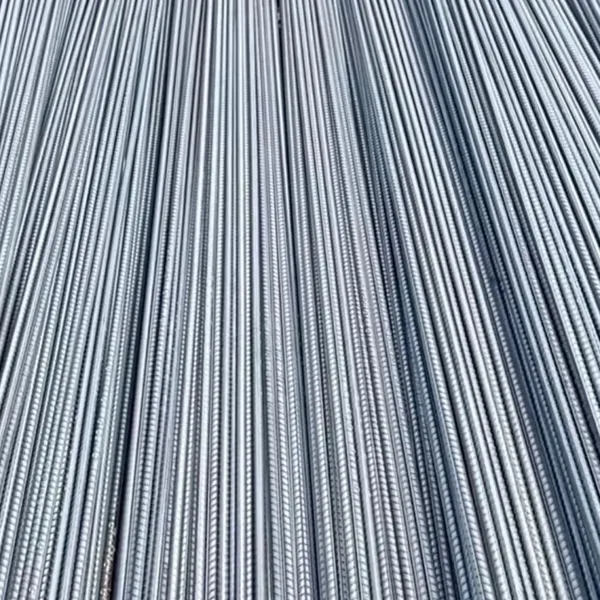
The specification of deformed steel bar is divided by nominal diameter (mm). The mainstream specifications include Φ6, Φ8, Φ10, Φ12, Φ14, Φ16, Φ18, Φ20, Φ22, Φ25, Φ28, Φ32, Φ36, Φ40, etc. According to the engineering design requirements, fixed length can be provided (common fixed length is 9m, 12m), and special length can also be customized according to customer needs.
Key dimensional requirements: The height of transverse ribs, spacing of transverse ribs, width of longitudinal ribs, etc. all comply with national standard regulations to ensure the bonding effect with concrete; the deviation of nominal diameter is controlled within ±0.4mm, with high dimensional accuracy to ensure the accuracy of construction docking.
2. Material and Strength Grade
Strength Grade |
Material Grade |
Yield Strength (≥MPa) |
Tensile Strength (≥MPa) |
Application Scenarios |
HRB335 (Grade 2) |
20MnSi |
335 |
490 |
Ordinary civil buildings, secondary structural reinforcement |
HRB400 (Grade 3) |
20MnSiV, 20MnSiNb, 20MnTi |
400 |
570 |
Mainstream civil, industrial buildings, bridges, roads, etc. |
HRB500 (Grade 4) |
40Si2MnV, 45SiMnV, 45Si2MnTi |
500 |
630 |
Large-scale projects with high strength requirements, high-rise buildings, seismic projects |
3. Appearance Quality
The surface has no cracks, folds, scars, inclusions and other defects, the threads are clear and uniform, and the longitudinal and transverse ribs are not missing or broken; slight scale (rust) is allowed on the surface, but it does not affect the service performance; the cuts at both ends are flat, without burrs and deformation, which is convenient for construction and installation.
IV. Product Classification
Classified by Strength Grade: Grade 2 deformed steel bar (HRB335), Grade 3 deformed steel bar (HRB400), Grade 4 deformed steel bar (HRB500). Among them, HRB400 is the current mainstream product in the market, balancing strength and economy.
Classified by Production Process: Hot-rolled deformed steel bar (mainstream, formed by normal temperature cooling), finish-rolled deformed steel bar (high precision and high strength, used for prestressed concrete structures), prestressed deformed steel bar (used for large-span and high-load projects, need to be used with anchors).
Classified by Application: Construction deformed steel bar (reinforcement for civil and industrial buildings), engineering deformed steel bar (bridges, tunnels, roads, water conservancy projects), export deformed steel bar (complying with international standards such as ASTM, BS, JIS, etc.).
Classified by Shape: Straight deformed steel bar (fixed-length straight bar, easy to cut and install), coiled deformed steel bar (supplied in coils, suitable for small-specification and large-batch construction, can be straightened and cut on demand).
V. Application Scenarios
Deformed steel bar is the core reinforcement material of concrete structures, and its application scenarios cover various construction projects, mainly including:
Civil Buildings: Reinforcement of beams, slabs, columns and foundations of residential buildings, office buildings, apartments, villas, etc., to ensure the bearing capacity and seismic performance of the building structure.
Industrial Buildings: Reinforcement of load-bearing structures of factories, warehouses, workshops, etc., to adapt to the load requirements in industrial production.
Transportation Engineering: Bridges, tunnels, highways, railway subgrades, toll stations, etc., which need to bear vehicle loads and the impact of natural environment, and have high requirements on the strength and durability of deformed steel bars.
Water Conservancy Engineering: Reservoirs, dams, canals, etc., which need to resist water pressure and erosion, and need to select deformed steel bars with corrosion resistance and high strength.
Other Projects: Large venues (stadiums, convention and exhibition centers), underground comprehensive pipe galleries, civil air defense projects, etc., as core reinforcement materials to ensure the stability and safety of the engineering structure.
VI. Implementation Standards and Quality Assurance
1. Implementation Standards: Strictly follow GB/T 1499.2-2018 "Steel for Reinforced Concrete - Part 2: Hot-rolled Ribbed Steel Bars". Export products can comply with international standards such as ASTM A615 (American Standard), BS4449 (British Standard), JIS G3112 (Japanese Standard), and inspection reports corresponding to the standards can be provided on demand.
2. Quality Control: Establish a full-process quality control system from raw material procurement, hot rolling production, cooling forming to finished product inspection. Each batch of products is tested for mechanical properties (yield strength, tensile strength, elongation), dimensional accuracy, appearance quality, etc., and unqualified products are strictly prohibited from leaving the factory.
3. Quality Certification: Each batch of products is accompanied by a quality inspection report and product certificate, clearly marking the product specification, strength grade, production batch, test results and other information to ensure that the product quality is traceable.
VII. Storage and Transportation Notes
Storage: It should be stored in a dry, ventilated and rainproof warehouse or shed, avoiding open-air stacking to prevent rainwater immersion and damp rust; when stacking, it should be classified (distinguished by specification and strength grade) to avoid mixing, and the stacking height should not be too high to prevent steel bar deformation.
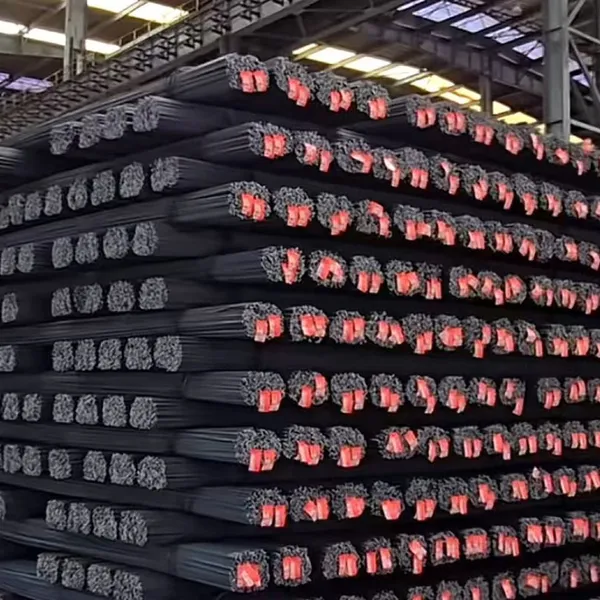
Transportation: Adopt truck transportation. During transportation, protective measures should be taken to avoid deformation and surface scratches caused by collision and extrusion of steel bars; straight deformed steel bars should be firmly bound, and coiled deformed steel bars should be well packaged to prevent loosening and rusting.
Before Use: If there is slight rust on the surface, derusting treatment (manual derusting, mechanical derusting) can be carried out, and the service performance will not be affected after derusting; if the rust is serious (cracks and peeling occur), it is strictly prohibited to use.
VIII. Summary of Product Advantages
This product uses high-quality raw materials, adopts advanced hot rolling technology for production, and strictly follows national standards. It has the advantages of high strength, strong bonding force, good toughness, excellent processability and strong durability. It has complete specifications and controllable quality, and can meet the reinforcement needs of various construction projects. At the same time, it can provide value-added services such as customized fixed length, export adaptation and quality inspection. It has high cost performance and is a reliable choice of reinforcement materials in construction projects. The delivery cycle is 5-7 days to ensure timely supply and guarantee the construction progress.

Send Inquiry to This Supplier



You May Also Like
-
Steel Reba,Steel Bar,ASTM A615, BS 4449, EN 10080NegotiableMOQ: 2 Metric Tons
-
Steel Sheet & Plate & Steel Plate Export,Q235B、Q355B、Q355C、SS400、A36、S235JR、S355JRNegotiableMOQ: 5 Metric Tons
-
Steel Rebar ,RebarASTM A615, BS 4449, EN 10080NegotiableMOQ: 2 Metric Tons
-
Steel Sheet & Plate & Checkered Steel Plate,Q235B、Q355B、1060、5052NegotiableMOQ: 5 Metric Tons
-
Steel Rebar,Steel BarHRB400/HRB500、Grade 60、B500BNegotiableMOQ: 2 Metric Tons
-
Steel Sheet & Plate & Checkered Steel Plate,Q235B、Q355B、1060、5052NegotiableMOQ: 5 Metric Tons
-
Steel Rebar,Steel BarHRB400/HRB500、Grade 60、B500BNegotiableMOQ: 2 Metric Tons
-
Steel Sheet & Plate & Checkered Steel Plate,Q235B、Q355B、1060、5052NegotiableMOQ: 5 Metric Tons
-
Steel Sheet & Plate & Checkered Steel Plate,Q235B、Q355B、1060、5052NegotiableMOQ: 5 Metric Tons
-
Steel Angle,Angle Steel,Q235B, Q355B,GB/T 706NegotiableMOQ: 2 Metric Tons


