Contact Platform Support
 Help Center
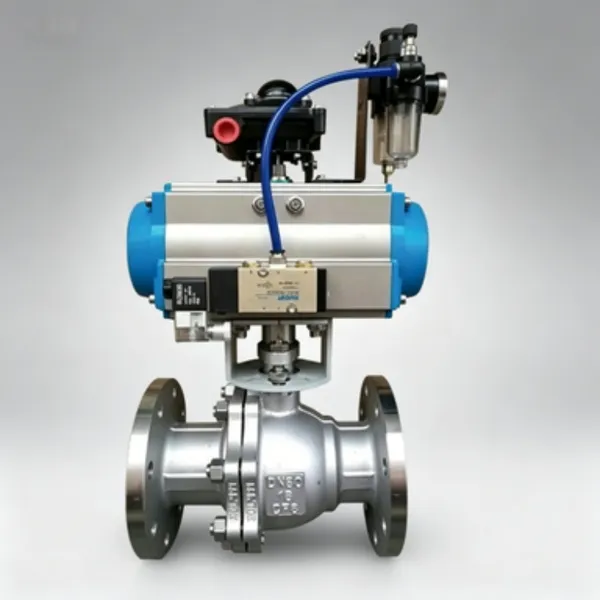
Trunnion Mounted API 6D Forged Steel Ball Valve for Seawater Service, Anticorrosion Coating
Product Spotlights








Related Products
-
 Marine Cargo and Ballast System Valve, API 6D Compliant, 3-Piece ConstructionNegotiableMOQ: 1 Unit
 -
API 6D Marine Ball Valve With 5-Year Extended Warranty and Mill Test ReportNegotiableMOQ: 1 Unit
-
Standard Compliant Forged Steel API 6D Valve, Complete With Operation Manual and Spare Parts KitNegotiableMOQ: 1 Unit
-
Full Port Marine Ball Valve Supplied With Complete Mill Test CertificationNegotiableMOQ: 1 Unit
-
API 6D Marine Full Bore Ball Valve With Fire Safe Design and DNV LR ApprovalNegotiableMOQ: 1 Unit
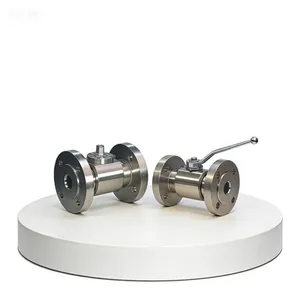
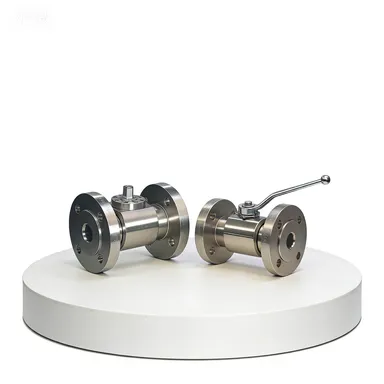
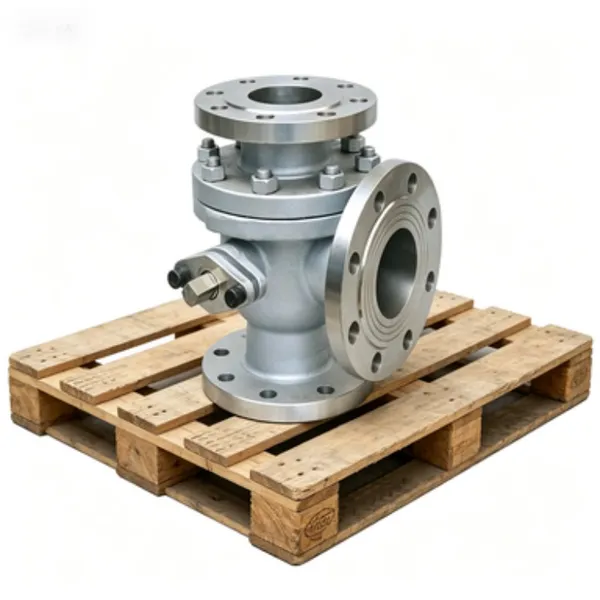
As a specialized valve manufacturer with ISO 9001 certified production processes, Shanghai Zhibang Valve is committed to delivering robust and reliable fluid control solutions for demanding industrial applications. Our Trunnion Mounted API 6D Forged Steel Ball Valve is engineered specifically for challenging seawater service, where corrosion resistance and long-term sealing integrity are paramount. By integrating a forged steel body with a specialized anticorrosion coating system, this valve offers a durable and cost-effective solution for offshore platforms, desalination plants, seawater cooling systems, and marine pipelines. We understand the critical need for valves that can withstand harsh saline environments without compromising performance, and our design focuses on minimizing maintenance downtime and extending service life, ultimately protecting your capital investment and operational continuity.
The trunnion-mounted design is a key differentiator for high-pressure and large-diameter applications. Unlike floating ball designs, the ball in our valve is fixed and supported by trunnions (stem extensions), which absorb the system pressure thrust. This significantly reduces operating torque, minimizes seat wear, and ensures smooth, reliable operation even after prolonged periods in the open or closed position. The forged steel construction (typically ASTM A105 or A350 LF2) provides superior mechanical strength and impact resistance compared to cast equivalents, making it the preferred choice for critical service where safety and reliability are non-negotiable.
To combat the highly corrosive nature of seawater, the valve features a comprehensive anticorrosion strategy. Internally, critical wetted parts like the ball and seats are often protected with advanced coatings such as epoxy resins (e.g., Nylon 11, Fusion Bonded Epoxy) or linings like PTFE (Polytetrafluoroethylene). Externally, a multi-layer paint system resistant to salt spray and UV radiation is applied. This dual-layer protection effectively isolates the metal substrate from the corrosive medium, preventing pitting, crevice corrosion, and galvanic attack, which are common failure modes in marine environments.
Key Technical Specifications & Configurations:
- Pressure-Temperature Ratings: Compliant with ASME B16.34, suitable for a wide range of pressures from Class 150 to Class 1500, accommodating various system design requirements.
- Bidirectional Sealing: The valve provides reliable bubble-tight sealing in both flow directions, a crucial feature for systems that may experience flow reversal.
- Extended Stem Design: For buried service or installations requiring insulation, an extended stem with a secondary seal (graphite packing) is available to prevent leakage to the atmosphere.
- Antistatic Device: Integrated springs ensure electrical continuity between the ball, stem, and body, preventing dangerous static charge buildup when handling non-conductive fluids.
- Blow-Proof Stem: The stem is designed with a shoulder or step that prevents it from being ejected under pressure if the packing is removed, enhancing operator safety.
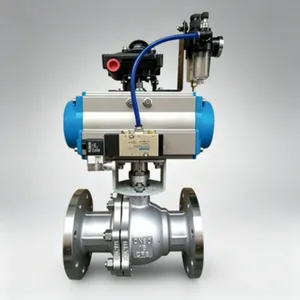
- Operational Flexibility: Can be equipped with manual gear operators, pneumatic actuators, hydraulic actuators, or electric actuators for remote or automated control.
Detailed Parameter Table:
| Parameter | Specification / Option |
|---|---|
| Design & Testing Standard | API 6D, API 608, ISO 17292 |
| Face-to-Face Dimension | API 6D, ASME B16.10 |
| Flange End Standard | ASME B16.5 (RF, RTJ), EN 1092-1 |
| Seat & Seal Material | Reinforced PTFE, RPTFE, PEEK, Metal Seated (Stellite) |
| Stem Material | A182 F6a (13% Cr), A182 F316, with optional hardening |
| Fire Safe Certification | Optional to API 607/6FA, ISO 10497 |
| Leakage Class | Seat: API 598/ISO 5208 Rate A (Bubble-tight), DPE: Rate A |
The primary advantage for end-users is reduced total cost of ownership. The initial investment in a forged, trunnion-mounted, coated valve is justified by its extended maintenance intervals, superior reliability, and avoidance of costly unplanned shutdowns due to valve failure. For engineering procurement teams, compliance with API 6D ensures the valve meets rigorous industry standards for design, materials, manufacturing, and testing, simplifying specification and approval processes. Furthermore, the valve's adaptability allows it to be customized for specific project needs, whether it's a special coating thickness, a unique actuator requirement, or specific material certifications for low-temperature service.
Backed by our ISO 9001 quality management system and an annual export value reflecting our global reach, Shanghai Zhibang Valve has consistently supplied reliable valve solutions to diverse markets including North America, Europe, Southeast Asia, and the Middle East. Our products are shipped from major ports like Shanghai, Guangzhou, and Hong Kong, ensuring efficient logistics. Choosing our Trunnion Mounted Ball Valve for seawater service means partnering with a manufacturer dedicated to quality, durability, and technical support. We invite you to contact us with your specific application details to discuss how this valve can be configured to deliver optimal performance and longevity in your most challenging fluid control systems.
Frequently Asked Questions (FAQ):
-
Q: What is the main advantage of a trunnion-mounted ball valve over a floating ball valve for seawater service?
A: The trunnion-mounted design is superior for larger sizes and higher pressures common in seawater mains. It uses mechanical anchors (trunnions) to hold the ball, so the system pressure does not force the ball against the downstream seat. This results in much lower operating torque, reduced seat wear, and more reliable sealing over a longer lifespan, which is critical for hard-to-maintain offshore or subsea applications. -
Q: Can this valve handle untreated, raw seawater with sand and debris?
A: While the anticorrosion coating protects against corrosion, the valve is designed for clean fluid service. For seawater with significant solids content, we recommend discussing optional features like hardened metal seats (e.g., Stellite) and specifying a full-port (full-bore) design to minimize erosion and allow for pigging. Pre-filtration upstream is also advised. -
Q: What specific anticorrosion coatings do you offer, and how are they applied?
A: We typically apply fusion-bonded epoxy (FBE) coatings like Nylon 11 or PTFE-based linings for internal protection. The application process involves precise surface preparation (shot blasting to a specific anchor profile) and controlled thermal curing to ensure adhesion and uniform thickness. The exact coating specification can be tailored based on the seawater chemistry (chlorinity, temperature) and service conditions. -
Q: Is this valve suitable for subsea applications?
A: Our standard design is for above-water installation. For true subsea applications, significant modifications are required, including a pressure-balanced stem, deep-sea qualified materials, and ROV (Remotely Operated Vehicle) interfaces. We can engineer such solutions based on specific project requirements and relevant standards like API 17D. -
Q: What is the typical delivery lead time for a custom-sized valve with specific coatings?
A: Lead times vary based on size, pressure class, and coating complexity. For standard sizes in our inventory, delivery can be relatively quick. For fully customized orders, including special NACE material requirements or third-party inspection, the lead time typically ranges from 8 to 16 weeks. We provide a firm schedule upon receipt of a detailed inquiry. -
Q: Do you provide documentation like material test reports (MTRs) and inspection reports?
A: Yes, as an ISO 9001 certified manufacturer, we provide comprehensive documentation packages. This can include MTRs (3.1 or 3.2 as requested), certificates of conformance, dimensional inspection reports, and pressure test reports (hydrostatic and pneumatic). Additional third-party inspection (e.g., DNV, Lloyds) can be arranged upon request. -
Q: How does the fire-safe design work, and is it standard?
A: Fire-safe design is an optional feature. In a fire scenario, the primary soft seals (PTFE) may degrade. A fire-safe valve incorporates secondary metal-to-metal sealing surfaces (usually between the ball and a special seat design) that engage to maintain a seal and prevent major leakage, meeting the requirements of standards like API 607. -
Q: Can the valve be repaired in-line, or does it require removal from the pipeline?
A: Many trunnion-mounted ball valves, including our design, offer in-line repairability. Features like a swing-out or top-entry body allow access to internal components (seats, seals, ball) without removing the entire valve from the pipeline. This drastically reduces maintenance time and cost, a significant benefit for critical continuous processes.

Send Inquiry to This Supplier


You May Also Like
-
API 6D Marine Ball Valve With Extended Warranty and Technical DocumentationNegotiableMOQ: 1 Unit
-
Full Bore Ball Valve for Shipboard Fuel and Lube Oil Transfer SystemsNegotiableMOQ: 1 Unit
-
Marine Pipeline Ball Valve Compliant With API 6D Standard, Fire Safe TestedNegotiableMOQ: 1 Unit
-
API 6D Full Bore Ball Valve With Mill Test Report, Cast Steel BodyNegotiableMOQ: 1 Unit
-
316 Stainless Steel Trim API 6D Marine Ball Valve, Full Port DesignNegotiableMOQ: 1 Unit
-
Cast Steel API 6D Full Port Marine Ball Valve in Class150 to Class600NegotiableMOQ: 1 Unit
-
Full Bore API 6D Ball Valve for Offshore Platforms, DN50 to DN300 FlangedNegotiableMOQ: 1 Unit
-
DIN 3357 Marine Ball Valve OEM Production, Carbon Steel With PTFE SeatNegotiableMOQ: 1 Unit
-
DIN 3357 Marine Ball Valve OEM Factory, Stainless Steel 316L, PN16NegotiableMOQ: 1 Unit
-
API 6D Marine Ball Valve for Seawater Cooling Systems and Firewater LinesNegotiableMOQ: 1 Unit