


 Contact Platform Support
 Help Center
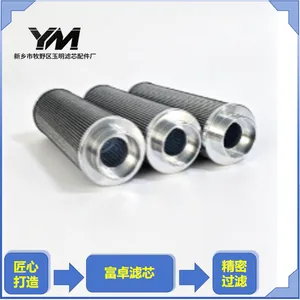
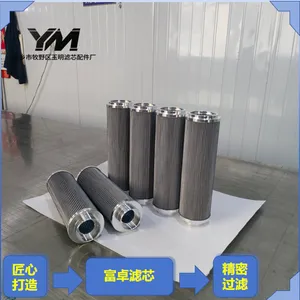
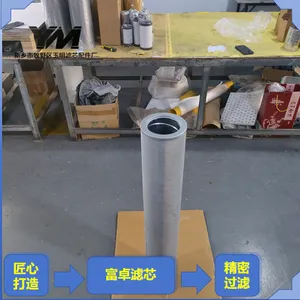
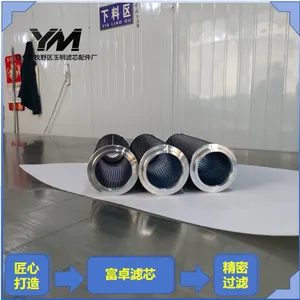
Replacement FILTREC Filter Element

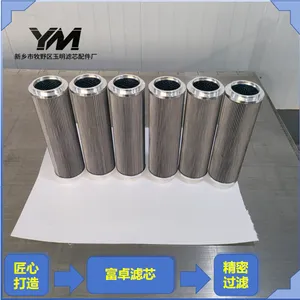
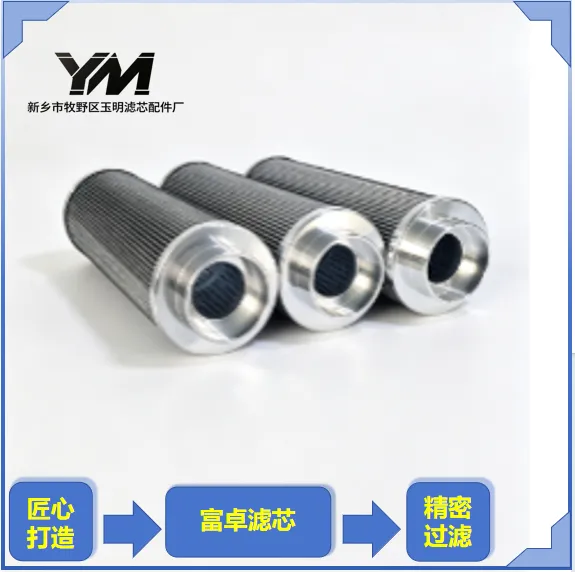
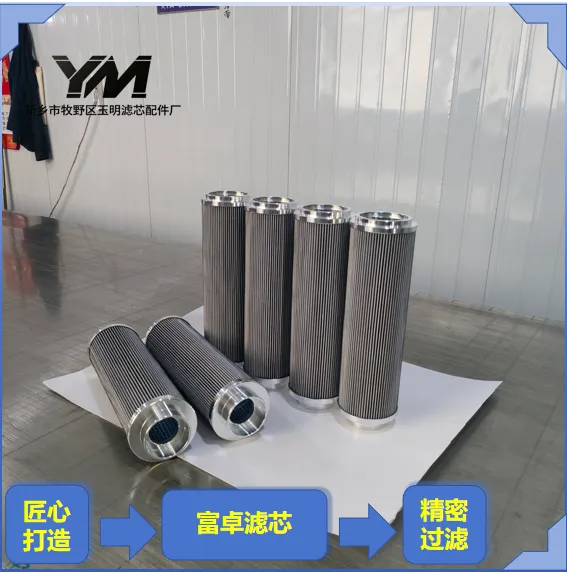
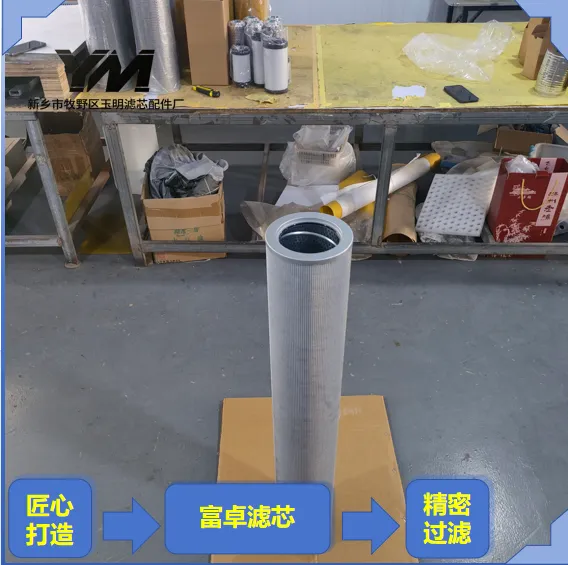
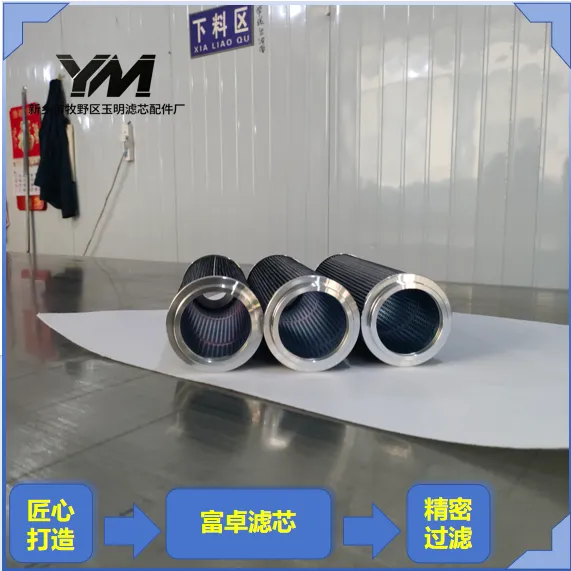
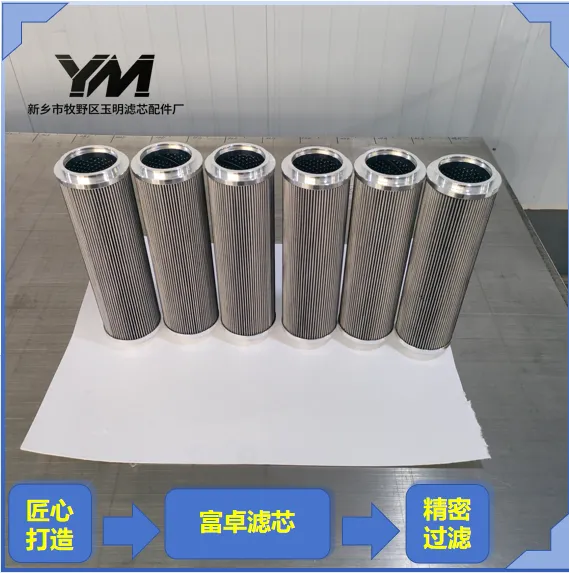
Product Spotlights
Adopts multi-layer gradient glass fiber composite filter media complying with Absolute Beta standard with stable beta value ≥1000. High capture efficiency for micron particles to sustain ISO4406 fluid cleanliness of hydraulic systems.







Related Products
1 Product Overview
Replacement FILTREC filter element is precision supporting component benchmarking genuine Italian FILTREC filter elements for hydraulic and lubrication contamination control systems. As core consumable spare parts, it is widely matched with original FILTREC filter assemblies and applied in pitch & yaw systems of wind turbine generators, hot & cold rolling production lines, hydraulic systems of shield machines and large excavators, marine deck machinery, steam turbine lubrication stations, hydraulic power units of injection molding machines and underground hydraulic supports for mining equipment.
During continuous operation of hydraulic systems, metal wear particles, rust oxides and rubber debris are continuously generated inside hydraulic oil. Meanwhile, moisture and dust invade oil circuits through tank breathers and shaft seal gaps. Tiny hard particles circulate with fluid and continuously scratch high-precision matching pairs such as valve spools, plungers and valve plates, resulting in increased internal leakage, sluggish response, pressure fluctuation and abnormal noise. Free water inside medium accelerates oil oxidation and produces sludge and varnish, further causing valve sticking and abnormal pump wear.
Common low-cost generic alternative filter elements on the market have obvious defects including rough pleating technology, lack of gradient layered structure, insufficient framework compression strength and uncontrolled seal dimensional tolerance. After short-term operation in the system, they quickly reach dirt saturation and cause contaminant bypass, leading to irreversible damage of high-value hydraulic components such as servo valves and piston pumps. This series of replacement FILTREC filter elements fully refers to original FILTREC design specifications. The whole process including raw material screening, automatic pleating, constant-temperature curing bonding, differential pressure sampling test and full tightness inspection adopts standardized control, and all performance indicators are close to the technical benchmark of original elements. Long-term on-site industrial application verifies that qualified interchangeable FILTREC replacement filter elements can stabilize fluid cleanliness indicators for a long time, effectively extend overhaul cycle of hydraulic components, and reduce comprehensive economic losses caused by spare parts procurement and production shutdown.
The complete FILTREC filter element product spectrum is divided into four categories: pressure line filter elements, return line filter elements, suction filter elements and offline bypass fine filter elements. Filtration precision covers mainstream specifications of 1μm, 3μm, 6μm, 12μm and 25μm. According to working conditions, it is divided into general particle filtration glass fiber type, high temperature corrosion-resistant metal fiber type and special medium adaptation type, fully meeting low, medium and high-pressure oil circuit requirements. Products are massively deployed in key production scenarios such as offshore wind power platforms, continuous metallurgical rolling lines, heavy construction machinery, power steam turbine units and port lifting equipment which cannot stop arbitrarily, avoiding sudden equipment failure risks relying on stable fluid purification capacity.
2 Structure Composition
The main assembly of replacement FILTREC filter element consists of gradient composite filter layer, inner supporting diversion mesh, outer pre-protective mesh, upper & lower stamped metal end caps, built-in pressure-bearing central framework and elastic sealing gasket.The core filtration layer mainly adopts multi-layer gradient density glass fiber filter material. Ultra-fine fibers are randomly intertwined to form three-dimensional pore structure to build graded filtration system of outer coarse interception and inner fine capture. Compared with single-layer homogeneous filter material, gradient structure holds contaminants layer by layer and avoids rapid blockage of surface flow pores, significantly lifting overall dirt holding capacity. Automatic precision pleating equipment uniformly controls folding height and spacing to maximize effective filtration area. Under the same outer diameter, larger effective filtration area brings smoother medium flow velocity, lower initial differential pressure and higher total pollutant holding capacity to extend filter replacement cycle.
Built-in central pressure-bearing framework adopts perforated metal cylinder or high-strength composite supporting barrel to resist forward and reverse differential pressure impact. In case of instantaneous water hammer shock and periodic flow pulsation in hydraulic systems, the framework firmly supports filter medium and prevents inward collapse, fold tearing and filtration failure. Stamped flat metal end caps connect with filter medium by oil-resistant two-component high-temperature curing adhesive. No softening, degumming or cracking occurs after long-term immersion in mineral hydraulic oil, water-glycol and phosphate ester fire-resistant fluid.
Two mainstream sealing options are available: nitrile rubber gaskets fit conventional mineral anti-wear hydraulic oil with outstanding cost advantage; fluorocarbon rubber gaskets are designed for high temperature medium, synthetic hydraulic oil and aviation fire-resistant fluid with excellent anti-swelling, anti-aging and anti-corrosion property. Sealing rings are produced strictly according to original FILTREC drawing tolerances. After assembly, they fit tightly with inner wall of filter housing to eliminate gap channels and prevent contaminated unfiltered fluid bypassing the element into downstream hydraulic circuits.
For water-containing oil and high-viscosity special medium, optional composite functional medium interlayer captures free water and emulsified water while filtering solid particles, realizing solid-liquid separation and water-oil separation simultaneously to solve two common system problems of particle pollution and water ingress.
3 Working Principle
During normal operation of hydraulic systems, oil carrying solid impurities and moisture enters filter housing and flows through multi-layer gradient medium from outer side to inner side of filter element (a small number of customized models flow inward to outward). Solid particle contaminants are trapped on medium surface and inner pores; clean purified oil passes through central channel and transports continuously to hydraulic actuators and lubricating bearing assemblies. With continuous operation, accumulated impurities gradually raise differential pressure between inside and outside of filter element. When differential pressure reaches preset alarm value or maximum working differential pressure of equipment, the filter element is nearly saturated and requires timely shutdown replacement.
Most filters matched with FILTREC filter elements support installation of differential pressure transmitters and indicators for real-time online monitoring. Electric signals will be triggered once reaching warning threshold. Operators can arrange maintenance window combined with production schedule to avoid insufficient oil supply and power drop caused by fully blocked filter element. When filter element is severely blocked and differential pressure exceeds limit value, built-in bypass valve of filter opens automatically. Fluid circulates bypassing filter element to guarantee temporary continuous operation. Under such condition, oil loses purification protection, so filter element replacement must be finished as soon as possible to prevent massive contaminants impacting high-precision valve assemblies.
The graded interception logic of gradient composite medium differs from ordinary single-layer filter paper: large impurities stay on outer surface, tiny micron particles are captured in inner pores. Surface flow pores will not be blocked rapidly, and full medium thickness can be utilized to hold contaminants. This is the core technical advantage that high-quality FILTREC interchangeable filter elements own stronger dirt holding capacity than low-cost copied elements. Low-quality single-layer filter paper only relies on surface interception, resulting in rapid closure of surface pores, sharp rise of differential pressure and greatly shortened service life, unable to meet long-time continuous production conditions.
4 Main Media Types & Technical Advantages
Replacement FILTREC filter elements adopt four mainstream media systems according to on-site working conditions, covering most industrial fluid purification scenarios.Type 1: Multi-layer gradient glass fiber medium, standard universal mainstream version with widest application range. Stable three-dimensional pores formed by intertwined ultra-fine glass fibers deliver excellent micron capture effect against oxide scale, metal wear particles and dust. Stable fiber structure rarely sheds fragments during operation without secondary oil circuit pollution. Suitable for most industrial hydraulic and equipment lubrication systems.Type 2: Stainless steel metal fiber medium for high-temperature medium, corrosive fluid and phosphate ester fire-resistant fluid, supporting cleaning and regeneration. Metal fiber owns outstanding resistance to high temperature, chemical corrosion and extreme differential pressure impact, widely used in power generation equipment, special aviation hydraulic equipment and chemical high-pressure oil circuits.Type 3: Composite hydrophilic water removal glass fiber medium integrated with hydrophilic interlayer. It captures solid particles and absorbs free water & emulsified water inside oil simultaneously, suitable for outdoor construction machinery vulnerable to water ingress and large steam turbine lubricating oil circulation systems.Type 4: Stainless steel woven mesh medium for pre-coarse filtration of high-viscosity fluid to trap large-size impurities, usually matched with rear precision filtration system as primary protection filter.
All media pass compatibility test before delivery, compatible with all commercial hydraulic oil and industrial lubricating oil without dissolution or impurity precipitation causing secondary system pollution. Automatic pleating production line guarantees uniform folding spacing without local extrusion deformation, ensuring even medium circulation in all filtration zones. Automatic constant-temperature bonding avoids virtual bonding and partial leakage gaps brought by manual assembly.
5 Key Technical Parameters
5.1 Filtration Precision: Evaluated by Absolute Beta beta value, mainstream specification βx[C]≥1000, which means capture efficiency of corresponding micron particles ≥99.9%, fitting real dynamic equipment operation conditions. Most low-cost copied filter elements only mark nominal precision without dynamic beta index, leading to continuous efficiency decline under load fluctuation. Optional precision: 1μm, 3μm, 6μm, 12μm, 25μm.5.2 Working Differential Pressure: New filter element maintains low initial differential pressure; maximum allowable differential pressure differs by model. Pressure line filter elements bear higher differential pressure while return and suction filters have relatively low limits. Long-term operation exceeding rated differential pressure brings risk of medium tearing and permanent failure.5.3 Working Temperature: Standard applicable oil temperature range: -25℃ ~ +100℃; fluorocarbon rubber sealing version supports short-time peak high temperature. Continuous long-time over-temperature accelerates aging of seals and filter materials.5.4 Applicable Medium: Conventional mineral HLP, HM anti-wear hydraulic oil; water-glycol medium; phosphate ester fire-resistant hydraulic oil; industrial lubricating oil; diesel oil. Special synthetic fluid is available with matched sealing structure. Strong acid and strong alkaline corrosive medium is prohibited.5.5 Installation Type: Standard thread and flange interface matching original FILTREC filter housing. Identical installation dimensions support direct original replacement without modifying mounting brackets and on-site pipelines.5.6 Test Standards: ISO 2941 filter burst resistance test; ISO 2942 structural integrity; ISO 2943 fluid compatibility; ISO 16889 multi-pass filtration performance test.
6 Application Fields
Wind Power Industry: Pitch hydraulic system, yaw lubrication hydraulic station and gearbox lubricating oil bypass filtration of wind turbine generators.Metallurgy Industry: Oil purification of hot rolling lines, cold rolling units, continuous casting equipment and hydraulic servo systems.Plastic Machinery: Pressure and return filtration of hydraulic power units for large injection molding machines and extruders.Construction Machinery: Main hydraulic system filtration for excavators, shield machines, road rollers and loaders.Power & Energy: Lubrication system, hydraulic speed control system and comprehensive hydraulic test benches of steam turbine units.Machine Tool Industry: Hydraulic circuit fine filtration for CNC machining centers, forging machines and die casting machines.Shipbuilding Industry: Deck lifting machinery, steering gear hydraulic devices and auxiliary engine lubrication systems.Mining Equipment: Underground hydraulic supports and crusher lubrication hydraulic circulation systems.General Industry: Complete hydraulic equipment matched with imported hydraulic valve groups, piston pumps and servo systems.
7 Installation & Operation Specifications
7.1 Pre-installation Preparation: Shut down equipment and fully release internal pressure of hydraulic system. Do not disassemble filter under pressure to prevent oil ejection safety accidents. Clean dust outside filter housing to avoid external impurities falling into cylinder and polluting clean oil circuit during assembly.7.2 Disassembly Steps: Open filter end cap slowly, take out waste filter element and clean sediment and metal impurities at cylinder bottom. Clean inner cylinder with clean hydraulic oil from the same system; ordinary cotton yarn wiping is forbidden, because fiber residue will form new system pollution sources.7.3 New Element Inspection: Unpack and check appearance of new replacement FILTREC filter element. Confirm no collision deformation, distorted end cap and damaged sealing ring. Verify model, precision and sealing material match working requirements.7.4 Assembly Process: Place sealing gasket stably into positioning slot on filter element, insert vertically into cylinder. Do not squeeze or twist forcibly. Tighten end cap bolts evenly in diagonal sequence to avoid sealing offset and medium leakage caused by unilateral stress.7.5 No-load Trial Run: Start hydraulic system without load after assembly, continuously check external leakage of filter housing and monitor stable differential pressure alarm value of control cabinet. Conduct re-inspection after continuous operation for 30 minutes. Installation is qualified without leakage and stable differential pressure.
8 Maintenance Rules & Common Fault Analysis
8.1 Standard Maintenance Cycle
Maintenance cycle depends on on-site environment and initial fluid cleanliness. Clean indoor closed environment: monitor differential pressure after 2000~3200 running hours. Outdoor dusty construction machinery and mining equipment detect differential pressure every 800~1600 hours. Replace filter immediately once differential pressure triggers alarm instead of delayed usage. Even without alarm, regularly replacement is recommended for long-time continuous operation equipment, because permanent pore blockage occurs after filter materials absorb impurities for a long time and reduces flow efficiency continuously.
8.2 Typical Fault Analysis
Fault 1: Persistent oil leakage at filter end cap. Causes: aging or damaged sealing ring, offset installation of gasket, uneven bolt tightening force. Solutions: replace new matched specification seal and lock bolts evenly in diagonal way.Fault 2: Differential pressure rises rapidly after short operation. Causes: heavily contaminated hydraulic oil, continuous dust ingress caused by failed tank seal, massive metal debris generated by worn pipeline components. Eliminate system pollution sources, replace filter element and test oil contamination level.Fault 3: Frequent wear and aggravated internal leakage of hydraulic servo components. Key inspection points: filter failure and contaminant bypass. Verify filter quality and confirm low-precision copied products. Replace qualified FILTREC interchangeable filter element and test oil ISO cleanliness through sampling.Fault 4: Filter element reaches maximum differential pressure within short service time. Check direction: pipeline rust, water ingress from tank, impurities brought by cooler leakage, eliminate continuous external pollution sources completely.
9 Selection & Purchasing Guide
A large number of copied filter elements circulate on the market with similar appearance but huge gaps in medium technology and filtration performance. High-quality replacement FILTREC filter elements carry clear printed marks on body, complete model code and specification information on labels; copied low-quality products own fuzzy printing without complete specification traceability data.Prioritize complete verification of original model code and strictly refer to official FILTREC sample parameters. Do not select products only depending on overall dimensions. Products with identical sizes may have completely different medium precision, dirt holding capacity and pressure resistance. Long-term use of low-cost copied filter elements brings higher pump and servo valve maintenance cost than price difference of filter elements.Choose suppliers with formal supply qualification. Check product marks after delivery and keep purchasing documents. Regularly take oil samples to detect ISO4406 contamination grade and verify actual purification effect of filter element intuitively through data.Select sealing material according to medium: NBR nitrile seal for conventional mineral hydraulic oil; FKM fluorocarbon seal directly for high temperature and synthetic fire-resistant medium to avoid seal swelling failure risk.
10 Product Advantages Summary
Replacement FILTREC filter element benchmarks original FILTREC filter element design standard, and performance parameters fit real dynamic working conditions of industrial hydraulic systems. Graded composite medium combines high filtration efficiency and large dirt holding capacity. Stable sealing structure prevents contaminant bypass and fully protects all kinds of high-precision hydraulic and lubrication components. Complete standardized model series owns excellent interchange compatibility with most original FILTREC filters. Regular filter replacement maintains long-term stable ISO cleanliness level of oil fluid, reduces sudden equipment failures, extends overall overhaul cycle and lowers comprehensive operation and maintenance cost for enterprises.For key production scenarios such as continuous metallurgical production lines, offshore wind power platforms, heavy construction machinery and power steam turbines which cannot stop arbitrarily, high-quality FILTREC interchangeable filter elements are core vulnerable spare parts to guarantee stable continuous production. Long-term industrial practice proves that systematic fluid purification scheme matched with high-quality interchangeable filter elements can significantly extend service life of hydraulic piston pumps, servo valves and hydraulic motors, and greatly reduce spare parts consumption and economic losses caused by production shutdown.


Send Inquiry to This Supplier


You May Also Like
-
Mobile Oil PurifierNegotiableMOQ: 1 Unit
-
Small Vacuum Pump Steam-Water SeparatorNegotiableMOQ: 1 Unit
-
Box-type Oil PurifierNegotiableMOQ: 1 Unit
-
Horizontal Automatic Steam-Water SeparatorNegotiableMOQ: 1 Unit
-
Horizontal Multi-stage Steam-Water SeparatorNegotiableMOQ: 1 Unit
-
Precision Gas FilterNegotiableMOQ: 1 Unit
-
Angle Type Self-cleaning FilterNegotiableMOQ: 1 Unit
-
High Precision Oil PurifierNegotiableMOQ: 1 Unit
-
Fan Pipeline FilterNegotiableMOQ: 1 Unit
-
Multi-media FilterNegotiableMOQ: 1 Unit


