Contact Platform Support
 Help Center
Veterinary Acid Storage Cabinet — Polypropylene for Animal Clinics & Labs | Wipe Clean

Product Spotlights



Related Products
-
 GHS-Labeled Acid Cabinet for Labs — Spill-Proof Tray & Double Lock | Pass Every AuditUS$ 100 - 600MOQ: 5 Sets
 -
Polypropylene Chemical Cabinet for Gold Assay Labs — Aqua Regia Eats Straight Through SteelUS$ 180 - 550MOQ: 3 Combos
-
Corrosive Storage Cabinet for Trace Metal Analysis Labs — No Metal Ions, No False ReadingsUS$ 180 - 550MOQ: 3 Combos
-
Acid Resistant Cabinet for Wet Labs — PP Body, No Coating to Chip or Bubble | Never RustsUS$ 180 - 550MOQ: 3 Combos
-
90 Gallon Acid Cabinet — Floor Standing PP for Plating and Assay Labs | Double-Lock DoorsUS$ 180 - 550MOQ: 3 Combos
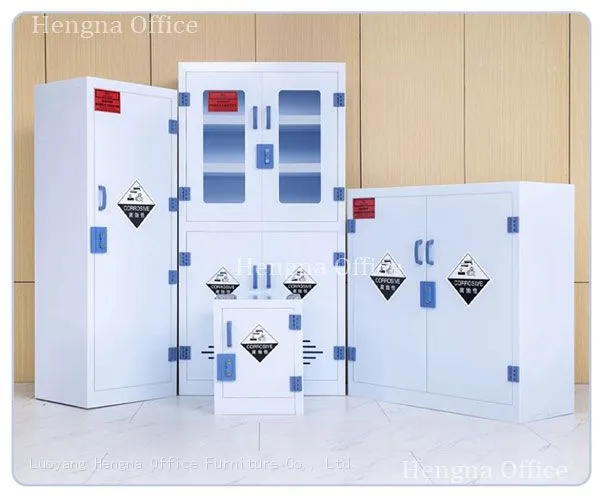
Walk through the back rooms of any veterinary clinic, and you’ll find a quiet collection of chemicals doing important work. Concentrated disinfectants. Lab reagents for in-house bloodwork. Staining solutions. Acids and buffers for testing. None of them belong on an open shelf — and nearly all of them will attack anything made of steel. A veterinary acid storage cabinet gives those bottles a proper home: polypropylene, wipe-clean, and locked.
What Goes Inside a Veterinary Acid Cabinet
Veterinary work runs on chemistry, even in a small practice — and in a full veterinary lab, the list only grows. The question isn’t whether you have corrosive chemicals. It’s where they live.
The usual contents:
Disinfectant concentrates. Chlorine-based products arrive corrosive straight from the jug — the same chemistry that rusts shelves and hinges.
Laboratory reagents. In-house bloodwork and diagnostics run on reagents and solutions, some with a corrosion pictogram right on the label.
Staining solutions and buffers. Prepared stains and buffers that need containment and a locked door, not a shelf.
Acids, bases, and pH solutions. Small acid stocks, testing solutions, and the buffers every lab keeps somewhere.
Tissue preservatives. Larger hospitals and teaching clinics that do histology keep preservation fluids in their own controlled spot.
Rule of thumb: if the bottle carries the GHS corrosion diamond, it belongs in a cabinet like this.
Why a Metal Cabinet Fails in a Clinic
A clinic is harder on equipment than most labs. Floors get washed daily. Cages get flushed. Aerosols from spray bottles settle on every surface. Water and disinfectant end up in the air — and on whatever is standing in the room.
On a coated steel cabinet, that reality shows up fast:
Concentrated disinfectant splashes eat into the coating at the edges and hinges.
Humidity from washdowns works on the paint from the outside.
A cart bump opens a scratch, and bare steel appears underneath.
Once moisture and chemicals reach that steel, rust spreads under the paint — often along the door frame, right above your stock.
A polypropylene cabinet skips the whole story. There is no iron in it and no coating to fail — the body simply never rusts, and the chemicals that destroy metal shelving are the ones this cabinet was made to hold.
The Wipe Clean Advantage
Hair, dander, dust, and the occasional splash — clinic surfaces collect everything. A storage cabinet has to be cleanable, not just clean on day one.
A molded polypropylene body makes that easy:
Smooth surfaces wipe down in seconds. Warm water and a mild detergent handle daily dust and fingerprints. For spills, one cloth and the right gloves are usually the whole job.
Nothing to soak in. No coating, no paint edges, no rust pockets where moisture can sit. What you see is what you wipe.
The bottom tray catches what leaks. If a bottle seeps, the spill stays in the tray — off the shelf, off the floor, and away from the rest of your stock.
Your own protocol still applies. Most practices finish the job with their standard surface disinfectant. Check the label for plastic-safe compatibility, then you’re done.
A clean cabinet also reads as a safe cabinet. When a hygiene or safety reviewer walks through, a wiped-down, labeled, locked chemical store is one less thing on the clipboard.
Sized for Clinic Realities, Not Warehouse Scale
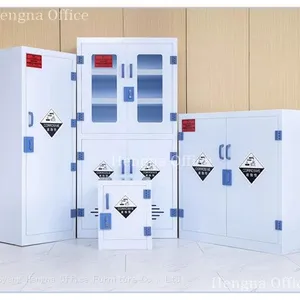
Most veterinary practices and animal clinics don’t need a wall of storage. They need a few well-placed cabinets:
4–15 gallons: single door, single shelf. Right for the treatment-room bench, the lab counter, or a back-room worktable.
22–30 gallons: the stockroom workhorses — bulk disinfectant, reagent bottles, and the backup stock that keeps the practice running.
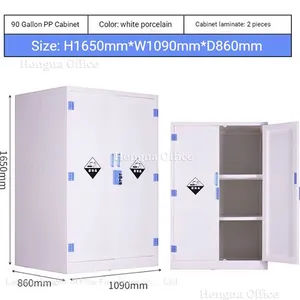
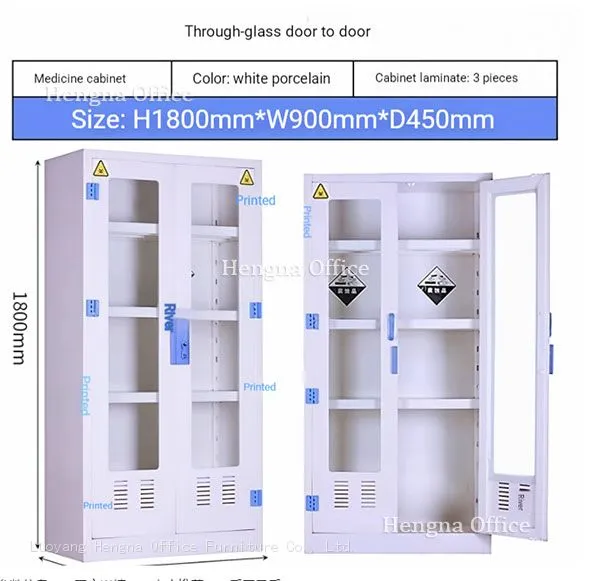
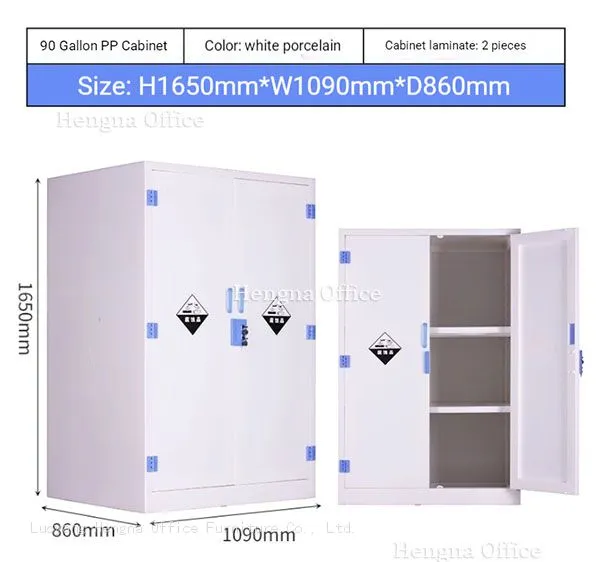
45–90 gallons: double-door units for teaching hospitals, referral centers, and practices with a real chemistry setup.
Shared features across the range:
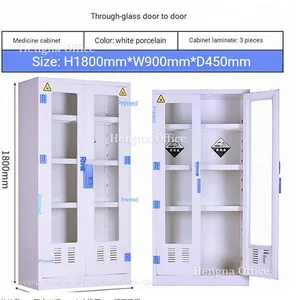
Blue vision window — check levels and labels without opening the door, so gloved hands stay gloved.
Adjustable PP shelves — fit tall jugs or short reagent bottles, and change the spacing in seconds.
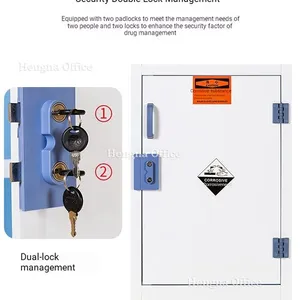
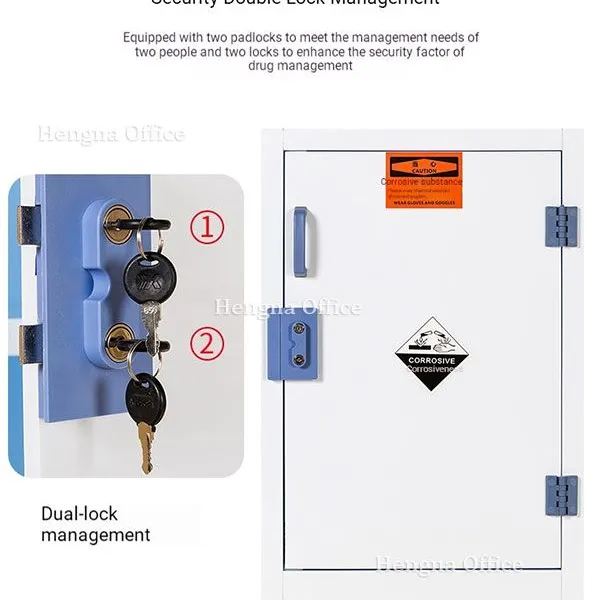
Double lock — keeps chemical access with the people who should have it.
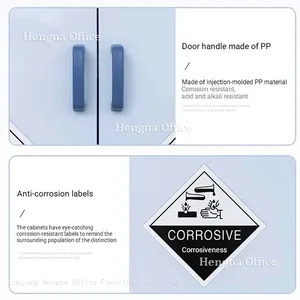
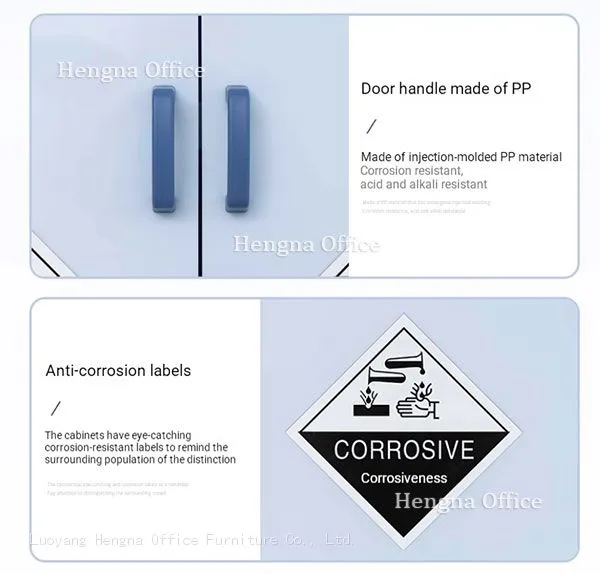
GHS corrosive labels and passive base vents — proper hazard communication, and air that keeps moving so fumes can’t pool.
Spill-retaining bottom tray — every model ships with one.
If you’re between sizes, start with your largest container, then count a week of everyday bottles. That pair of numbers settles it.
Safer for Staff, Clearer for Reviews
Move corrosive chemistry off open shelves, and three things improve at once. Staff stop handling dusty, damaged bottles. Spills end up in a tray instead of on the floor. And the practice can show a reviewer exactly how chemical storage is handled — labeled, locked, contained, documented.
Storage quality is one of the first things a careful walk-through notices. A cabinet like this is easy to explain: what goes in, who holds the keys, how it’s cleaned.
One honest note: this cabinet is built for corrosive chemicals. Controlled substances usually fall under their own security rules — check your local requirements before assigning them here.
Common Questions From Veterinary Teams
What do most clinics store in an acid cabinet? Concentrated disinfectants, lab reagents, staining solutions, small acid and buffer stocks — and any bottle carrying the corrosion pictogram.
Why does a steel cabinet rust so quickly in a clinic? Wet floors, washdowns, and disinfectant sprays keep the air humid and chemically active. Once the coating is scratched or softened, the steel underneath starts to rust, and it spreads under the paint.
Why polypropylene instead of stainless steel? Stainless handles some acids, but chlorides — the chemistry behind chlorine disinfectants and hydrochloric acid — pit it over time. That’s why labs and clinics keep corrosive storage in PP.
Our practice is small. Is a cabinet really necessary? Small volumes still leak, spill, and corrode. You don’t need a big unit — a 4- to 15-gallon cabinet sits on or under a bench and keeps the whole day’s chemistry in one controlled place.
How do we keep it clean between busy days? A quick wipe with warm water and mild detergent handles daily dust. For spills, follow your clinic’s spill protocol first, then wipe the surface. Finish with your standard surface disinfectant if your protocol calls for it — gentle products only, no abrasives.
Does it need ventilation? The passive vents at the base keep air moving so fumes don’t collect. For standard storage that’s usually enough. If your practice rules require ducting for fuming chemicals, follow those rules.
Where should we place it? Away from washdown spray and off the floor. A back-room corner, the lab wall, or the area beside the pharmacy station all work. Keep it out of direct sun, and close to where the chemicals actually get used — so bottles don’t travel across the practice.
Can it be used for controlled substances? No — it’s built for corrosive chemicals. Controlled substances typically need security-rated storage under specific regulations. Check with your licensing body.
Ready When You Are
If your clinic stores chemistry on open shelving, this is one change that pays off quietly every day — fewer replacements, fewer spills, cleaner reviews. Tell us what your practice stores and the space you have in mind. We’ll match the size, set the shelf layout, and quote it delivered to your port. Custom sizes and OEM programs are available for practices, practice groups, and veterinary suppliers.

Send Inquiry to This Supplier



You May Also Like
-
4 - Gallon Corrosion-resistant Safety Cabinet for Hazardous Chemicals Acid SupplierUS$ 340 - 500MOQ: 5 Combos
-
22 Gallons /80 L PP Acid - Base Cabinet: Safeguard Chemical Storage Supplier OEMUS$ 500 - 600MOQ: 5 Combos
-
Laboratory Polyethylene Acid and Corrosive Chemicals Safety Storage PP CabinetUS$ 340 - 600MOQ: 5 Combos
-
4 Gallon Laboratory PP Acid and Alkali Resistant Storage Cabinet With Adjustable Spill-Proof Shelf - OEM/ODMUS$ 500 - 600MOQ: 5 Combos
-
Full PP Anti-Corrosion Safety Cabinet for Corrosive Storage, White Porcelain, Leak-Proof DesignUS$ 500 - 600MOQ: 5 Combos
-
12 Gallon Industrial PP Corrosive Chemical Safety Cabinet With Anti-Leak Trays and Optional Venting for Chemical PlantsUS$ 500 - 600MOQ: 5 Combos
-
Heavy-Duty Full PP Corrosion-Resistant Safety Cabinet With Sealed PP Hinges, Chemical Storage FacilitiesUS$ 500 - 600MOQ: 5 Combos
-
School Laboratory PP Reagent Storage Cabinet With Double Lock Security - Custom SizesUS$ 500 - 600MOQ: 5 Combos
-
Customizable PP Chemical Storage Cabinet for School Science Labs - Acid & Alkali Resistant With Spill-Proof Adjustable ShelvesUS$ 500 - 600MOQ: 5 Combos
-
PP Anti - Corrosion Safety Cabinet for Hospital Testing Labs, Metal - Free Rust - Proof BuildUS$ 500 - 600MOQ: 5 Combos