


 Contact Platform Support
 Help Center
Heavy Duty Tool Cabinet for Mine and Quarry Sites — Sledgehammers and Jacks Won't Bow It

Product Spotlights



Related Products
-
 Heavy Duty Tool Cabinet for Food Plant Maintenance — Why Are Your Wrenches Rusting FirstUS$ 89 - 300MOQ: 6 Combos
 -
Heavy Duty Tool Storage Cabinet | Industrial Tool Organizer for Garage & WorkshopUS$ 200 - 600MOQ: 5 Sets
-
Hengna Heavy-Duty Automotive Tool Cabinet With Glass Doors - Professional Storage for Auto Repair Shops & MechanicsUS$ 200 - 600MOQ: 5 Sets
-
Hengna Industrial Steel Tool Cabinet With Adjustable Shelves - Factory Storage Solution for Manufacturing PlantsUS$ 200 - 600MOQ: 5 Sets
-
Weather-Resistant Construction Tool Cabinet - Lockable Storage for Building Sites & Contractors SupplierUS$ 200 - 600MOQ: 5 Sets
Heavy Duty Tool Cabinet for Mine and Quarry Sites — Sledgehammers and Jacks Won't Bow It
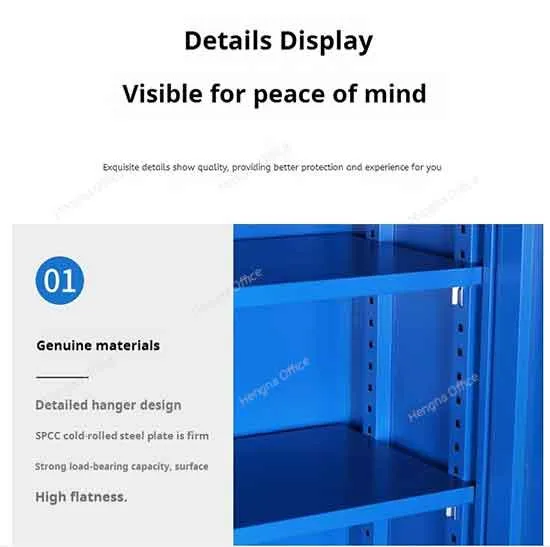
Short answer: a shelf sags because of its cross-section, not because of how thick the steel is. The same steel, bent into a ribbed profile instead of left flat, carries far more weight without bowing — and that single difference is what keeps this cabinet flat under sledgehammers, hydraulic jacks and pullers.
Why a Load Rating in Kilos Won't Help You on a Mine Site
Most cabinet listings give you one number — a shelf rating in kilograms — and stop there. On a mine or quarry site that number tells you almost nothing.
The figure assumes the load is spread evenly across the whole shelf. Nobody stores gear that way. A sledgehammer lands on one corner. A hydraulic jack sits in the middle with a puller balanced on top. A box of drill steels drops in as a dead weight. Same total kilos, completely different force on the metal.
So instead of printing a number that only holds true in a test rig, it is worth explaining the shelf itself. Once you understand what makes a shelf bow, you can judge any cabinet on the market — including ours.
The Parameter That Actually Decides It: Section Stiffness
Plate thickness is the number buyers look at. It is not the number that decides whether a shelf bows.
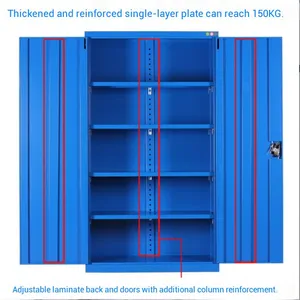
What decides it is the section — the shape the steel is formed into. A flat sheet resists bending poorly: load the middle and it flexes, corner-load it and it twists. Bend that same sheet into a ribbed channel and its resistance to bending increases out of proportion to the material used. The rib acts like a shallow beam, carrying load to the side rails instead of letting the sheet sag between them.
This is why a ribbed shelf of the same steel can outperform a flat shelf by a wide margin — and why comparing cabinets on plate thickness alone leads people to the wrong conclusion.
| Behaviour | Flat single-skin shelf | Ribbed stiffened shelf |
|---|---|---|
| Heavy load in the centre | Deflects most here; takes a permanent set over time | Rib transfers load to the side rails |
| Load on one corner | Shelf twists and tilts | Ribs resist twisting across the full width |
| Repeated loading | Never returns fully flat | Springs back when the load comes off |
| Long tools resting on the edge | Edge folds down over time | Edge stays straight |
| What the crew notices | Tools slide to the low side, drawer faces go out of line | Everything stays where it was put |
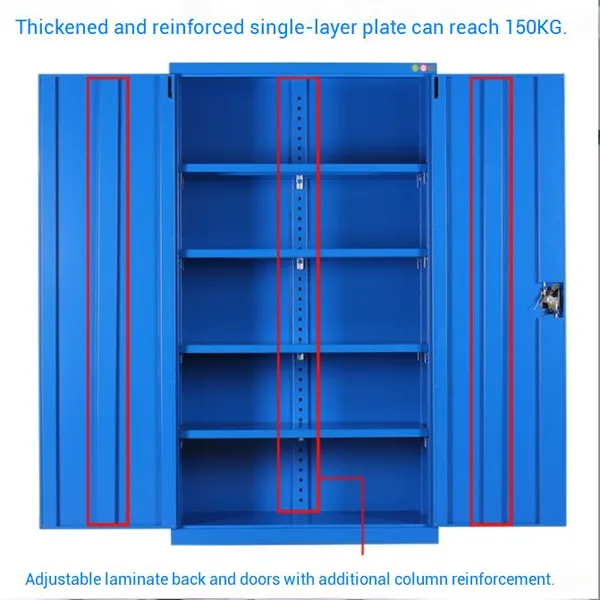
Two more things hold the shelf up. The adjustment brackets are the load path from shelf to frame — if they are thin stampings they flex and the shelf wobbles. Ours are designed to keep the shelf seated firmly at any height. And the cabinet frame itself has to stay rigid, because a shelf is only as stable as the frame it sits in.
What This Means on a Mine or Quarry Site
Site workshops are hard on storage in specific ways.
Gear is heavy and it is long. Crowbars, pinch bars, drill steels and pullers do not fit neatly into a drawer, so they end up on a shelf or hung on a panel. Heavy items get put down where there is space, not where the load chart says.
Tools move between sheds. A cabinet gets emptied, dragged onto a truck, and refilled somewhere else.
Dust is constant. Fine grit works into anything that is not closed, and grit in a slide is what turns a smooth drawer into a two-handed fight.
Floors are rarely level. A cabinet leaning a few degrees puts uneven load on one corner of every shelf, which is exactly the load case a flat shelf handles worst.
None of these are unusual problems. They simply are not the problems a test-rig load figure is measuring.
What the Cabinet We Build Looks Like
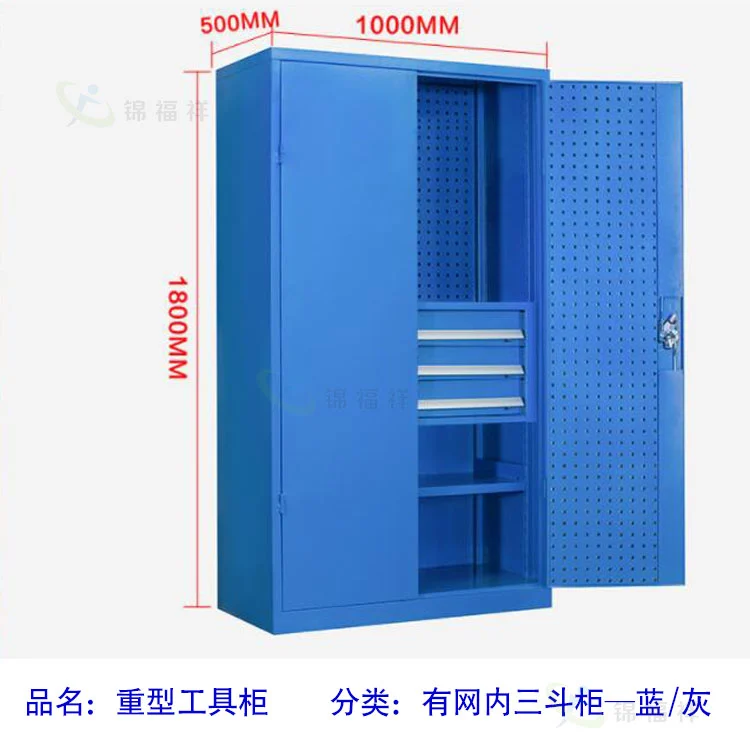
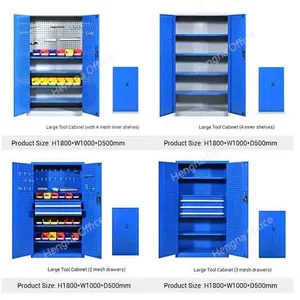
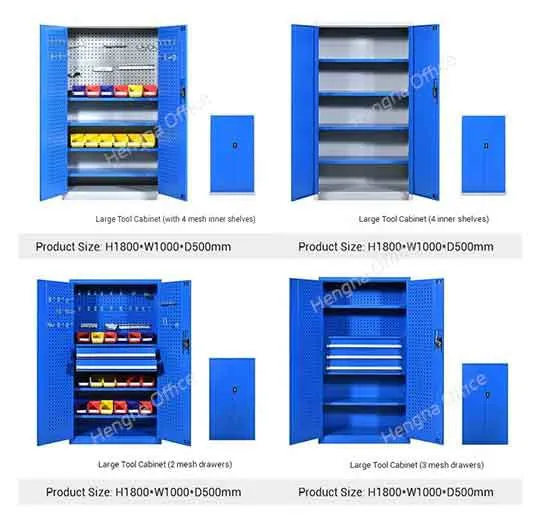
Hengna has been in steel furniture for nine years, working directly with the production facilities that build our range. Luoyang Hengna Office Furniture Co., Ltd. supplies this cabinet in two shell configurations, both on the same 1000 mm W × 500 mm D × 1800 mm H frame:
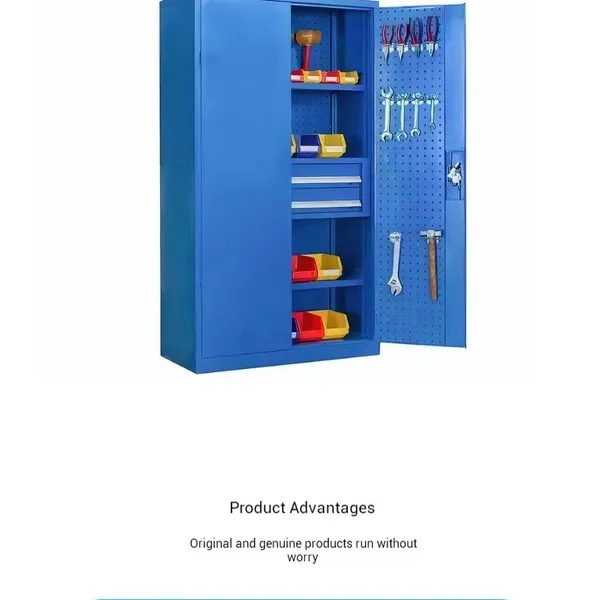
Option A — shelved shell. Four height-adjustable shelves with stiffening ribs. Shelf height is reset by hand, no tools. This is the layout for sites that store bulky and long tools.
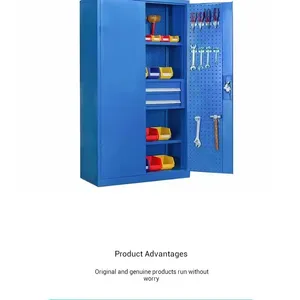
Option B — panel and drawer shell. Square-hole hanging panels in the upper section for hooks, wrench racks and parts bins, with two full-width drawers below for meters, calipers and consumables.
Whichever shell you take:
Body: cold-rolled steel, electrostatic powder-coated finish
Doors: double doors on full-length outer hinges
Lock: steel deadbolt driven into the cabinet top and bottom at the same time; one key, whole cabinet
Top: flat and load-bearing, usable as a bench surface
Delivery: welded and fully assembled — nothing to build on site
Certification: CE
Warranty: 1 year
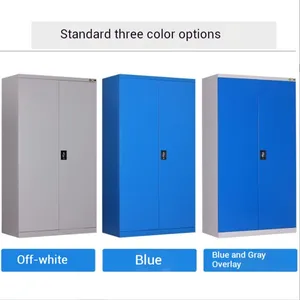
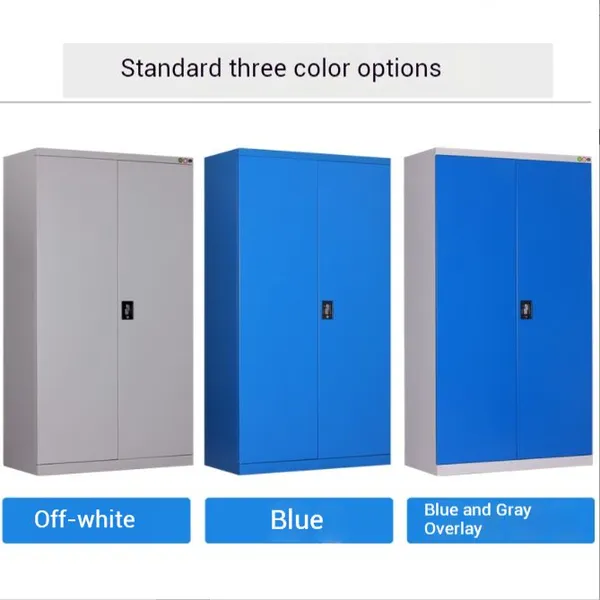
Colour: standard industrial blue or grey; other RAL references for volume orders
Which Gear Goes Where
Layer the cabinet by weight and by how often the crew reaches for it.
| Gear | Character | Where it belongs |
|---|---|---|
| Sledgehammers, crowbars, pinch bars | Heavy, long | Bottom shelf, or hung on the square-hole panel |
| Hydraulic jacks, pullers, torque multipliers | Heavy, compact | Bottom shelf, load centred rather than on a corner |
| Drill steels, bits, chisels | Medium, long | Lower shelves, or panel hooks to keep them vertical |
| Socket sets, spanners, filter wrenches | Medium, dense | Middle shelves, in trays or bins |
| Calipers, micrometers, gauges | Light, easily damaged | Upper shelf or a drawer |
| Grease, seals, rags, consumables | Light, loose | Drawers |
One rule beats any load chart: heavy and low, light and high, and never concentrated on a shelf corner. A shelf that carries a well-distributed load for years will bow in months if the same weight is dropped on one edge every day.
What This Cabinet Is Not Built For
Being straight about the limits saves everyone a claim later.
Outdoor or uncovered storage. Site sheds and workshops, yes. Standing in the rain, no.
Washed-down or coastal-salt environments. Where a cabinet is hosed daily, or where salt spray is constant, stainless is the correct material. Buy stainless for that job.
Corrosive chemicals stored inside. Acids and aggressive solvents need a dedicated chemical cabinet, not a tool cabinet.
Weather in a container on a deck. If the cabinet is going to sit on a site where humidity never drops, plan for ventilation and inspection even though the finish handles normal humidity well.
Overloading a single shelf with point loads. The ribs help a lot, but a shelf is still a shelf. Spread the load.
FAQ
What is the MOQ?
One unit for a sample. Site and distributor orders are quoted from the container up.
How does pricing work?
We do not publish prices — configuration and freight vary too much. Send us the spec and volume and you have a quote within 24 hours.
FOB, CIF or something else?
All three, plus EXW. Give us the destination port and we will quote the terms that suit you.
Warranty?
1 year.
After-sales?
Replacement parts shipped from our side. For site and distributor accounts we agree a spares list up front — slides, lock sets, hinges, shelf brackets — so a single failure does not take a cabinet out of service for a month.
Can we put our own brand on it?
Yes. Silk-screen logo on the cabinet face, custom packaging, and custom manuals under your brand. Colour matched to your RAL reference, and unit numbering if you are outfitting a fleet of sheds.
Lead time?
Standard configuration 7–15 days. Custom colour or custom layout 20–30 days.
How is it packed?
Moisture film, corner protectors, and hardware bagged separately. The cabinet ships welded, so there are no loose panels rubbing against each other in transit.
Does it need assembly on arrival?
No. Set it on level floor, adjust the shelves to your tool mix, and start loading.
How many fit in a container?
Send the target quantity and we will confirm the loading plan for your container type. It ships fully assembled, so volume is the trade-off you accept in return for a frame that arrives square.
Can the shelves be adjusted after delivery?
Yes, at any time, by hand. Sites usually reset them once after the first month, when they see what actually gets stored.
Next Step
Tell us the site type, the tool mix and the quantity. You will have a quote within 24 hours — we supply site and quarry workshops across West Africa, Southeast Asia and the Middle East.

Send Inquiry to This Supplier



You May Also Like
-
Electrician’s Tool Cabinet With Pegboard - Secure Storage for Electrical Workshops & Insulated Tools DistributorUS$ 200 - 600MOQ: 5 Sets
-
Hengna Aerospace Precision Tool Cabinet - Compliance-Ready Storage for Aviation Maintenance & RepairUS$ 200 - 600MOQ: 5 Sets
-
Hengna Vocational School Tool Cabinet With Glass Doors - Educational Storage for Technical Training ProgramsUS$ 200 - 600MOQ: 5 Sets
-
Hengna Warehouse Inventory Tool Cabinet - Heavy-Duty Storage for Logistics Centers & Distribution Facilities ManufacturerUS$ 200 - 600MOQ: 5 Sets
-
Hengna Medical Equipment Tool Cabinet - Sterile Storage for Hospitals & Clinical FacilitiesUS$ 200 - 600MOQ: 5 Sets
-
Metalworking Blue Tool Cabinet With Perforated Doors - Professional Storage for Fabrication Shops SupplierUS$ 200 - 600MOQ: 5 Sets
-
Home Garage Tool Cabinet - Versatile Storage for DIY Projects & Household ToolsUS$ 200 - 600MOQ: 5 Sets
-
H1800 x W1000mm Freestanding Warehouse Tool Cabinet - High Capacity 4-Shelf Metal Storage Unit for Inventory ManagementUS$ 200 - 600MOQ: 5 Sets
-
Lockable Tool Cabinet – Heavy Duty Steel Storage With 3-Point Lock for Workshops | Locks Out TheftUS$ 89 - 300MOQ: 6 Combos
-
Metal Tool Cabinet HS-DJG-760 – Durable Storage for Automotive Repair Shops | Lockable & Space-Saving DesignUS$ 89 - 300MOQ: 6 Combos


