


 Contact Platform Support
 Help Center
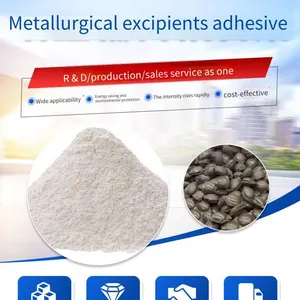
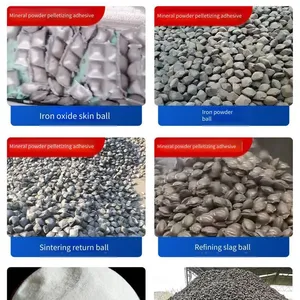
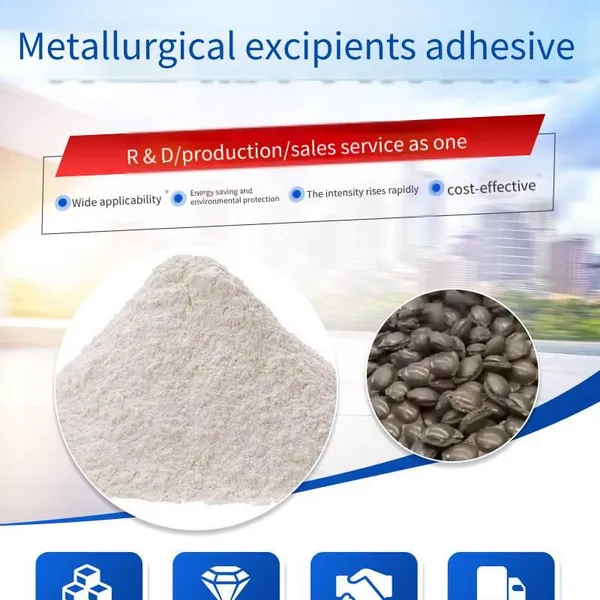
Powder Ball Pressing Binder for the Metallurgical Industry, Suitable for the Ball Pressing and Forming of Various Ore Powder Types, Ensuring Both Cold and Hot Strength


Related Products
-
 High-purity Nickel Powder Pellet Binder, Less Addition With Strong Adhesion, no Increase in Ash Content and no Damage to Quality. Bulk Orders Enjoy Preferential Prices.US$ 446.15 - 461.54MOQ: 100 Tons
 -
Low - Water - Consumption and High - Efficiency Ball - Pressing Binder. Cold - Pressing Molding of Metallurgical Powder Without Adding a Large Amount of WaterUS$ 415.38 - 430.77MOQ: 1 Ton
-
Special Binder for Carbon Raiser Granulation. a Powerful Supplier From China, Customized as Required.US$ 538.46 - 553.85MOQ: 1 Ton
-
Exclusive Ball Pressing Binder With Cold Pressing Process, no Need for Drying, Easy to Form, and the Pellets Are Firm and Non - LooseUS$ 307.69 - 338.46MOQ: 1 Ton
-
High-viscosity Mineral Powder Ball Pressing Binder, Suitable for All Kinds of Mineral Powders, With High Forming Rate and Compact and Stable PelletsUS$ 292.31 - 307.69MOQ: 1 Ton
Determination Method of Addition Ratio of Metallurgical Auxiliary Binder
I. Five Core Determining Factors (The ratio is entirely determined by these five points)
The finer and fluffier the raw material powder is, the larger the addition amount; the coarser and denser the particles are, the smaller the addition amount.
Coarse material: 1.0%~1.8%
Medium-fine material: 2.0%~3.0%
Ultra-fine ash / sludge: 3.0%~4.5%
The higher the moisture content of the raw material (less than 25%), the less the amount of binder used; more binder needs to be added to dry materials.
Moisture content 8%~12%: Normal ratio
Moisture content > 15%: Reduce by 0.5%~1%
Dry material
Material composition
Iron-containing materials, neutral powders: Regular usage amount
High-calcium ash, iron oxide scale, high free calcium oxide: Add 0.5%~1.5% more (prone to loosening and expansion)
Coke powder, graphite, carbonaceous materials: Add about 1% less
Molding process
High-pressure ball pressing: The lowest usage amount
Medium-pressure double-roller: Regular standard ratio
Low-pressure molding / Disc pelletizing: Add about 1% more
Strength requirements for use
For short-distance self-use and fast charging into the furnace: The lowest addition amount
For long-distance transportation, stacking, and water resistance: Take the upper-middle ratio
II. General Standard Addition Ratios for Various Materials
Organic / composite binder for iron ore concentrate pellets: 1.2%—2.0%
Special adhesive for steel mill dust and iron oxide scale: 2.2%—3.5%
Iron-containing sludge and wet mud: 3.0%—4.5%
Coke powder, carburant, and graphite powder: 1.0%—2.0%
Manganese ore, chrome ore, and non-ferrous ore powder: 1.8%—3.0%
Inorganic bentonite: 5%—12% (Large addition amount reduces grade)
III. Simplest on-site determination steps (Factories can follow directly)
First, conduct a trial mix according to the intermediate value. For example, first add the adhesive to the dust at a rate of **3%** for a trial.
Check the state of the wet balls. If they fall apart when pinched → add 0.3%. If they stick to the mold and become soft → reduce by 0.3%.
After air-drying for 24 hours, measure the dry strength. If they are fragile and pulverize → increase by 0.5%. If they have sufficient hardness and do not shed powder → lock in the ratio.
In the rainy and humid season, increase the ratio by a fixed 0.5%.
IV. Calculation formula (Accurately calculate the usage amount)
Weight of the adhesive required per ton of powder (kg) = Weight of the powder (tons) × Addition ratio
Example: For 10 tons of dust with a ratio of 3%, the required adhesive is 0.3 tons = 300 kg.
V. Principle of cost-saving and quantity control
Add as little as possible. Adding more only increases the cost without increasing the efficiency.
For high-pressure equipment, try to lower the ratio as much as possible.
For the formula that does not require drying, preferably choose the lower limit of the ratio.
If the finished products do not break up and do not crush during transportation, that's the appropriate ratio.

Send Inquiry to This Supplier


You May Also Like
-
Nickel-cobalt Powder Binder, Non-sticking to Roller Skin, Economical and Practical, Low Dosage Required. Welcome to Consult and Learn More.US$ 446.15 - 461.54MOQ: 1 Ton
-
Adhesive for Pressing Cakes and Blocks of Recycled Iron Filings/shavings, Assisting in Resource Recycling and ProcessingUS$ 276.92 - 292.31MOQ: 1 Ton
-
High-purity and Low-carbon Fluorite Pellet Binder, Less Addition With Strong Adhesion, no Increase in Ash Content and no Damage to Quality, for Fluorite Powder ProcessingUS$ 446.15 - 461.54MOQ: 100 Tons
-
Industrial-grade Ferrochrome Binder, Preferred for Temperature Resistance and Crack Resistance, High-density Briquetting Binder, Improved Forming Rate!US$ 246.15 - 261.54MOQ: 1 Ton
-
Binder for Metallurgical Furnace Charge Briquetting, Meticulously Crafted by Jinhang. Strong Bonding, no Impact on Smelting Components, Ensuring QualityUS$ 261.54 - 276.92MOQ: 1 Ton
-
Environmental-friendly Calcium Hydroxide Desulfurizer Binder: Green Bonding, Low Cost, for Desulfurizer ProcessingUS$ 523.08 - 538.46MOQ: 1 Ton
-
Special Adhesive for Briquetting Magnesite Powder. Direct Supply From the Source to Promote the Resource Utilization of Mineral Powder.US$ 307.69 - 338.46MOQ: 1 Ton
-
Iron-containing Sludge Briquetting Binder —— One-time Molding, Strength Meets the Standard, Stable Adhesion and no DisintegrationUS$ 261.54 - 276.92MOQ: 1 Ton
-
Silicon Manganese Nitride Binder With Low Addition Amount, Does Not Reduce the Grade, Used for Granulation of Ferrosilicon Manganese PowderUS$ 453.85 - 461.54MOQ: 1 Ton
-
Yujinhan High-efficiency Fluorite Ball Binder, Strong and Solid Forming, Wear-resistant, Suitable for Smelting and Deep Processing RequirementsUS$ 384.62 - 400MOQ: 1 Ton


