


 Contact Platform Support
 Help Center
China LCL and FCL Shipping Service With Customs Clearance Support
Product Spotlights





Related Products
-
 China to Germany Auto Parts Sea Freight and Door Delivery ServiceNegotiableMOQ: 1 Kilogram
 -
China Logistics Top Logistic Companies Transport Shipping Service Buying Agent to US France WarehouseNegotiableMOQ: 1 Kilogram
-
DDP Sensitive Goods Shipping Reliable Ship TransportationNegotiableMOQ: 1 Gram
-
China to Mexico Transportation DDP Door-to-door Delivery Insurance Low Freight Air Truck Sea Transportation Shipping AgentNegotiableMOQ: 1 Cubic Meter
-
China to Middle East Israel Asia UAE Saudi Arabia Sea Shipping Agency LCL + Express Freight Forwarding Logistics WarehousingNegotiableMOQ: 1 Cubic Meter
China LCL and FCL Shipping Service with Customs Clearance Support
Quick Answer
We provide LCL and FCL sea freight coordination from China for importers, wholesalers, distributors, retailers and commercial buyers. Our service can connect supplier pickup, China warehouse receiving, cargo consolidation, export declaration, international sea freight, destination customs clearance support and delivery to an agreed address.
LCL, or Less than Container Load, allows smaller shipments to share container space. FCL, or Full Container Load, gives one shipment dedicated container space. The better option depends on cargo volume, weight, handling needs, destination charges and the receiving plan rather than a single universal volume threshold.
We review your shipment details and compare suitable shipping arrangements before a booking is confirmed. Customs responsibilities, taxes, local charges and final delivery scope are specified according to the country, cargo and quotation.
Need a reliable China supply chain partner?
YOUSI SUPPLY helps overseas buyers source products in China and coordinate suppliers, warehouse operations, quality-control arrangements and international shipments. By organizing product information and cargo before dispatch, we help connect purchasing activity with a practical export logistics plan.
Learn more: /
Our LCL and FCL Sea Freight Services
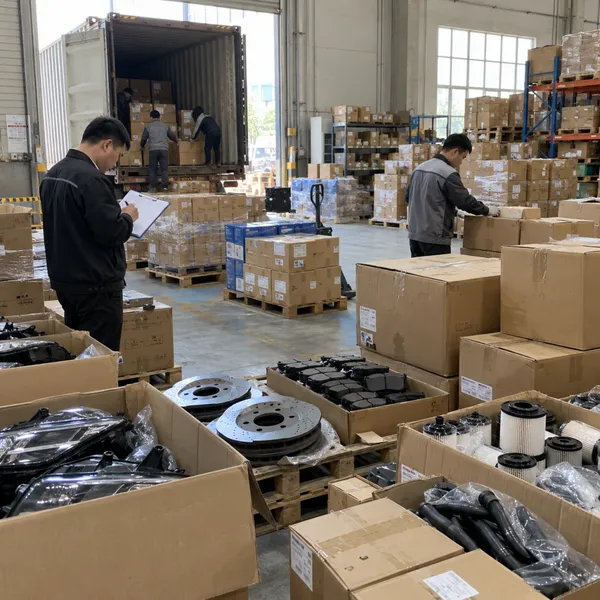
We can coordinate• Supplier pickup and cargo receiving in China
• Multi-supplier consolidation for suitable products
• Carton quantity, visible packing condition, weight and dimension checks
• Cargo photos, sorting, repacking and shipping marks when agreed
• LCL bookings and consolidation warehouse handling
• FCL container selection, booking and loading coordination
• Commercial invoice and packing list information review
• China export customs declaration coordination
• Ocean freight and shipment status follow-up
• Destination customs clearance support on confirmed routes
• Truck delivery to importer, wholesale, ecommerce or 3PL warehouses
Cargo acceptance and the service scope are confirmed after reviewing the products and shipping route. Warehouse receiving is not a full product inspection unless that service is separately agreed.
Who This Service Is For
Our sea freight support is intended for• First-time commercial importers planning an initial sea shipment
• Wholesalers restocking mixed product categories
• Distributors ordering from several Chinese manufacturers
• Retail chains moving planned seasonal inventory
• Ecommerce sellers delivering inventory to their own or 3PL warehouses
• Industrial buyers shipping tools, equipment or machinery parts
• Growing businesses comparing LCL and FCL for larger orders
The important question is not only how much you buy, but how the goods are packed, where they originate, and where they must arrive.
What Is LCL Sea Freight?
LCL means Less than Container Load. Cargo from more than one shipper is consolidated into shared container capacity under an applicable LCL service.
LCL is commonly considered for commercial orders that do not justify reserving a full shipping container. It may be useful for sample-scale commercial inventory, trial wholesale purchases, mixed supplier orders, periodic ecommerce replenishment and smaller palletized cargo.
The shipment usually passes through a container freight station or consolidation facility. At the destination, deconsolidation and release procedures can create handling and local charges in addition to the ocean freight amount.
Before comparing LCL prices, confirm which origin charges, destination charges and delivery services are included.
How LCL Pricing Works
LCL services commonly assess cargo according to applicable weight or measurement rules. Volume is often expressed in cubic meters, or CBM. Some routes charge on a weight-or-measurement basis and apply minimum charges.
For example, a compact heavy shipment and a bulky light shipment with the same physical volume may be assessed differently depending on the service's tariff. That is why the packing dimensions and gross weight are both needed.
The total LCL cost may include• China supplier pickup and domestic handling
• Receiving, consolidation and documentation
• Origin CFS and export-related charges
• Ocean freight
• Destination CFS and deconsolidation charges
• Import customs clearance services
• Duties, taxes and local charges where applicable
• Final trucking, appointment or special unloading
A low per-CBM sea freight quotation alone does not establish the full cost to the warehouse.
LCL Transit and Handling Considerations
LCL freight follows the available consolidation and vessel schedules. Additional handling may be necessary because shipments are combined at origin and separated at destination.
This does not mean LCL is unsuitable for fragile products, but packaging should be reviewed with the expected handling process in mind.
For urgent arrival requirements, the shipment timeline should include the receiving cutoff, consolidation date, vessel departure, destination deconsolidation, customs release and final delivery.
What Is FCL Container Shipping?
FCL means Full Container Load. It allows a buyer to reserve dedicated container space rather than combine its cargo with other customers' shipments in one LCL consolidation.
Common dry container types include• 20GP for suitable smaller-volume or denser container shipments
• 40GP for larger general commercial cargo volumes
• 40HQ for suitable high-volume cargo requiring additional interior height
The container type is selected according to cargo dimensions, total weight, stacking limits, packing method and route availability. A dedicated container does not automatically make all goods suitable for shipment together; dangerous goods, incompatible cargo and other restrictions still require review.
When FCL May Be a Better Choice
Consider an FCL quotation when• Cargo volume is large enough to use dedicated container space efficiently
• Many cartons from one or several suppliers need to move together
• Destination warehouse unloading is set up for container deliveries
• Pallet or floor-loading plans can be managed as one shipment
• A dedicated container provides a more suitable handling arrangement
FCL can also be worth comparing before a container is nearly full. Conversely, a poorly utilized full container may cost more than an LCL arrangement once all local charges are included.
We compare the complete origin-to-destination quotation instead of declaring a fixed CBM break-even point for every trade lane.
Choosing Between 20GP, 40GP and 40HQ
Container choice starts with actual dimensions and loading constraints, not only a theoretical cubic-meter figure.
Heavy or dense products may be limited by weight, while lightweight bulky goods may reach space limits first. Pallet footprints, carton stackability, door opening dimensions and handling access also affect practical utilization.
For FCL planning, please provide• Carton and pallet quantity
• Length, width and height of each package type
• Gross weight and total shipment weight
• Heavy, fragile or non-stackable cargo details
• Palletized or floor-loaded preference
• Required destination unloading method
Oversize, heavy or specialized cargo may require equipment beyond standard dry containers and must be reviewed separately.
Floor Loading Versus Pallet Loading
Floor-loaded cartons can use container space efficiently when carton strength and unloading conditions allow. However, the destination may require additional labor and unloading time.
Pallet loading makes many shipments easier to handle with forklifts and can support organized receiving, but pallets occupy space and may add handling and packing costs.
Neither method is automatically preferable. We review the trade-off using cargo protection, loading safety, freight cost and warehouse requirements.
FCL Loading and Container Checks
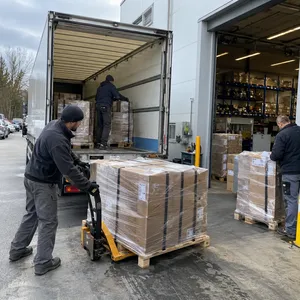
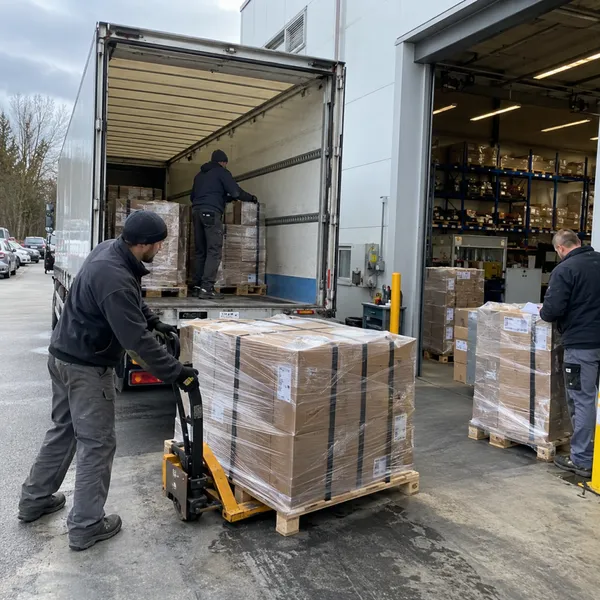
For applicable FCL shipments, the loading arrangement can include an empty-container visual check, cargo positioning, quantity confirmation, container sealing and trucking to port.
Visual checks may look for obvious holes, water intrusion, abnormal odors, dirty floors or significant door damage. Serious problems should be addressed before loading.
The container loading plan should account for weight distribution, fragile cartons, pallet stability, blocking or securing where appropriate and the destination unloading sequence.
The verified gross mass and other carrier requirements must be handled in accordance with the applicable booking rules. Incorrect shipment data can affect container acceptance and transport planning.
Multi-Supplier Warehouse Consolidation in China
Importers often order from several Chinese suppliers instead of a single factory.
One supplier may produce the main goods, another accessories, and a third packaging or replacement components. Each factory may have a different cargo-ready date and document format.
We can coordinate receiving and consolidation when the products and shipping arrangement are suitable. Cargo is identified by supplier, purchase order and shipping reference before final measurement and booking.
Consolidation does not necessarily mean all goods must be declared under one generic product name. Each product should retain the information needed for accurate customs documents.
If one supplier is delayed, we can review whether to hold the other cargo or ship it separately according to the required delivery date and additional logistics cost.
Warehouse Receiving and Repacking
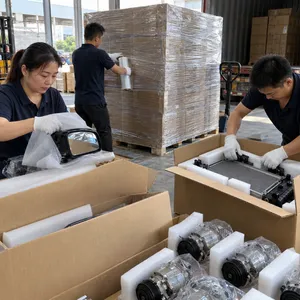
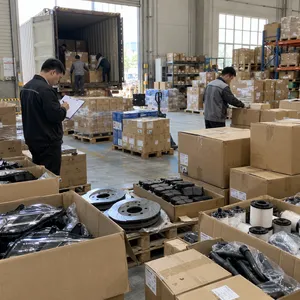
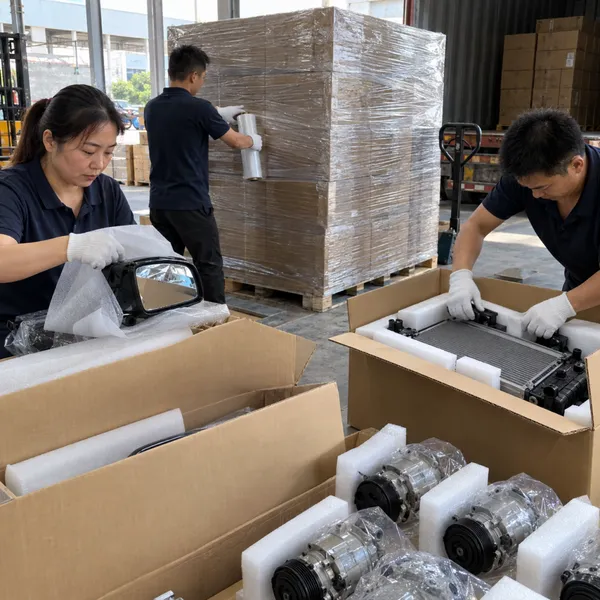
Basic receiving support may include package count, visible outer condition, shipping marks, photos, dimensions and gross weight.
Optional preparation may include• Reinforcing weak cartons
• Replacing visibly damaged outer packaging
• Applying shipping labels and carton marks
• Sorting cartons by supplier, SKU or delivery reference
• Palletizing or stretch-film wrapping suitable cargo
• Coordinating wooden cases or other protective packing
Product-quality testing, technical inspection, brand authentication and individual-piece verification are separate from standard logistics receiving.
Cargo Volume and Weight Confirmation
Supplier estimates may change after production or repacking. When the goods arrive, actual carton dimensions and weights may differ from the original purchase information.
For LCL freight, the final measurements can affect the freight basis. For FCL freight, they can affect the selected container, loading feasibility and domestic trucking requirements.
We recommend confirming the shipment's final physical data before committing to a transportation option whenever the schedule permits.
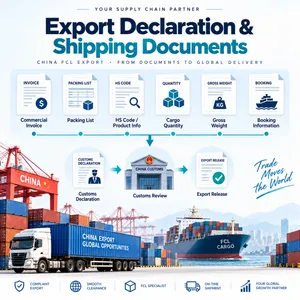
China Export Customs Declaration
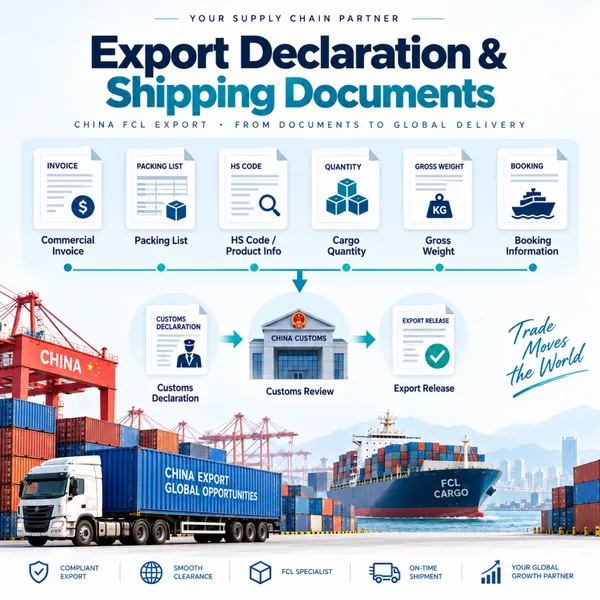
Commercial shipments leaving China may require export customs declaration. We can coordinate export-related logistics and document information for suitable cargo.
Typical information may include• Exporter and buyer details
• Commercial invoice and packing list
• Accurate product descriptions and quantities
• HS code information where available
• Product materials, functions and intended use when required
• Commercial values and country of destination
• Permits, certificates or authorizations where applicable
The export arrangement should be reviewed in light of the seller, exporter of record and underlying commercial transaction. Goods from several factories may require careful coordination of invoice and product records.
Shipping Documents for LCL and FCL
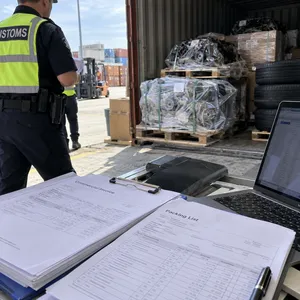
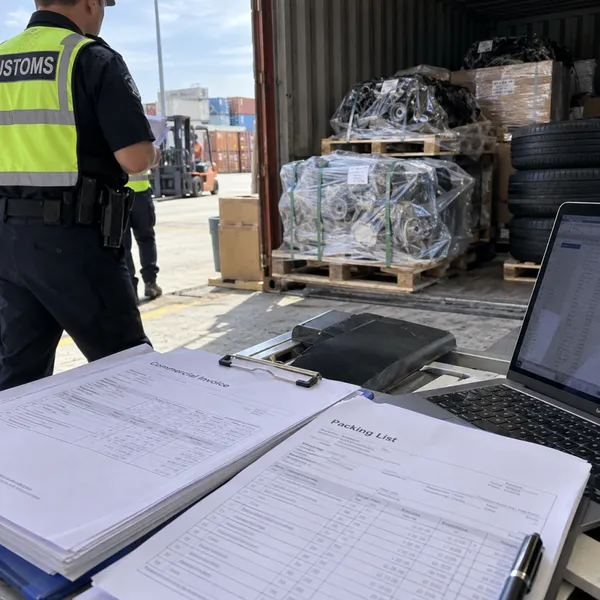
The shipping document set may differ according to the route and booking arrangement, but can involve a commercial invoice, packing list, bill of lading or sea waybill, export declaration information and other cargo-specific supporting records.
Please confirm the shipper, consignee, notify party, ports, shipping terms and applicable delivery contact information before the final documents are issued.
A mismatch between product names, quantities, commercial values and actual packages can lead to clarification requests or amendments.
Customs Clearance Support at Destination
Import customs rules vary by destination country. We can coordinate customs clearance support for confirmed routes, while the importer and customs representative must establish the appropriate import arrangement and required documents.
Before shipping, we may request• Registered importer information
• Commercial invoice and packing list
• Transport document
• Product description and HS code information
• Declared commercial value and country of origin
• Product photos or specifications
• Required product certificates and authorization documents
Customs authorities may request additional information or select cargo for examination. Timely cooperation from the buyer and suppliers is important when that occurs.
Customs Classification, Duty and Tax
The classification and declared value of imported goods can affect duty, taxes, import restrictions and documentation requirements. The destination country's rules determine the applicable charges.
For mixed commercial shipments, avoid placing many unrelated goods under vague labels such as general products or accessories without an adequate product breakdown.
Our freight quotation should distinguish transportation and handling fees from duties, taxes and other destination charges. We do not guarantee a specific tax result or clearance decision.
What Is Included in Customs Clearance Support?
The phrase customs clearance support may refer to document coordination, communication with a local clearance partner, import entry handling or related follow-up depending on the agreed service.
It should not be assumed to include every certificate, inspection fee, duty, tax or customs examination charge. The importer should confirm its legal and tax responsibilities before booking.
DDP, DAP and Port-to-Port Arrangements
Sea freight can be arranged under different service scopes.
Port-to-port service typically covers agreed freight movements between specified ports but does not automatically include local import charges or delivery to a warehouse.
Under an agreed DAP arrangement, the seller generally arranges delivery to the named place while the buyer handles import clearance and import charges. Under DDP, the seller generally bears more import-side obligations, subject to the actual transaction and relevant legal requirements.
DDP service is not automatically available for every cargo type or destination. We review the importer structure, country, product category and shipping route before confirming any duty-paid option.
Door Delivery After LCL or FCL Sea Freight
After customs release and any required cargo release, suitable shipments can continue to an importer warehouse, wholesale warehouse, ecommerce fulfillment facility, 3PL warehouse, distribution center or other supported commercial address.
The delivery method can be different for LCL and FCL cargo.
LCL cargo may be collected from a destination handling facility and delivered as individual cartons or pallets. FCL cargo may require delivery and unloading of an entire container, followed by the applicable empty-container return arrangements.
Before quotation, please provide the complete delivery address, city, postcode, receiving hours, contact person, appointment requirements and loading-dock or forklift availability.
Special services such as tail-lift, inside delivery, long waiting time, redelivery, extra stops or unusual unloading equipment should be requested in advance.
FCL Container Unloading and Free Time
FCL deliveries may require live unloading while the truck waits, or a drop-and-return arrangement where supported.
Please confirm whether the receiving warehouse can accept a full container and unload it within the available time. Free time, demurrage, detention and storage can affect the shipment's final cost if release, collection or container return is delayed.
For LCL shipments, confirm destination warehouse and deconsolidation charges, collection conditions and storage terms.
A realistic delivery plan considers these responsibilities before the vessel arrives.
Comparing Total LCL and FCL Costs
When comparing quotations, consider• China pickup and supplier coordination
• Consolidation and cargo handling
• Packing, palletizing and cargo measurement
• Export documentation and declaration support
• LCL ocean freight and CFS charges or FCL container booking and trucking
• Destination terminal or deconsolidation charges
• Customs clearance services and possible inspections
• Import duty and tax responsibilities
• Final delivery and unloading conditions
An LCL quote with a low ocean rate may still carry meaningful destination handling costs. An FCL rate should not be compared without checking container delivery, free time and unloading requirements.
The decision is best based on the total estimated cost to the agreed receiving point.
Planning the Shipment Timeline
The vessel transit is only one part of the complete process. Total delivery time can include supplier readiness, warehouse receiving, packing, customs preparation, CFS cutoff or container gate-in, sailing, arrival handling, import clearance and inland delivery.
Schedules, port conditions and customs inspections can affect the final result. We recommend sharing the date when goods are needed at the receiving warehouse so the transport plan can be built backward from that target.
LCL and FCL for Wholesale Restocking
Wholesalers often move several product categories at one time. Smaller periodic restocking may be suitable for LCL, while a major purchasing cycle may favor FCL.
We can identify supplier shipments by purchase order, consolidate compatible cargo and compare transport arrangements after final measurement.
The shipping plan should account for destination inventory priorities, not just how many boxes can be loaded into one departure.
LCL and FCL for Ecommerce Inventory
Ecommerce brands may have mixed SKUs, packaging materials, accessories and stock destined for a 3PL receiving facility.
We can coordinate China-side receiving, consolidation, labeling instructions and suitable sea freight options. Warehouse-specific receiving rules and appointments should be provided before shipment.
LCL can support smaller planned batches. FCL can support larger replenishment orders when a dedicated container is justified.
Special and Restricted Cargo
Products containing lithium batteries, liquids, powders, chemicals, pressurized items, magnets or other potentially regulated materials require a separate transport review. Dangerous goods may need classification documents and an appropriate sea freight service.
Food, cosmetics, medical-related goods, branded products and other regulated categories may also require destination compliance or authorization documentation.
Please disclose special cargo before booking. An ordinary general-cargo rate does not establish acceptance for restricted products.
Branded Cargo and Compliance
For branded products, the buyer should ensure the goods are legally sourced. Supporting invoices, authorization or proof of authenticity may be requested according to cargo and destination.
Product standards, labeling, permits and market access obligations remain subject to the applicable rules. Freight coordination is not a substitute for product compliance evaluation.
Common LCL and FCL Shipping Problems
Potential problems include• Supplier cargo not ready before the cutoff
• Inaccurate cartons, weights or total CBM
• Weak outer packaging or unclear shipping marks
• Incomplete product descriptions and inconsistent documents
• Unexpected destination local charges
• Customs examination or additional document requests
• LCL deconsolidation delays
• Incorrect container size or inefficient FCL loading
• Destination warehouse not ready for unloading
• Container detention or storage beyond allowed free time
Reviewing cargo, documents and receiving conditions early can reduce preventable disruption, although it cannot eliminate operational or customs uncertainty.
Illustrative Multi-Supplier Shipping Example
A wholesaler buys commercial products from three Chinese suppliers. One factory supplies the main goods, another provides accessories, and a third supplies packaging materials.
The buyer first provides estimated carton counts, dimensions and weights. Each supplier delivers its cargo to the agreed warehouse in China. After receiving and final measurement, the combined shipment is compared under LCL and FCL quotations.
If LCL offers a better complete cost and suitable delivery timing, the goods can move under a shared-container service. If the combined cargo supports a dedicated container more effectively, FCL may be preferred.
The export and import documentation is coordinated according to the actual products and the agreed trade arrangement. Final delivery is arranged after the applicable releases.
This is an example of the planning process, not a claim about a completed customer shipment or a guaranteed saving.
Information Needed for a Fast Quote
Please send• Product names, photos or product links
• Product materials, use and HS codes if available
• Quantity, commercial values and brand information
• Number of suppliers and China pickup cities
• Supplier cargo-ready dates and pickup addresses if required
• Number of cartons, dimensions and gross weight per package type
• Total gross weight and CBM if available
• Pallet quantity, dimensions and non-stackable cargo details
• Whether consolidation, repacking, sorting or labeling is required
• Whether any products contain batteries, liquids, powders, magnets, chemicals or other restricted materials
• Available commercial invoice and packing list
• Destination country, port if known and full final delivery address
• Warehouse type, receiving hours, delivery appointment and unloading capabilities
• Target delivery date and expected shipment frequency
After receiving these details, we can review an appropriate LCL or FCL option and clearly identify the quoted scope.
Why Choose Us
• China-side supplier pickup and warehouse coordination
• Consolidation support for compatible goods from different factories
• LCL and FCL comparisons based on actual shipment data
• Cargo measurement and packing preparation
• Export declaration and customs document coordination
• Sea freight booking and shipment status support
• Destination customs clearance coordination on suitable routes
• Final commercial warehouse delivery options
• Communication support by email and WhatsApp
Our goal is to connect the purchasing, cargo preparation, export and destination receiving stages through one coordinated logistics plan.
FAQ
What is the difference between LCL and FCL shipping?
LCL uses shared container space under a consolidation service. FCL reserves dedicated container space for the shipment.
Is LCL always cheaper for small shipments?
No. Compare origin charges, ocean freight, destination handling, customs services and final delivery. Minimum charges and local fees can change the result.
When should I choose FCL instead of LCL?
FCL can be preferable when cargo volume, weight, packing and destination handling make a dedicated container more efficient. There is no universal break-even CBM for every route.
Can you collect goods from several suppliers in China?
Yes. Suitable cargo can be collected or received at an agreed warehouse and consolidated before international transport.
Can different products share an LCL shipment?
Compatible products may be consolidated subject to transport acceptance and accurate customs documentation. Special cargo requires separate review.
Can several suppliers load into one FCL container?
Yes, for suitable cargo and an agreed loading arrangement. Each supplier's quantities and product records should remain identifiable.
Can you arrange both LCL and FCL sea freight?
Yes. We can review both service options depending on route, cargo details and shipping requirements.
Can you confirm the final cargo volume?
Warehouse measurement may be arranged so final dimensions, gross weight and total CBM can be confirmed before booking or invoicing under the agreed service.
Can you coordinate export customs declaration in China?
Yes. Export declaration coordination is available for suitable commercial shipments after the exporter and cargo documentation are reviewed.
Can you assist with customs clearance at destination?
We can coordinate destination clearance support on confirmed routes. Importer responsibilities and documentation requirements depend on the destination and cargo.
Are duties and taxes included in the quote?
Only when the written service scope expressly includes the applicable charges. Otherwise duties and taxes remain separate according to the agreed arrangement.
Can you provide DDP shipping?
DDP may be available on suitable routes after checking the product, importer arrangement and applicable customs requirements. It cannot be assumed for every destination.
Can you deliver to a warehouse or 3PL facility?
Yes, for supported destinations and confirmed warehouse receiving conditions. Please provide the address, reference numbers, appointments and unloading requirements.
Can you deliver the full container directly to my warehouse?
Where supported, FCL container trucking can be arranged after release. Confirm whether the warehouse accepts containers and can unload within the agreed time.
Can you arrange repacking or palletizing?
Suitable cargo can be repacked, reinforced or palletized according to the agreed warehouse handling scope.
Can you ship batteries or dangerous goods by sea?
Special cargo requires separate classification and route review. Ordinary general-cargo acceptance should never be assumed for regulated goods.
How long does LCL or FCL shipping take?
Total time depends on cargo readiness, booking schedules, ports, customs processing and final delivery. Request a route-specific estimate rather than assuming the sailing time is the complete transit.
What do you need for a quotation?
Send product details, carton counts, dimensions, weights, supplier locations, cargo-ready dates, destination and the final delivery address. Please disclose special cargo and required warehouse services.
Looking for a reliable China sourcing and supply chain partner?
YOUSI SUPPLY can help coordinate supplier sourcing, product requirements, quality-control arrangements and international shipping support for buyers purchasing commercial goods from China.
Contact us: /
Contact Us
Need to compare LCL and FCL shipping from China with customs clearance and final delivery?
Send us your supplier information, cargo dimensions, weight, product descriptions and destination warehouse requirements. We can review suitable sea freight options, help organize export documentation and coordinate the agreed customs and delivery services.

Send Inquiry to This Supplier



You May Also Like
-
BOX EU US B2B Online Shop Market DDP DDU CIF 20GP 40HQ DG Container Cabinet Shipping FOB Logistics Agent Full Container Load FCLNegotiableMOQ: 1 Cubic Meter
-
Bulk Cargo Road Transport for Building Materials and Equipment Urgent Same Day Pickup and Next Flight Out Express CargoNegotiableMOQ: 1 Kilogram
-
China Purchasing Agency Quality Supplier Inspection Report Sample Service Integration Service Drop ShippingNegotiableMOQ: 1 Cubic Meter
-
Scandinavian Sea Freight - Stockholm, Oslo, LCL Services, Real-Time Shipment Updates 1688 Shipping Ups Transport CargoNegotiableMOQ: 1 Gram
-
Door-to-Door Shipping From China to Ghana Quality Rail Inspection Sea/Air Freight Forwarder for LCL+Express Sea Freight ServiceNegotiableMOQ: 1 Kilogram
-
Specialized Service for Oversized Cargo Sea-Truck Logistics Solution for Large Goods Delivery to the AmericasNegotiableMOQ: 1 Kilogram
-
China to Australia Sea Transportation With DDP TermsNegotiableMOQ: 1 Kilogram
-
Bulk Cargo Road Transport for Building Materials and Equipment Urgent Same Day Pickup and Next Flight Out Express CargoNegotiableMOQ: 1 Cubic Meter
-
Professional Shopify Dropshipping Agent With 7 Year Business ExperienceNegotiableMOQ: 1 Gram
-
Efficient Car International Transportation, for Commercial Vehicle Transportation and Export Logistics, China Purchased CarsNegotiableMOQ: 1 Unit


