Contact Platform Support
 Help Center
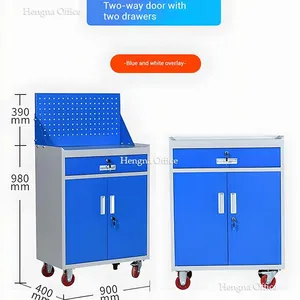
Heavy Duty Tool Trolley for Facility Crews – Built to Take Daily Abuse on Uneven Floors
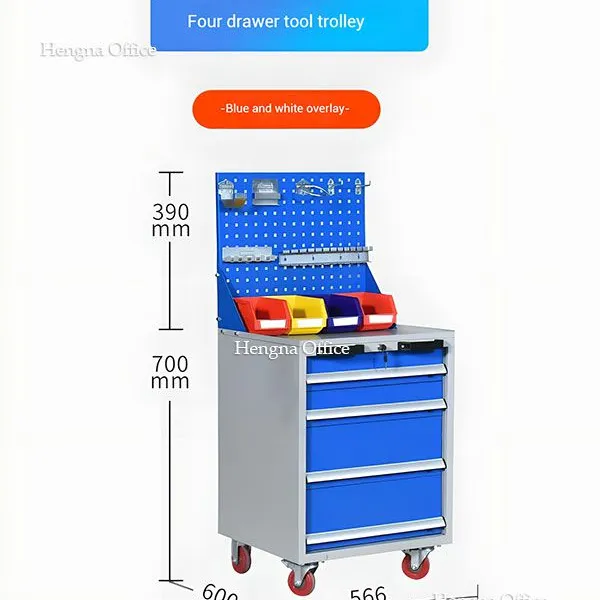
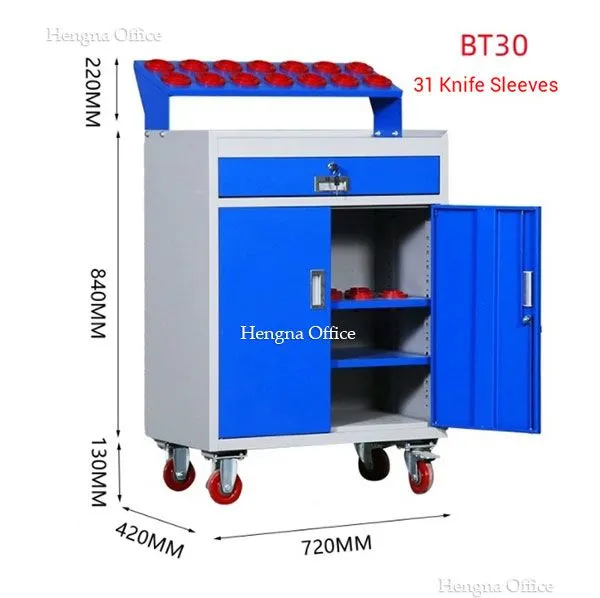
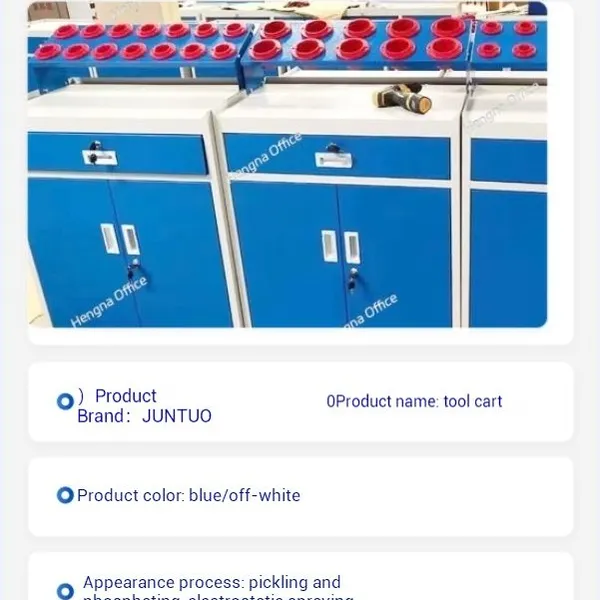
Product Spotlights



Related Products
-
 5 Drawers Hardware Tool Truck | Wholesale Metal Tool Cabinet SupplierUS$ 99 - 269MOQ: 2 Cases
-
Multifunctional Mobile Tool Storage Box|Tool Cart With Handle and Wheels OEM ServicesUS$ 99 - 269MOQ: 2 Cases
-
Workshop Garage Metal Tool Cabinet| Mechanic Tool Storage Cabinet PriceUS$ 99 - 269MOQ: 2 Cases
-
Heavy Duty Steel Tool Cart With Drawers for Workshops|Hengna OfficeUS$ 99 - 269MOQ: 2 Cases
-
OEM 3 Drawer Rolling Tool Cart With Side Handle for Garage & Workshop StorageUS$ 99 - 269MOQ: 2 Cases
Heavy Duty Tool Trolley for Facility Crews – Built to Take Daily Abuse on Uneven Floors
A cart does not wear out. It wears in — one part first. The real question about a facility trolley is not whether it will take abuse, but which part gives out first and how soon. For a facility crew, that answer decides whether the cart is a tool for three years or a new purchase every season. This page is for the people who run a building's maintenance — facilities managers, property maintenance leads, and crew supervisors — deciding whether a heavy duty tool trolley earns its place on the daily route. HNJUNTUO supplies steel tool trolleys for export and replies within 24 hours.
Why a Facility Cart Takes More Abuse Than a Shop Cart
A shop cart lives in one room on a flat floor. A facility cart lives everywhere at once: the loading dock, the boiler room, the corridor to the third floor, the wet patch by the back door. It is loaded, rolled over thresholds, dragged across gravel, and left in hallways where tenants walk past it. No single incident is dramatic, but the daily total is more abuse than a workshop cart sees in a year.
The result is that durability is not a comfort feature for a facility trolley; it is the whole product. A cart that rattles after six months is a cart the crew stops using, and a cart that stops being used is a cart the building never should have bought. As of 2026, facility teams run longer routes with fewer hands, which makes a trolley that actually rolls everywhere more valuable, not less.
A Cart's Day: Loading Dock to Third Floor
Follow one cart through a morning. It meets the delivery at the loading dock, carries the day's materials up past the threshold, rides the service elevator with a full drawer, and sits outside a bathroom on the third floor while the crew replaces a faucet. By lunch it has crossed a door threshold, two expansion joints, and the uneven lip where the lobby tile meets the corridor.
None of those crossings is violent. Each is a small shock to the wheels and the frame, repeated dozens of times a week. This is what "daily abuse on uneven floors" actually means: not one drop, but a thousand small ones. A trolley built for it takes the crossings in stride; one built for a smooth shop floor feels every one.
The Parts That Wear First
If you know what fails first, you know what to check before you buy. On a facility trolley, the wear order is consistent.
Wheels and casters go first. Thresholds, gravel, and floor joints hammer the wheel bearings and bend the axles on a lightly built trolley.
Drawer slides follow. A trolley rolled with drawers full and slightly unbalanced racks the rails, and a racked rail jams.
The coating then. Door frames and hallway corners scuff the finish, and on a poor coating the scuffs turn to rust.
The handle and frame joints last. A weak weld cracks where the handle meets the frame under a full load.
That order is why "heavy duty" has to be a real description, not a label. A trolley with heavy-gauge wheels, solid slides, and a welded frame fails much later than one that only looks sturdy. We confirm wheel size, slide rating, and frame build in the quotation rather than print a figure you cannot verify. It is also the order to inspect if you buy used: a trolley with good wheels but worn slides is cheaper to fix than one with a cracked frame.
How to Tell If a Cart Will Last Three Years
Judge a trolley by its failure points, not its thickness. Three checks cover most of it.
Spin the casters. A free-rolling, firm wheel with a solid axle will take thresholds; a loose, light caster will not. Load a drawer and roll it. A full drawer that slides smoothly and shuts cleanly means the rails are straight and the frame is rigid; wobble here means it will jam within a year. Look at the finish where the frame joins. A clean, sealed weld and a coating that covers the edges resist the corrosion that starts at corners.
These are checks you can do on any trolley in a few minutes, and they separate a three-year cart from a seasonal one without any spec-sheet claim. None of them needs a tool, and all three take about as long as a coffee.
Uneven Floors and What They Do to a Cart
Uneven ground is not a design detail; it is the operating condition. A facility with thresholds, expansion joints, and gravel approaches needs wheels that keep turning over the bumps instead of stopping at them. Large-diameter wheels roll across a threshold; small casters catch it and stop, and the crew learns to lift the cart at every doorway, which is time and strain nobody budgets for.
The flooring also decides the wheel. Hard rubber or solid wheels roll smoothly indoors; pneumatic and deep-tread options handle gravel outdoors. We size the wheel to your floor mix rather than assume one type fits every building. A route that looks flat to the eye still has every threshold and joint the wheels feel, which is why the wheel decision belongs in the quotation, not the brochure.
Steel, Casters, and Repairability
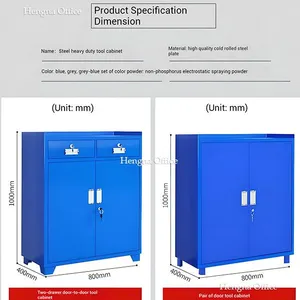
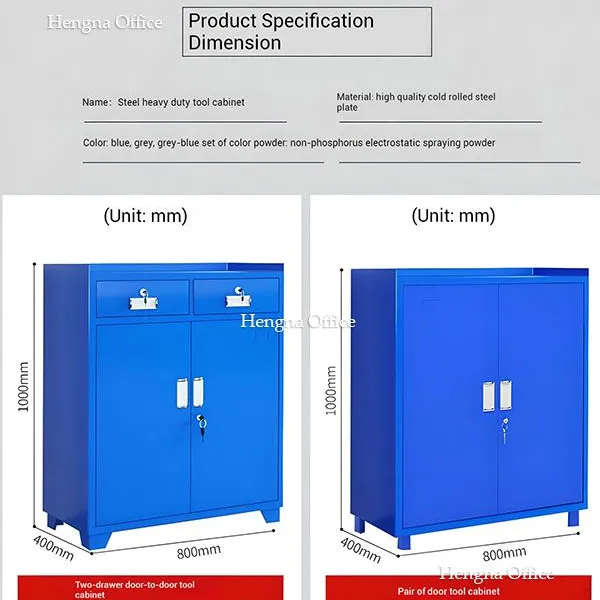
Durability has a second half: what happens after something wears. HNJUNTUO builds these trolleys from cold-rolled steel with an electrostatic powder coating, and the value of steel here is that it is repairable. Worn casters are replaced, not scrapped; a damaged slide is swapped, not thrown away. A plastic-bodied trolley fails as a unit; a steel one fails in parts, and the parts are cheap to fix.
That is a real cost difference over three years, and it is why repairability belongs in the durability conversation. A trolley that can be repaired keeps working long after a disposable one is in a landfill. The repair-versus-replace difference is small on day one and large by year three, when the second trolley you did not buy is the money saved. Our compliance line is CE marking, which we can document for the relevant markets.
When a Cart Is Not the Answer
Be straight about limits. A facility trolley is not a freight cart: it should not carry the heavy materials that need a pallet or a cart meant for loads. It is not a cleaning cart, and it should not be left loaded in a hallway where it becomes a hazard. And if your crew mostly works in one spot on flat floors, a heavy duty trolley may be more than you need — a lighter utility cart would do, and we will tell you so.
Matching the cart to the building's actual daily route, not to the idea of "maximum," is the honest way to buy.
What We Confirm in the Quotation
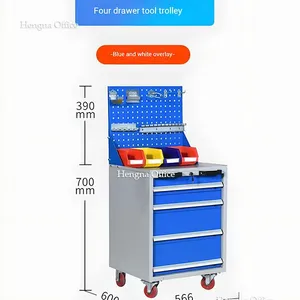
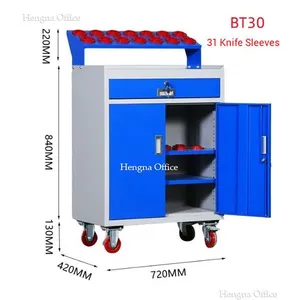
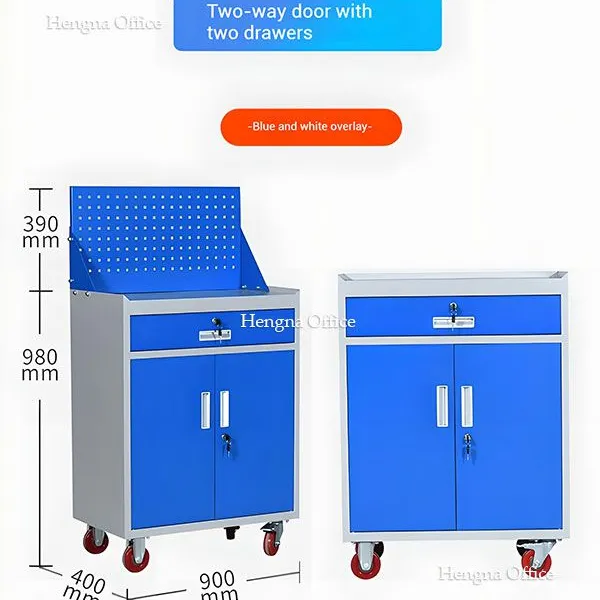
This is where we stop generalizing. When you tell us your floor conditions — thresholds, gravel, or mostly flat — and what the crew carries, HNJUNTUO confirms in the quotation: the wheel size and caster type, drawer count and slide rating, frame build, and the maximum working load. If the route mixes indoor and outdoor ground, say so, and we size the wheel for the worst surface, not the average.
Request a Quote
Send us your floor conditions and what the crew carries on a typical route, and we reply within 24 hours with the wheel build, drawer configuration, confirmed load, and a quotation. Mention whether the trolley will cross thresholds or gravel. We are HNJUNTUO, a steel office and workshop furniture export manufacturer — and tool trolleys for facility maintenance are part of what we build to keep the crew's tools on the route.

Send Inquiry to This Supplier



You May Also Like
-
Wholesale 3-Drawer Tool Trolley With Wheels for Factory and Garage StorageUS$ 99 - 269MOQ: 2 Cases
-
Warehouse Steel Shelving for Emergency Response Tools and Supplies|Hengna OfficeUS$ 5 - 120MOQ: 2 Cases
-
HN-wlj160 Industrial Rolling Tool Organizer With Pegboard|All-in-One Mobile Tool Storage CartUS$ 5 - 120MOQ: 2 Cases
-
Trustworthiness Workshop Tool Organizer on Wheels With Pegboard Back PanelLuoyang Hengna FactoryUS$ 5 - 120MOQ: 2 Cases
-
JUNTUO-GJC Heavy Duty CNC Tool Cart With Lockable Drawers for Machine Shop EfficiencyUS$ 99 - 269MOQ: 2 Cases
-
Heavy-Duty Rolling Tool Cabinet With Drawers | Industrial Steel Tool Storage for Garage 36" H x 24" W x 18" DUS$ 99 - 269MOQ: 2 Cases
-
Large Capacity Industrial Tool Chest on Wheels | Mobile Metal Storage Cabinet for Mechanics| Drawer Height|130mm (5.1 Inches) EachUS$ 99 - 269MOQ: 2 Cases
-
Juntuo-GJC081 Professional Workshop Rolling Tool Box | Heavy-Duty Tool Cabinet With 4 Polyurethane WheelsUS$ 99 - 269MOQ: 2 Cases
-
MT-H2D & MT-L2D Metal Tool Chest for Garage Mechanics – Lockable Rolling Tool Cabinet With PegboardUS$ 99 - 269MOQ: 2 Cases
-
Durable Blue-White Metal Tool Storage Cabinet MT-H2D – Professional Mechanics Tool Chest With Swivel CastersUS$ 99 - 269MOQ: 2 Cases