Contact Platform Support
 Help Center
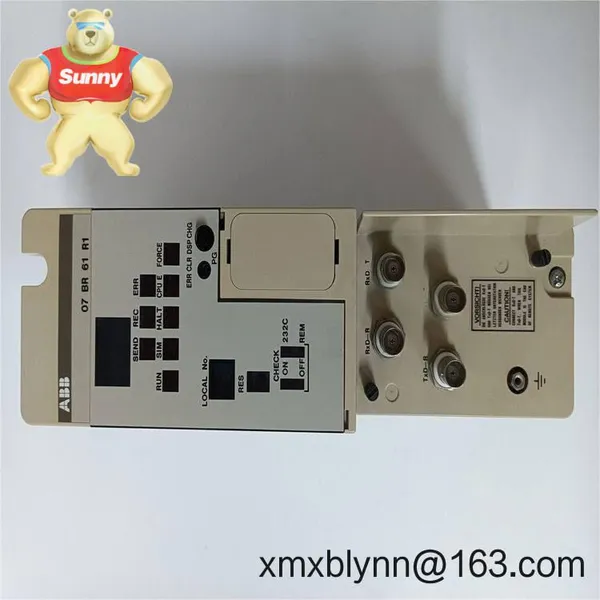
ABB 07BR61R1 (GJV3074376R1) – MasterBus 300 Repeater for Segment Isolation and Distance Extension








Related Products
-
 ABB 07DC91 (GJR5251400R0202) – Digital Control/communication Module for Legacy Procontrol/Advant 07-series SystemsNegotiableMOQ: 1 Combo
 -
ABB 07EA90-SI (GJR5251200R0101) – System Interface Module for Advant Master S100 I/ONegotiableMOQ: 1 Combo
-
ABB 07KT94 (GJR5252100R3261) – Communication/Processor Module for Advant Controller 31 (AC31) SystemsNegotiableMOQ: 1 Combo
-
ABB 086318-002 / 086318-501 – Legacy I/O Termination Assembly for ABB Bailey INFI 90 / NET 90 CabinetsNegotiableMOQ: 1 Combo
-
ABB 086329-004 – Legacy DCS Module for ABB Bailey INFI 90 Maintenance and SparesNegotiableMOQ: 1 Combo
The ABB 07BR61R1, ordering code GJV3074376R1, is a MasterBus 300 (MB 300) bus repeater module used in Advant/MB 300 networks to extend cable runs, isolate segments, and strengthen noisy links. From my experience, it’s the piece you add when a new cabinet sits just beyond the reliable reach of the existing trunk or when you want to segregate a troublesome spur without reworking the whole network.
In many cases, integrators use the 07BR61R1 to increase MB 300 node capacity and improve resilience between process areas. You might notice that once the segments are properly isolated and terminated, intermittent communication drops tend to disappear, especially in drives-heavy or high-EMI environments.
MB 300 segment isolation – Provides galvanic isolation between bus sections to reduce ground noise and fault propagation.
Distance extension – Typically used to extend cable length beyond a single-segment limit when adding remote cabinets or MCC rooms.
Redundant channel support – Works with MB 300 A/B redundant bus architecture to maintain communication availability.
Noise immunity – Helps stabilize links in areas with VFDs, large motors, or high switching loads.
Diagnostics indicators – Usually provides basic status LEDs to speed up field checks and commissioning.
Advant ecosystem compatibility – Integrates into ABB Advant Master installations without forcing controller or I/O changes.
Typical deployments include plantwide ABB Advant systems where MB 300 must span long distances or cross noisy areas:
Pulp & Paper – segmenting wet-end and finishing lines while keeping controller redundancy intact.
Metals & Mining – extending to rolling mill drives cabinets and field junction boxes.
Power Generation – isolating turbine control rooms from balance-of-plant networks.
Oil & Gas – long corridor runs between process skids and central control buildings.
Water & Wastewater – connecting remote filter galleries and pump stations back to the main DCS room.
Reliability uplift – Segment isolation usually eliminates nuisance dropouts caused by ground loops or EMI.
Drop-in for legacy Advant – Keeps existing controllers and operator stations; you only enhance the bus layer.
Lifecycle-friendly – A practical way to add cabinets or relocate equipment without re-architecting the DCS.
Budget control – Compared to wholesale network upgrades, a repeater is a low-disruption, cost-effective fix.
Serviceability – Clear status LEDs and simple wiring make it straightforward for plant techs to maintain.
One thing I appreciate is how predictable these are to commission when the basics are right. A few practical notes that typically prevent callbacks:
Mount in a clean, ventilated control cabinet (IEC/UL cabinet standards). Allow airflow; avoid heat sources immediately below.
Use shielded twisted pair cabling qualified for MB 300. Terminate shields at a single designated grounding point per segment.
Respect segment termination rules; ensure only the ends are terminated. Many issues trace back to incorrect terminators.
Maintain proper separation from high-voltage and VFD cables; cross at 90° if proximity is unavoidable.
Power the module with a stable 24 V DC supply (where specified on the label). Observe polarity and protective earth connections.
ESD precautions during handling. Avoid plugging/unplugging on a live bus unless ABB procedures explicitly allow it.
Routine checks: inspect LED/status, verify terminal tightness, confirm shield bonds, and visually check for moisture or dust buildup.
Configuration is minimal in most cases; the repeater functions transparently. If your site uses bus redundancy switching logic, document the topology and label segments clearly at the cabinet door.
Quality & CertificationsCE compliant; UL/CSA markings may apply depending on build revision and market.
Manufactured under ABB quality systems (ISO 9001). RoHS applicability varies with vintage; verify per lot.
Manufacturer’s warranty policy applies; the series is typically supported with a standard 12‑month warranty.
Plants frequently pair the 07BR61R1 with MB 300 terminators and carriers. Depending on your cabinet design, you may also need:
MB 300 termination/connection hardware and shielded cable sets for segment ends.
Advant controller nodes (e.g., 07KT-series) and operator stations on MB 300.
Spare repeater module for redundancy or quick swap, especially in 24/7 critical lines.

Send Inquiry to This Supplier


You May Also Like
-
ABB 086339-501 – Field-Replaceable Industrial Control Module for Legacy ABB DCS RacksNegotiableMOQ: 1 Combo
-
ABB 086345-004 – Replacement Control Module for Legacy ABB Bailey DCS RacksNegotiableMOQ: 1 Combo
-
ABB 086348-001 – Legacy DCS Module for Bailey INFI 90 System SustainmentNegotiableMOQ: 1 Combo
-
ABB 086370-001 – Legacy Bailey INFI 90 Spare Module for Stable DCS MaintenanceNegotiableMOQ: 1 Combo
-
ABB 100472-012 – Plug-in Control Board for Legacy ABB Drive and DCS CabinetsNegotiableMOQ: 1 Combo
-
ABB 1MRB150003R0002 – Control/Feedback Board for ABB Drive and Motor SystemsNegotiableMOQ: 1 Combo
-
ABB 1MRB150005R0001 — Motor Resolver Assembly for Precise Speed/Position FeedbackNegotiableMOQ: 1 Combo
-
ABB 1MRB150015R1 – OEM Replacement Component for ABB Motors/Drives MaintenanceNegotiableMOQ: 1 Combo
-
ABB 1MRB150020R0712 – OEM Bearing Component for ABB Large AC MotorsNegotiableMOQ: 1 Combo
-
ABB 1MRB150020R1102 – OEM Interface/Feedback Board for ABB Drive SystemsNegotiableMOQ: 1 Combo