Contact Platform Support
 Help Center
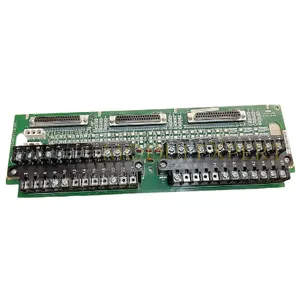
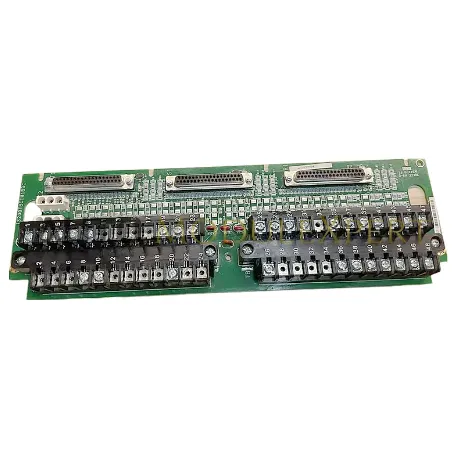
GE IS200TBCIH1BBC Contact Input Terminal Board



Related Products
-
 GE IS200TPROH1BCB Protective Termination BoardNegotiableMOQ: 1 Piece
 -
GE DS200SDCCG5AHD Drive Control CardNegotiableMOQ: 1 Piece
-
GE 531X307LTBAKG1 LAN Terminal BoardNegotiableMOQ: 1 Piece
-
GE IS215UCCCM04A Compact PCI Controller BoardNegotiableMOQ: 1 Piece
-
GE G60E00HAHF8LHXXM8LPXXUXXWXX Generator Control RelayNegotiableMOQ: 1 Piece
GE IS200TBCIH1BBC is a contact terminal board belonging to the GE Speedtronic Mark VI control system series. As a critical signal connection and transmission component in industrial automation, it integrates multiple functions including process temperature monitoring, data acquisition and processing, and signal switching. It is widely used in industries with stringent requirements for signal transmission reliability and equipment stability, such as power generation, oil and gas, chemical engineering, and manufacturing, providing precise signal interfacing and safety assurance for control systems of gas turbines, steam turbines, automated production lines, and other equipment.
1. Purpose and Functions
This module serves as key infrastructure in the GE Mark VI series turbine control system. Acting as a "hub" for signal transmission and connection, it undertakes core functions such as signal switching, temperature monitoring, data acquisition, and power distribution. It serves as both a carrier for various electrical signals and a vital component for temperature parameter monitoring in process control. Its specific functions are as follows:
Signal Switching and Connection: Equipped with dual 48‑pin black terminal blocks, it enables accurate connection and switching of various electrical signals (analog and digital) within the control system, providing safe and reliable interfaces for power distribution and signal routing. This ensures stable signal transmission during operation of gas turbines, steam turbines, and other equipment while reducing signal loss and interference.
Process Temperature Monitoring: As a dedicated process temperature module, it adopts advanced Electro‑Hydraulic Control (EHC) technology and is fitted with professional‑grade temperature sensors, delivering measurement accuracy up to ±0.1℃. It can monitor temperature changes of key equipment and environments in industrial sites in real time. Some configurations support dual‑channel monitoring, allowing simultaneous temperature tracking of multiple critical locations to provide data support for safe equipment operation.
Data Acquisition and Processing: It collects various sensor data and equipment operating parameters from industrial sites in real time, performs preliminary processing and filtering on the acquired data, and features built‑in data storage to record key data such as temperature trends. This facilitates subsequent fault analysis and traceability by operation and maintenance personnel, meeting the data monitoring demands of complex industrial scenarios.
Power Distribution and Protection: Supports input of the commonly used industrial 24V DC power supply and stably distributes it to relevant control modules. It also integrates multiple protection mechanisms including overvoltage, overcurrent, and short‑circuit protection, effectively guarding against damage from circuit anomalies, ensuring safe operation of the module and associated equipment, and improving system fault tolerance.
Remote Monitoring and Compatibility: Supports multiple industrial communication protocols and can be integrated into SCADA and DCS (Distributed Control Systems) for remote monitoring and management. It is also compatible with the GE Mark VI series control system and various PLCs (Programmable Logic Controllers), enabling seamless integration without extensive modification to existing systems and adapting to diverse industrial control scenarios.
2. Key Features
High Reliability and Durability: Designed with military‑grade durability, its housing complies with the UL 94 V‑0 flammability standard. It adapts to harsh industrial conditions such as high temperatures, high dust levels, and flammable & explosive atmospheres, with an operating temperature range of -40℃ to 85℃, demonstrating strong environmental adaptability. The terminals use gold‑plated technology to minimize signal loss, ensuring long‑term stable operation and reducing equipment downtime risks.
Modular Design and Ease of Maintenance: Adopts a standard PC driver board architecture with a compact structure (dimensions: 33cm × 10.2cm × 4.8cm) and a weight of only 0.54kg, allowing convenient installation. It supports tool‑free maintenance, enabling quick plug‑and‑swap replacement to minimize downtime during system upgrades and fault servicing, improving O&M efficiency.
High Precision and Fast Response: Achieves temperature measurement accuracy of ±0.1℃ with millisecond‑level detection of temperature changes, allowing timely capture of anomalies and alarm issuance. Signal transmission responds rapidly, enabling fast data acquisition and signal switching to ensure accurate delivery of control commands and safeguard stable and safe equipment operation.
Strong Anti‑Interference Capability: Uses digital filtering technology to effectively suppress electromagnetic interference in industrial environments, preventing external disturbances from affecting signal transmission and data acquisition. This ensures accuracy of collected data and stability of signal transmission, adapting to complex industrial electromagnetic environments.
Intelligent Self‑Test and Diagnosis: Features a built‑in self‑test function that continuously monitors the module’s own operating status, provides early warnings of potential faults, and delivers clear fault prompts to maintenance personnel. This reduces troubleshooting time and further enhances system operational reliability.
3. Troubleshooting Guidelines
Fault Symptom Identification: Signal interruptions, abnormal data acquisition, distorted temperature monitoring, equipment shutdowns, or alarm indications in the control system may result from module failure. Overheating or loose connections at terminal points also require priority inspection of the module status and wiring.
Basic Inspection Steps: First, check for loose or oxidized wiring and ensure intact, undamaged connections on the terminal blocks. Next, use a multimeter to measure input/output power voltages and signal parameters to identify power abnormalities or signal transmission faults. Inspect the module installation environment to verify compliance with temperature, dust, and other operational requirements to avoid environment‑induced failures.
Application of Diagnostic Tools: Use dedicated diagnostic software for GE control systems, multimeters, vibration analyzers, and other tools to read module operating data and fault codes, locating root causes such as poor terminal contact, faulty temperature sensors, or signal interference. Monitor data acquisition and signal transmission status via software to assist in identifying internal circuit faults.
Precautions for Replacement and Maintenance: Before replacement, inspect other components of the control system for faults to prevent recurrence after installation. Replacement must be performed with power disconnected, and electrostatic protection must be applied to avoid damaging internal electronic components. After replacement, verify secure terminal connections, perform parameter calibration and functional testing to ensure compatibility with the system and proper performance of signal switching, temperature monitoring, and other functions. For routine maintenance, regularly clean dust from terminal blocks and inspect wiring tightness to extend module service life.
4. Application Scenarios
Gas Turbine / Steam Turbine Control Systems: As a core terminal board component in the Mark VI series turbine control system, it performs signal switching, temperature monitoring, and power distribution. It tracks temperature changes at key turbine locations to ensure stable operation throughout startup, load regulation, shutdown, and other full‑process sequences, suitable for combined‑cycle power plants and similar facilities.
Power Industry Systems: Widely applied in main control systems of thermal power plants and distributed power stations, providing interface support for unit operating parameter acquisition and signal transmission while monitoring equipment temperature status. This ensures real‑time monitoring and precise control of the power generation process, improving generation efficiency and safety.
Petrochemical and Natural Gas Industry: Adapts to flammable, explosive, high‑temperature, and high‑pressure environments in chemical facilities. Used in chemical processing control and compressor control systems, it provides signal switching, temperature monitoring, and data acquisition to avoid production interruptions caused by signal faults or temperature anomalies and ensure operational safety.
General Industrial Automation: Deployed in various automated production lines and process control systems to connect sensors, actuators, and control modules, enabling switching and acquisition of analog and digital signals. It serves industries including manufacturing, water treatment, food and beverage, optimizing production processes and enhancing production efficiency and equipment reliability.

Send Inquiry to This Supplier


You May Also Like
-
GE VMIVME-7666-111000 Multifunctional I/O ModuleNegotiableMOQ: 1 Piece
-
GE IS420ESWBH2A Non-hosted Industrial Ethernet (IONet) SwitchNegotiableMOQ: 1 Piece
-
GE VMIVME-3215-000 Thermocouple Signal Acquisition ModuleNegotiableMOQ: 1 Piece
-
GE IS215VCMIH2BB VME Bus Master ControllerNegotiableMOQ: 1 Piece
-
GE IS200VCMIH2BCC Communication Interface CardNegotiableMOQ: 1 Piece
-
GE IS200AEPAH1AHD Excitation Power Control (AEPC) BoardNegotiableMOQ: 1 Piece
-
GE HYDRAN 201TI Dissolved Gas Monitoring System for Transformer OilNegotiableMOQ: 1 Piece
-
GE DS200TCRAG1ACC Relay Output BoardNegotiableMOQ: 1 Piece
-
GE VMIVME-7650-83H 350-007650-83H C VME Controller BoardNegotiableMOQ: 1 Piece
-
GE IC697CPX772 Single-socket Central Processing Unit (CPU) ModuleNegotiableMOQ: 1 Piece