


 Contact Platform Support
 Help Center
Polypropylene Acid Cabinet 22 Gallon With Spill Tray for Lab Corrosives | One-Piece PP Body

Product Spotlights



Related Products
-
 Veterinary Acid Storage Cabinet — Polypropylene for Animal Clinics & Labs | Wipe CleanUS$ 100 - 600MOQ: 5 Sets
 -
GHS-Labeled Acid Cabinet for Labs — Spill-Proof Tray & Double Lock | Pass Every AuditUS$ 100 - 600MOQ: 5 Sets
-
Polypropylene Chemical Cabinet for Gold Assay Labs — Aqua Regia Eats Straight Through SteelUS$ 180 - 550MOQ: 3 Combos
-
Corrosive Storage Cabinet for Trace Metal Analysis Labs — No Metal Ions, No False ReadingsUS$ 180 - 550MOQ: 3 Combos
-
Acid Resistant Cabinet for Wet Labs — PP Body, No Coating to Chip or Bubble | Never RustsUS$ 180 - 550MOQ: 3 Combos
Polypropylene Acid Cabinet 22 Gallon with Spill Tray for Lab Corrosives | One-Piece PP Body
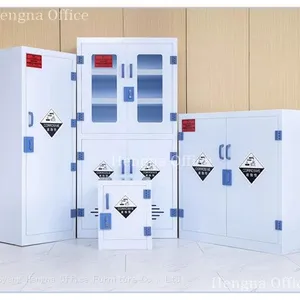
Strong acids and alkalis are the chemicals labs replace most often — and the ones storage decisions get wrong most often. Sulfuric acid, hydrochloric acid, nitric acid, sodium hydroxide and potassium hydroxide eat through painted steel, swell wooden cabinets, and corrode anything only half-meant for the job. A polypropylene acid cabinet exists for exactly this inventory. The 22 gallon model covered here is a one-piece molded PP body with a spill tray, a double lock and a blue vision window, sized for a single lab’s working stock of corrosives. Below: what it is, what is inside, where it fits, and the questions labs ask before ordering.
What a Polypropylene Acid Cabinet Is
An acid cabinet is a safety storage cabinet rated for corrosive chemicals: acids on one side of the rulebook, alkalis on the other. A polypropylene acid cabinet builds that cabinet from PP — polypropylene — instead of coated steel, because PP withstands the strong acids and bases that damage metal surfaces and paint films.
It sits in a specific slot in the lab safety cabinet family. Steel flammable safety cabinets handle flammable and combustible liquids; a PP acid cabinet handles the corrosives — the sulfuric, hydrochloric and nitric acids, and the sodium and potassium hydroxides, that a general chemical storage cabinet is not meant to hold long-term. Many labs end up needing both, side by side, because “corrosive” and “flammable” are different hazard classes with different storage rules. A corrosive storage cabinet that is also expected to take flammables is a mismatch either way — the materials are chosen against different threats.
Why the Body Is One Piece
The body is molded from PP as one piece rather than folded from coated steel sheet. The difference shows up where coatings fail. A steel cabinet’s corrosion resistance depends on its paint film staying intact; acid fumes work at the edges, hinge points and scratches first, and rust follows the coating inward. A PP body has no coating at all — the material is the same through the wall, so a scratch is cosmetic rather than the start of a failure. There are no painted edges or coating breaks inside for residue to work under, which is also why these cabinets wipe clean after a spill.
For buyers this simplifies two conversations. Inspection: there is no paint condition to audit, only the body, the window and the hardware. Replacement planning: the parts that age are standard fittings, not the body material.
Inside the 22 Gallon Acid Cabinet
Capacity: 22 US gallons — about 83 liters of rated storage volume.
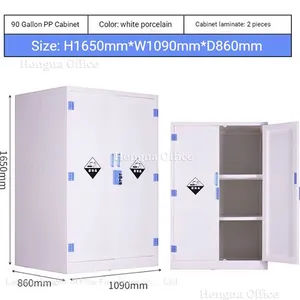
Size: 1,650 mm tall, 590 mm wide, 460 mm deep — roughly 65 by 23 by 18 inches — with a net weight around 40 kg. Two adjustable PP shelves inside; shelf height moves to fit taller bottles, and the shelves are PP through, like the body.
Door: a single door with a blue PP vision window. The window lets staff check container condition and stock levels without opening the door — useful when the alternative is opening a corrosives cabinet several times an hour.
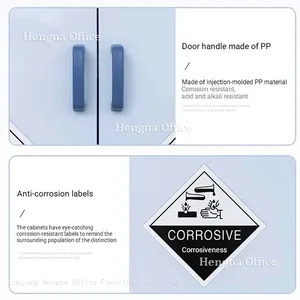
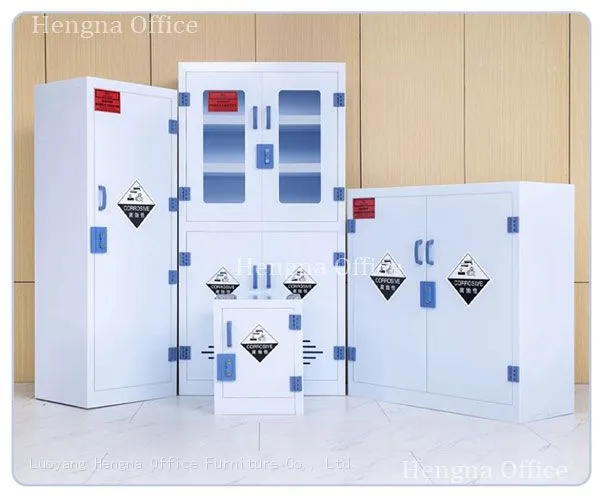
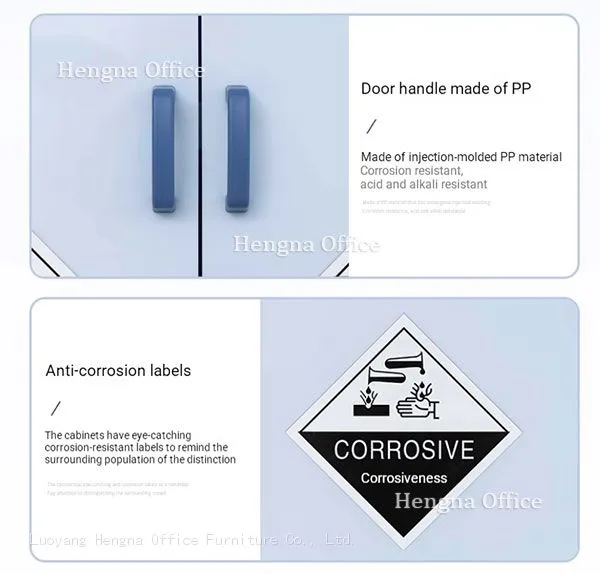
Signage: a red corrosive label plus the yellow GHS corrosive diamond, applied at the factory, so the cabinet arrives labeled to GHS convention.
Vents: louvered openings at the base provide passive air movement. Whether a specific lab’s rules require anything beyond that depends on the chemicals stored and the local code — a question for the site’s EHS officer, not a default answer.
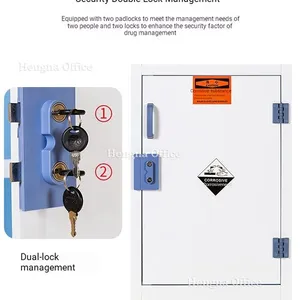
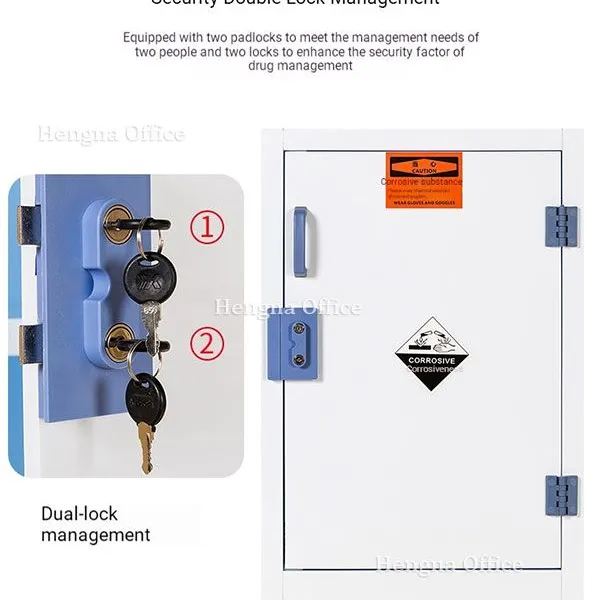
Locking: a double lock on the single door, supporting access-control policies for hazardous chemicals.
Footprint: at 590 mm wide, the cabinet sits in a run of cabinets or against a short wall section — which is how most 22 gallon units get used: one cabinet dedicated to corrosives, standing next to general storage.
The Spill Tray and the Double Lock
Two features answer the two questions EHS officers ask first.
The spill tray: the base of the cabinet forms a containment sump. A leaking or knocked-over bottle drains into the tray instead of onto the shelving or the floor, and cleanup becomes a controlled task instead of a floor incident. It is the feature that separates a near-miss from a chemical spill report.
The double lock: two locks on one door, so opening the cabinet is a deliberate act rather than an accidental one. For labs where corrosives sit in shared spaces — teaching labs, QC benches, shared R&D rooms — locking the corrosive inventory is usually a policy requirement, and the hardware is already there.
Where a 22 Gallon Unit Fits
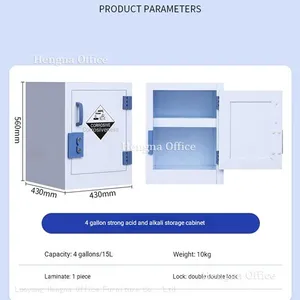
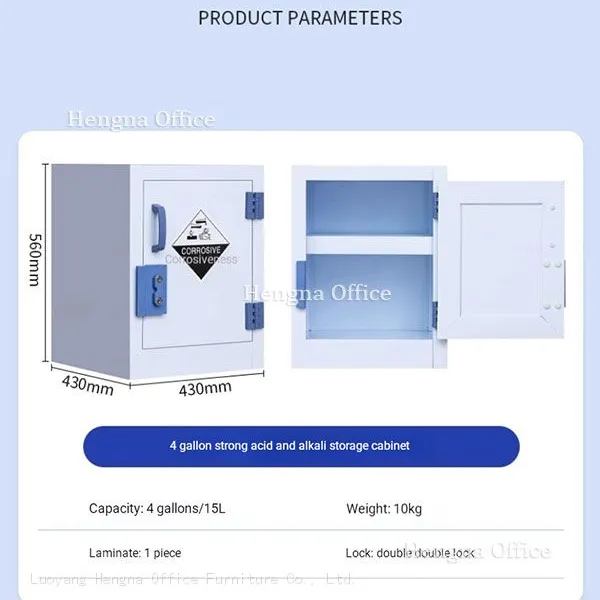
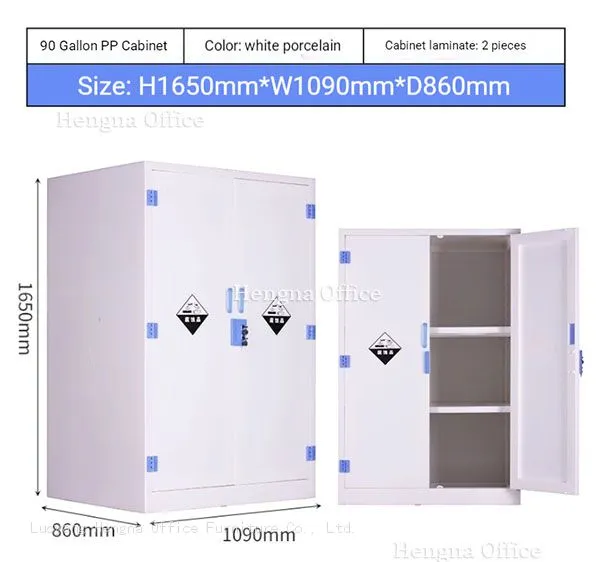
The 22 gallon size sits in the middle of the PP range, which runs from 4 gallon benchtop units to 90 gallon floor models. Typical fits:
University and school chemistry labs, where corrosives are real but volumes are moderate and floor space is contested.
Pharma QC and water-testing labs, where reagent stock is bottled and rotates fast.
R&D and electronics labs, where etchants and process acids sit near the bench they serve.
The sizing question is usually storage time, not volume: how much corrosive stock does the lab hold at once, and how fast is it consumed? A lab holding a couple of weeks of stock in 2.5 L bottles does not need to move up a size class; a plating shop or an assay lab consuming acids daily will outgrow 22 gallons quickly and should look at the larger double-door models.
Common Questions
What can I store in it — and what should stay out?
Strong acids and alkalis in their original containers: sulfuric, hydrochloric and nitric acids, sodium and potassium hydroxide, and similar corrosives. What does not belong: flammable solvents, which need a steel flammable safety cabinet, and chemical pairs that a compatibility chart separates — those go on different shelves or in different cabinets. Acids and bases can share one cabinet in separate compartments where policy allows; many labs keep them on opposite sides with the compatibility chart posted inside the door.
Does the blue window actually matter for safety?
It removes the reason to open the door. Staff can see container condition, level and labeling through the blue PP panel, so routine checks stop being door-opening events. Fewer openings means fewer vapor releases and fewer chances for an unsecured door.
Does this cabinet need to be connected to an exhaust?
Not as standard. The louvered vents at the base provide passive air movement, and most installations run the cabinet as-is. Whether a specific lab must add powered ventilation depends on what is stored, in what quantity, and under which local code — that call belongs to the site’s EHS officer. What the cabinet does not replace is a fume hood: volatile work belongs in a hood, and the cabinet is for stored stock.
How is this different from the yellow steel cabinet next to it?
Different hazard, different cabinet. The yellow steel unit is a flammable safety cabinet, built for flammable and combustible liquids. The PP acid cabinet is built for corrosives — acids and alkalis that attack coated steel. Labs that store both classes run the two side by side; neither covers for the other.
The Short Version
A 22 gallon polypropylene acid cabinet is the middle size of the PP corrosive-storage range: a one-piece molded body that stands up to the acids that eat painted steel, a spill tray that turns leaks into controlled cleanups, a double lock for access control, and a blue window that keeps routine checks door-closed. For a single lab’s corrosive stock, it is the size most labs land on — and the one that fits the narrowest wall.

Send Inquiry to This Supplier



You May Also Like
-
90 Gallon Acid Cabinet — Floor Standing PP for Plating and Assay Labs | Double-Lock DoorsUS$ 180 - 550MOQ: 3 Combos
-
4 - Gallon Corrosion-resistant Safety Cabinet for Hazardous Chemicals Acid SupplierUS$ 340 - 500MOQ: 5 Combos
-
22 Gallons /80 L PP Acid - Base Cabinet: Safeguard Chemical Storage Supplier OEMUS$ 500 - 600MOQ: 5 Combos
-
Laboratory Polyethylene Acid and Corrosive Chemicals Safety Storage PP CabinetUS$ 340 - 600MOQ: 5 Combos
-
4 Gallon Laboratory PP Acid and Alkali Resistant Storage Cabinet With Adjustable Spill-Proof Shelf - OEM/ODMUS$ 500 - 600MOQ: 5 Combos
-
Full PP Anti-Corrosion Safety Cabinet for Corrosive Storage, White Porcelain, Leak-Proof DesignUS$ 500 - 600MOQ: 5 Combos
-
12 Gallon Industrial PP Corrosive Chemical Safety Cabinet With Anti-Leak Trays and Optional Venting for Chemical PlantsUS$ 500 - 600MOQ: 5 Combos
-
Heavy-Duty Full PP Corrosion-Resistant Safety Cabinet With Sealed PP Hinges, Chemical Storage FacilitiesUS$ 500 - 600MOQ: 5 Combos
-
School Laboratory PP Reagent Storage Cabinet With Double Lock Security - Custom SizesUS$ 500 - 600MOQ: 5 Combos
-
Customizable PP Chemical Storage Cabinet for School Science Labs - Acid & Alkali Resistant With Spill-Proof Adjustable ShelvesUS$ 500 - 600MOQ: 5 Combos

