


 Contact Platform Support
 Help Center
Semi-Auto Liquid Chlorine Injection Unit With PLC Control and Standard Compliant for Industrial Use

Product Spotlights




Related Products
-
 Chlorine-alkali Plant EPCUS$ 100000 - 2000000MOQ: 1 Set
 -
99% Alkali Tablets EPC ProjectUS$ 100000 - 2000000MOQ: 1 Set
-
33% Hydrochloric Acid Equipment ManufacturerUS$ 100000 - 2000000MOQ: 1 Set
-
Liquid Chlorine EquipmentUS$ 100000 - 2000000MOQ: 1 Set
-
High Concentration Sodium Hypochlorite Generator for Chlor-Alkali Plant EPC ProjectUS$ 200000 - 2000000MOQ: 1 Set
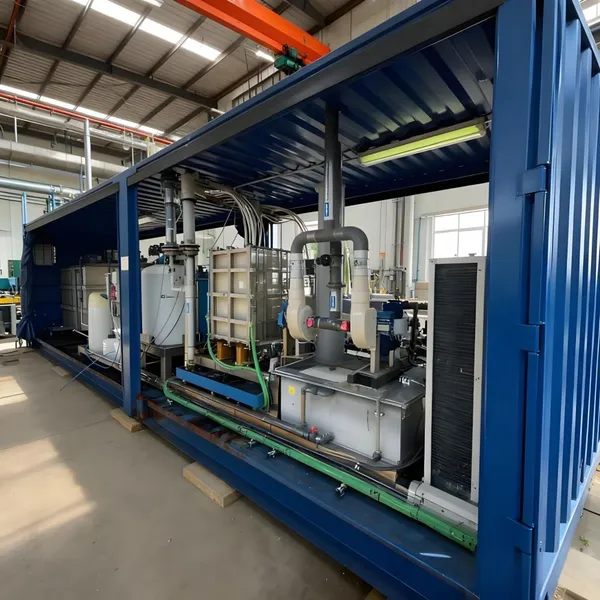
Tianjin ZhuoLiNeng (ZLN) Technology Co., Ltd., an experienced manufacturer based in Tianjin, China, introduces this semi-automatic liquid chlorine injection unit with PLC control. Built for industrial applications where accurate chlorine dosing and process reliability are essential, this unit combines operator-friendly semi-automatic operation with programmable logic controller (PLC) assistance. It is designed to help water treatment facilities and industrial plants maintain consistent chlorine residuals while reducing manual dosing errors. As a producer rather than a trading company, ZLN can offer direct technical support and configuration flexibility.
Liquid chlorine injection is a critical step in many water and wastewater treatment processes. This semi-automatic unit meters chlorine solution into a process stream using a controlled injection approach. The PLC manages the operating sequence, monitors key parameters, and helps maintain stable dosing, while the operator retains manual control for startup, shutdown, and process adjustments. The result is a practical balance between automation and operator oversight, especially suitable for plants that want to upgrade from manual dosing without committing to a fully automated system.
Key features and benefits
PLC-assisted sequence control: The injection sequence, pump start/stop, and alarm actions can be configured through the PLC. Semi-automatic mode gives operators clear control while reducing repetitive manual work.
Anti-corrosion construction: Components that come into contact with chlorine solution are selected for resistance to chemical corrosion, helping to extend service life and reduce unplanned maintenance.
Standard-compliant design: The unit is built with attention to common industrial installation and safety practices, making it easier to integrate into existing treatment lines.
Manual override and safety: Operators can intervene manually when needed. Emergency stop functions and status indication are included in the control design to support safe operation.
Flexible configuration: Injection capacity, pipe connections, control interfaces, and mounting methods can be adapted to meet specific project requirements.
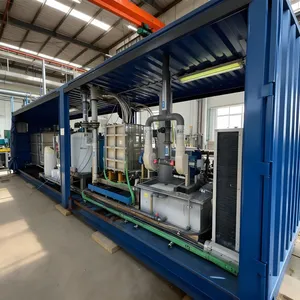
Compact, low-maintenance layout: The arrangement of the injection pump, flow control components, and PLC cabinet is designed to save floor space and simplify routine inspection.
Technical specifications
| Parameter | Description |
|---|---|
| Unit type | Semi-auto liquid chlorine injection unit |
| Control mode | PLC-assisted, semi-automatic with manual override |
| Power supply | Customizable to local electrical standards |
| Injection capacity | Selected according to process flow and dosing requirement |
| Wetted parts material | Industrial anti-corrosion material, customizable |
| Mounting type | Skid or panel mounted, optional |
| Operation interface | Control panel with status indicators; remote signal optional |
| Design compliance | Built in line with common industrial requirements; produced under quality system |
Operational advantages for your facility
Stable dosing performance: Because the PLC supports repeatable operating sequences, the risk of uneven chlorine feed is reduced. This helps maintain water quality targets and process stability.
Lower operating burden: In semi-automatic mode, the operator starts, monitors, and stops the system, while the PLC handles routine sequence chores. This simplifies daily operation without eliminating human supervision.
Easy integration: The control panel can be linked to plant signals such as run status, fault output, and remote start/stop, allowing straightforward connection to existing control rooms.
Reduced chemical waste: By minimizing manual guesswork and supporting more consistent injection, the unit can help reduce over-dosing and unnecessary chemical consumption.
Safer work environment: A controlled injection arrangement, combined with clear operator instructions, can help reduce direct exposure to chlorine solution during routine operation.
Common application areas
Municipal and industrial water treatment systems requiring chlorine dosing
Cooling water treatment for algae and microbiological control
Wastewater disinfection and odor control processes
Process water treatment in food, beverage, chemical, and pharmaceutical plants
Other industrial applications where controlled chlorine solution injection is needed
ZLN operates an quality management system at our factory in Tianjin, China. Each semi-auto liquid chlorine injection unit is produced with controlled manufacturing procedures, and the PLC logic and electrical assembly are checked before shipment. From your initial inquiry to after-sales communication, our engineers are available to clarify specifications, recommend components, and discuss customization based on your site conditions.
As a manufacturer, we aim to provide not only equipment but also practical support for installation, startup, troubleshooting, and future spare parts. We have shipped products to markets across North America, South America, Eastern Europe, Southeast Asia, Africa, Oceania, the Middle East, Asia, and Europe, and we understand the importance of reliable documentation and careful export packing. Our shipment port is Tianjin, China, with every unit packed to reduce the risk of damage during long-distance transportation.
If you are planning a new chlorine dosing line or upgrading an existing system, please share your process flow, target chlorine residual, control preferences, and plant layout. The ZLN team will help you select a suitable configuration or customize the unit to match your operational needs.
FAQ
Q1: What is the difference between this semi-automatic unit and a fully automatic dosing system?
A1: In a fully automatic system, the PLC or a higher-level controller continuously adjusts the chlorine feed based on analyzer signals. This semi-automatic unit uses PLC assistance for sequence and monitoring, but the operator remains involved in starting and stopping the process and making setpoint changes. It is a practical solution for plants that need controlled dosing without a full automation package.
Q2: Can the PLC be connected to an existing control room or SCADA system?
A2: Yes. The unit can include standard discrete signals such as run status, fault output, and remote start/stop. Communication protocol options are available upon request. Our engineers will confirm how the unit can be integrated with your existing control architecture.
Q3: What materials are used for components that contact chlorine solution?
A3: The wetted parts are selected for resistance to chlorine-related corrosion. Because chlorine solutions can contain different concentrations and impurities, the specific material combination should be matched to your chemical conditions. Please send your water chemistry or dosing solution details for a more precise recommendation.
Q4: What safety features can be included?
A4: The control panel supports emergency stop, fault indication, and manual shutdown. Additional safety equipment such as leak alarms, low-liquid level switches, or pressure monitoring can be added as an option. Site-specific safety regulations should be followed when installing and operating the unit.
Q5: What is the available injection flow range?
A5: The injection flow depends on the pump size, piping configuration, and chlorine solution concentration. There is no single universal range because the unit is configured for each application. Contact ZLN with your required flow rate and operating pressure, and we will help you choose the correct injection pump and accessories.
Q6: How is the unit shipped and what documentation is included?
A6: The unit is exported from Tianjin Port with careful packing for the PLC cabinet, piping, and injection components. Basic documentation includes a general arrangement drawing, electrical schematic, operating manual, and component list. Specific documentation requirements can be discussed before order confirmation.
Q7: Can the mounting arrangement be customized?
A7: Yes. The standard design can be adapted for skid mounting, frame mounting, or panel mounting according to your site space and piping layout. Customizing the arrangement helps simplify installation and maintenance in existing plants.
Q8: Is operator training or startup support available?
A8: ZLN provides technical guidance during installation and commissioning through remote communication and written instructions. For projects that need on-site support, please inform your sales contact so that the service scope and arrangements can be discussed in advance.

Send Inquiry to This Supplier



You May Also Like
-
99% Flake Caustic Soda for Chemical Plant EPC ProjectUS$ 200000 - 2000000MOQ: 1 Set
-
33% Hydrochloric Acid Production Equipment for Chlor-Alkali PlantUS$ 200000 - 2000000MOQ: 1 Set
-
Liquid Chlorine Equipment for Chlor-Alkali Production PlantUS$ 200000 - 2000000MOQ: 1 Set
-
High Purity 99% Caustic Soda Flakes for EPC ContractorUS$ 200000 - 500000MOQ: 1 Set
-
Corrosion Resistant 33% Hydrochloric Acid Manufacturing EquipmentUS$ 200000 - 500000MOQ: 1 Set
-
Industrial 33% Hydrochloric Acid Equipment for Chemical EPC ProjectUS$ 200000 - 2000000MOQ: 1 Set
-
Industrial Brine Electrolysis Plant for Caustic Soda and Chlorine ProductionUS$ 100000 - 2000000MOQ: 1 Set
-
Ion Exchange Membrane Chlor Alkali Process PlantUS$ 100000 - 2000000MOQ: 1 Set
-
Automated Chlor Alkali Manufacturing UnitUS$ 100000 - 2000000MOQ: 1 Set
-
Industrial 31% Hydrochloric Acid SolutionUS$ 100000 - 2000000MOQ: 1 Set


